
Outdoor lab: Researchers tap into Glacier's snowfields to uncover mystery of colorful algae
HAILEY SMALLEY | Hagadone News Network | UPDATED 3 weeks AGO
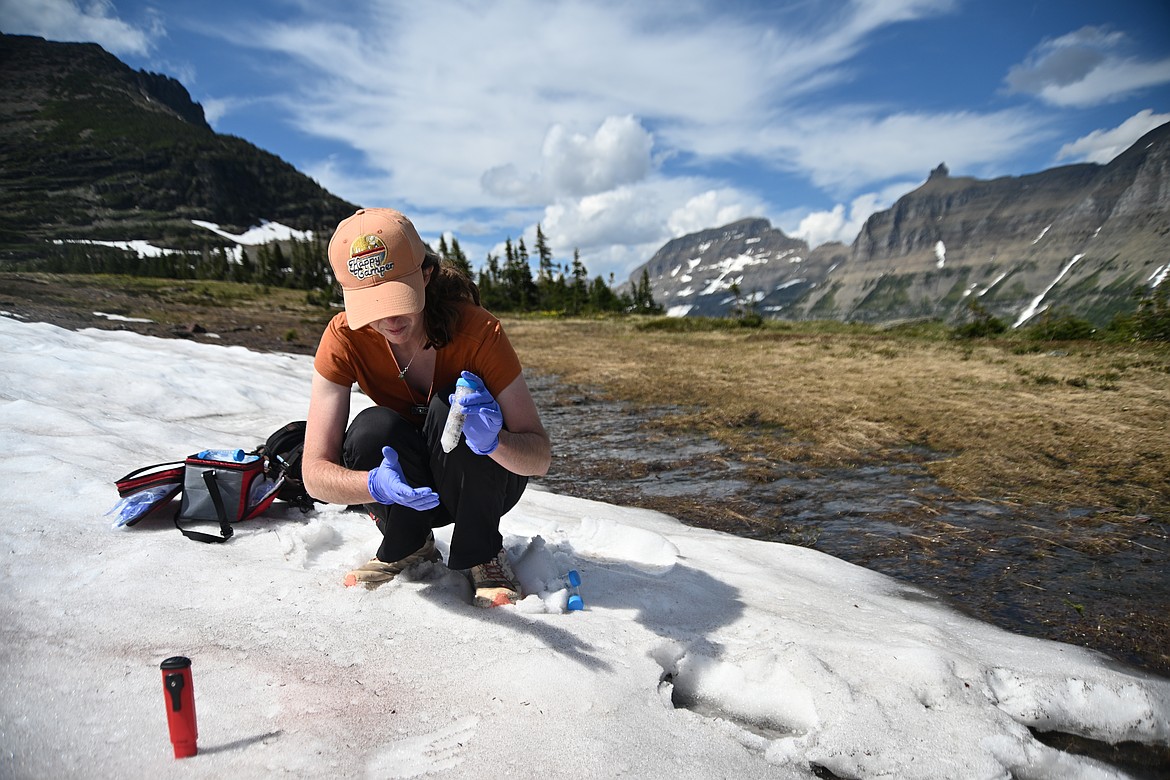
Ashley Beck samples an early snow algal bloom on Logan Pass in July 2026. (Hailey Smalley/Daily Inter Lake)
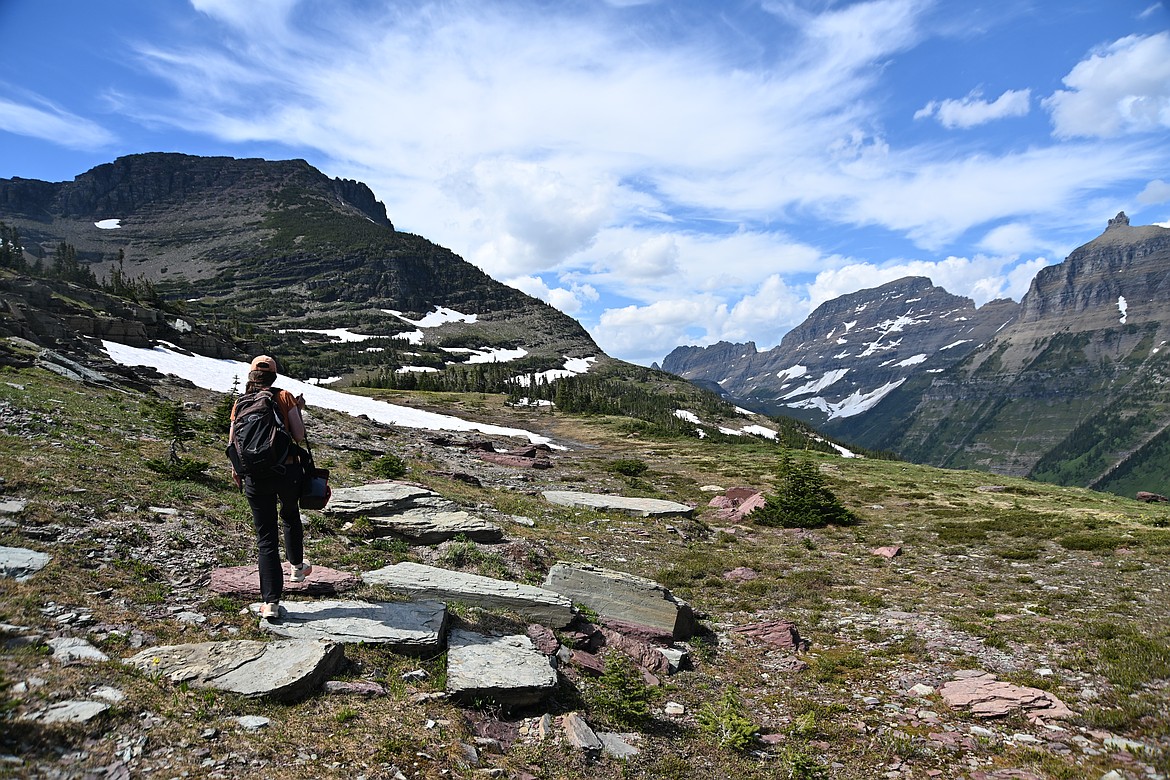
Ashley Beck searches for snow algae on Logan Pass in July 2026. (Hailey Smalley/Daily Inter Lake)

Ashley Beck samples an early snow algal bloom on Logan Pass in July 2026. (Hailey Smalley/Daily Inter Lake)
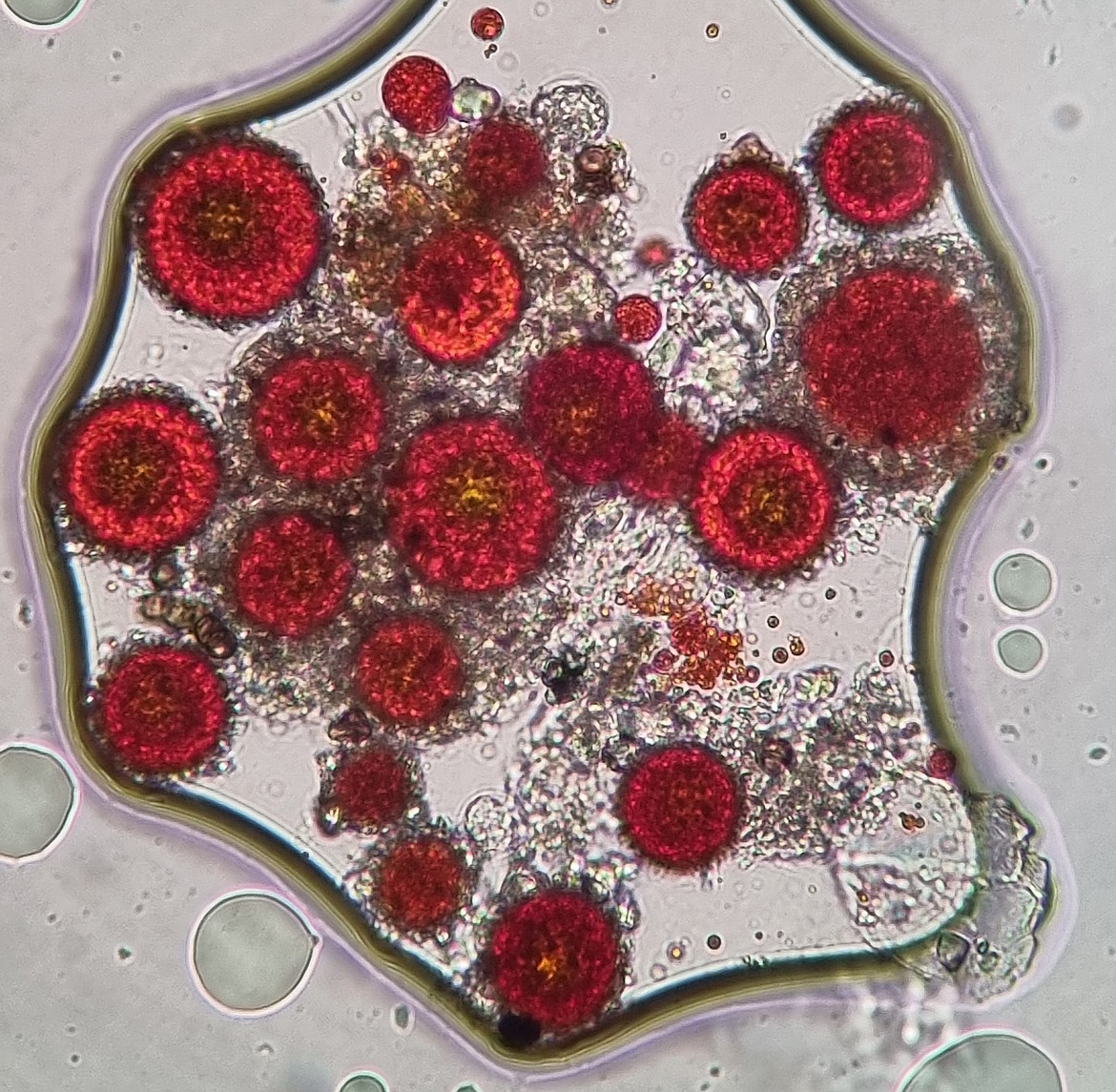
Red snow algal cells mingle with other microscopic critters in a snow sample. (Courtesy of Ashley Beck)
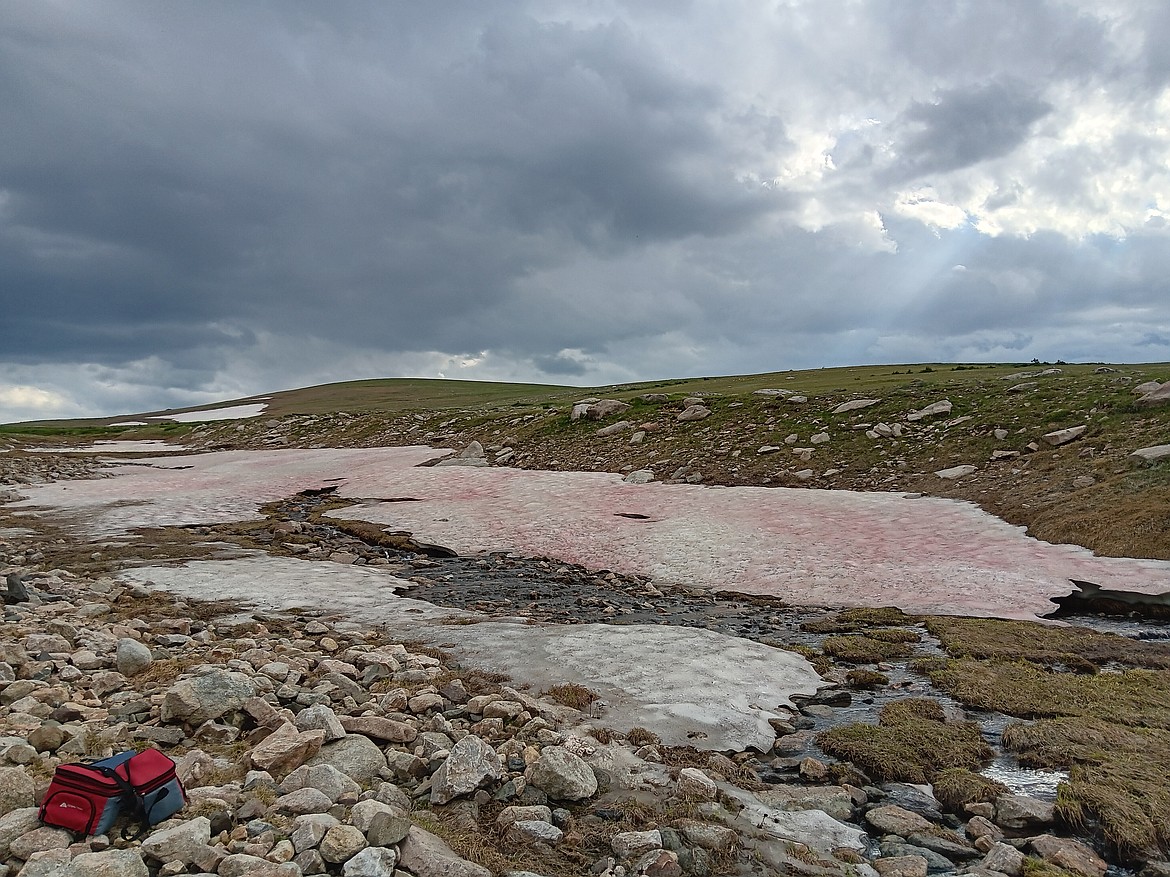
Snow algae blooms on top of a melting snow field. (Courtesy of Ashley Beck)
On a sunlit afternoon in early July, Logan Pass bustled with all the energy typical of summertime in Glacier National Park.
Families swarmed like ants from hastily parked cars, scrambling up the hillside toward the visitor center and Hidden Lake Overlook. Peals of laughter rang out as hikers slid down the latent summer snowfields shrouding the trail. Selfies were taken and snowballs thrown.
A few hundred feet from the bedlam, Ashley Beck squatted at the edge of a snowbank and pulled on a pair of Latex gloves. She took a selection of instruments from her bag and placed them in a semi-circle around her. First, a thermometer and then a pH meter and then a handful of sterilized plastic vials — all the usual accoutrement of a science experiment waiting to happen.
For decades, Glacier National Park has served as an outdoor laboratory for scientists of all disciplines and backgrounds. Researchers like Beck flock to the storied peaks each summer to scrape up samples, log data and observe the natural world at its most wild. The work they do is both macroscopic and breathtakingly detailed; by zooming in on some of Glacier’s overlooked and underappreciated creatures, scientists are revolutionizing the ways people think about entire ecosystems and forging new paths for many of the park's most vulnerable species.
In Glacier’s backcountry, biologists whiled away the warm summer nights surveying bats. In the North Fork, scientists scouted for bumble bees. And, on a clear afternoon in early July, a researcher and professor from Carroll College trekked along the Continental Divide in search of snow algae.
The tiny plant-like creatures spread across the surface of alpine snowfields each summer in patches of crimson and orange and forest green. The often-vibrant hues have earned snow algae a bevy of monikers, from watermelon snow to glacier blood, but Beck knows there is far more to the yearly blooms than meets the eye.
Millions of creatures make their home in permanent and semi-permanent snowfields, most of them so miniscule as to be invisible to the naked eye.
"Even though the red [algae] is what we see, there's bacteria in there. There's fungi, other protozoa, other small, small eukaryotes," Beck said. "They're all co-existing, but we don't necessarily know how they are competing and cooperating together, and what actually drives the [algal] bloom in terms of inter-species interactions. That's where my interest lies."
In 2023, Beck received funding from the National Science Foundation to explore the long-hidden worlds within snow algal blooms, using a novel form of DNA analysis known as nanopore sequencing. The final results, which are expected in 2028, may very well form the most complete catalogue of life within Montana's snowfields and unveil many of the lingering mysteries surrounding the algae itself.
Scientists have documented hundreds of unique species of snow algae, including species on every continent, but much about the inner workings of snow algal life remains an enigma.
Researchers know, for example, that snow algae weather the winter near the bottom of the snowpack. Come summer, each of the algal cells propels itself to the surface using tail-like appendages called a flagella, where it can photosynthesize light into sugar. Exposure to the sun's ultraviolet rays also prompts the algae to produce more of certain pigments, which mutually act as a sunblock and lend the algae its characteristic hues.
But what, exactly, triggers the algae to begin its annual migration is still a topic of scientific debate, and researchers have yet to unravel why algae flourish on some snow patches, while others remain barren of the blooms.
Part of the answer could lie with the algae's neighbors. Some bacteria and fungi might compete with snow algae for water and other resources, inhibiting its growth. Others are likely beneficial trade partners for key nutrients and vitamins.
"It's its own little society," Beck said. "They just have a different currency that they're exchanging ... Even if you think about a larger scale ecosystem with macro-flora and fauna, the presence of a certain animal is going to influence the presence of other animals."
Unravelling those complex interactions meant Beck first had to find the microscopic critters among often-vast fields of snow.
"Early on [the algal blooms] can be very faint, and it can just seem like a shadow or something," Beck said as she waded through the softening snow atop Logan Pass. "Like, am I just like seeing things, or is it really sort of pink?"
She paused beside a splotch of barely-there peach coloration, considering. From afar, the faint orange hue could easily be mistaken for a streak of dirt or a trick of the eyes, but as she neared the trace of color, Beck breathed out an affirmative, "Oh, yeah." This was the early genesis of a snow algae bloom.
Beck knelt and uncapped the first of three plastic tubes. She plowed the lip of the vial through the center of the bloom, pausing intermittently to shake the tube and settle the snow inside. She repeated the process thrice, then stuck a thermometer in the snow to record the temperature.
The whole sampling process, she said, was deceptively simple. Within minutes, Beck was ambling back toward the trail with a cooler full of snow algae samples slung over one shoulder.
The true work wouldn't unfold until months later, when autumn ushered students back to the Carroll College campus in Helena. In her laboratory, Beck retrieved the first of the summer's snow algae samples from a deep freezer and slid it under a microscope, revealing, for the first time, the extent of the world she had captured.
Magnified, each algal cell became its own planet. Bacteria and fungi formed kaleidoscopic starbursts around the globules and dotted the background with translucent bubbles, furthering the illusion of a tiny galaxy.
"This is probably my favorite part because they're so cute to look at," Beck said.
While illusory, even a microscopic view doesn't furnish enough detail for Beck to identify individual species with certainty. Many algal and bacterial species look nearly identical, even to Beck's trained eye, so genetics is the only way to pin down the specifics of the microscopic society.
Beck and a handful of her student mentees extracted DNA from each of the snow algae samples and replicated key parts of the genetic code many times over to ensure there was a readable amount of material.
From there, the DNA was threaded through an electrically resistant sheet that, while no bigger than a thumbnail, was pocked with thousands of miniscule holes called nanopores. An instrument reads minute disturbances in electrical currents as the DNA worms its way through the nanopore. Each unique segment of DNA produces a slightly different pattern of electrical disturbance, which can then be translated into the letters that scientists use to represent genetic code and cross-referenced to identify specific species.
"The difficulty with environmental samples, particularly snow algae, is there's a lot of unknown organisms out there," Beck said. "So, there's not a lot of matches for some of these [DNA] sequences, which is exciting in and of itself."
Despite the breadth of unknowns, Beck has already identified some key differences in snow algal blooms across Montana. Certain types of bacteria show up more often in samples taken in southwest Montana’s Beartooth Mountains, for example, while others seem particular to the Gravelly Range near Ennis.
There are also vast differences in the types of bacteria found within samples of algae-less "white snow" and in samples taken from active algal blooms, furthering Beck's hypothesis that some bacteria and algae benefit from living near each other.
As the project unfolds into the coming years, Beck hopes to build up her catalogue by sampling the same algal blooms several times over the course of their lifetimes and to establish a long-term monitoring framework to better track and understand how those blooms along with the environment around them. Eventually, she believes she will have enough data to construct a mathematical model capable of predicting where and when snow algae are most likely to bloom, based on the other species that are present.
Such forecasts could prove increasingly useful as climate change accelerates the loss of permanent snowfields and alters the timing of seasonal snowmelt. Algae also act as a catalyst for melting by darkening the color of the underlying snow.
"That's going to increase the light absorption," Beck said. "And that's going to lead to more melting, and then more melting leads to more surface area for snow algae growth. So, you get more snow algae, more melting, more snow algae, more melting."
In Antarctica, scientists estimated that snow algae blooms reduced the reflective capabilities of snow by 20-40%, leading to significant increases in light absorption and melting. Researchers believe the effect that snow algae has on melting rates in most other locales is smaller, but changing climatic conditions could shift the norm.
For Beck, the reasons to study snow algae remain the same as they always have. She can still recall her first encounter with a snow algae bloom and the awe she felt when she learned the color came from living creatures inhabiting what she had always assumed was a frozen wasteland. In the years since, her wonder has only continued to bloom.
"I mean, they're so beautiful," she said. "How could you not fall in love with them?"
Reporter Hailey Smalley can be reached at 406-758-4433 or [email protected]. If you value local journalism, pledge your support at dailyinterlake.com/support.
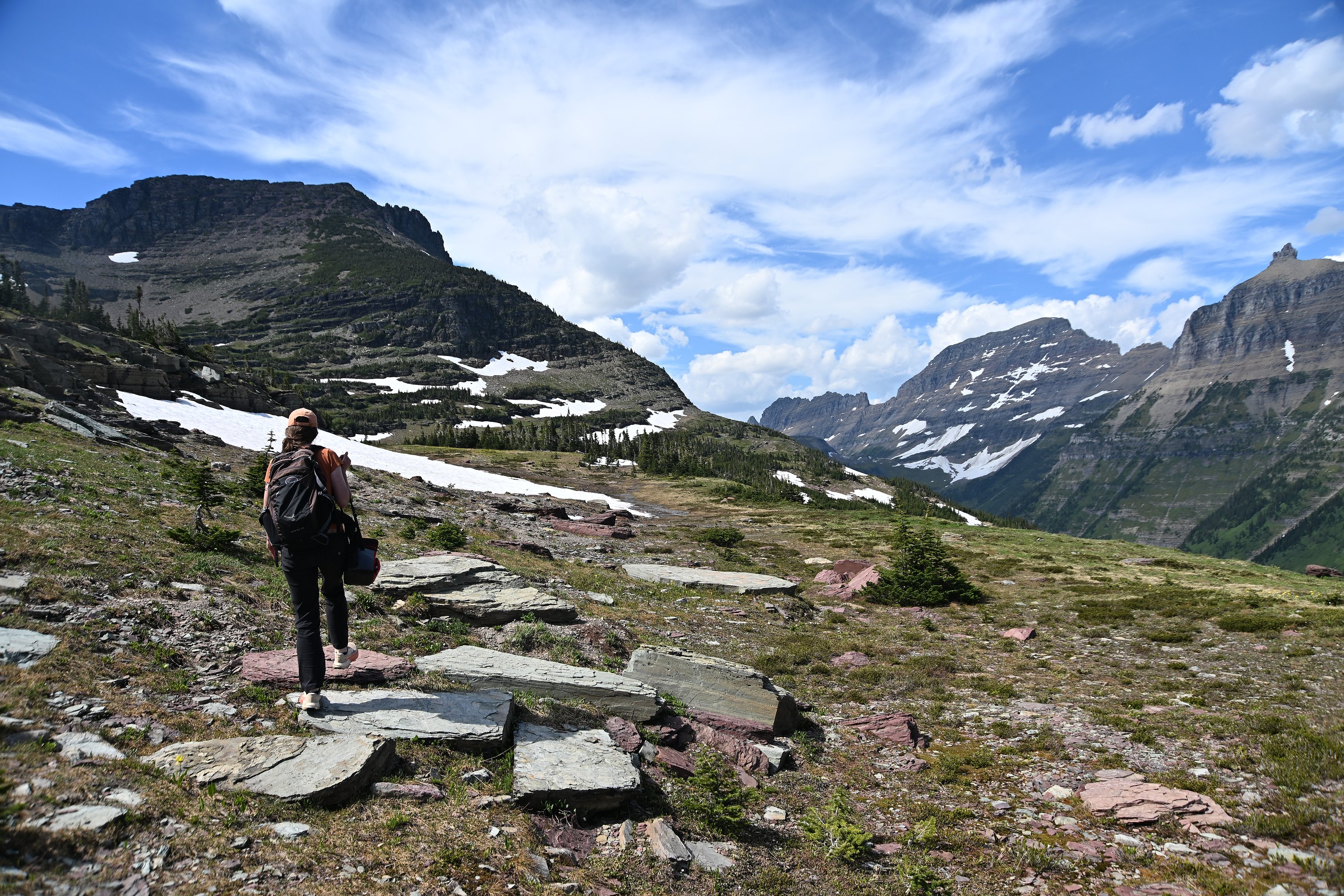 Ashley Beck searches for snow algae on Logan Pass in July 2026. (Hailey Smalley/Daily Inter Lake)
 Ashley Beck samples an early snow algal bloom on Logan Pass in July 2026. (Hailey Smalley/Daily Inter Lake)
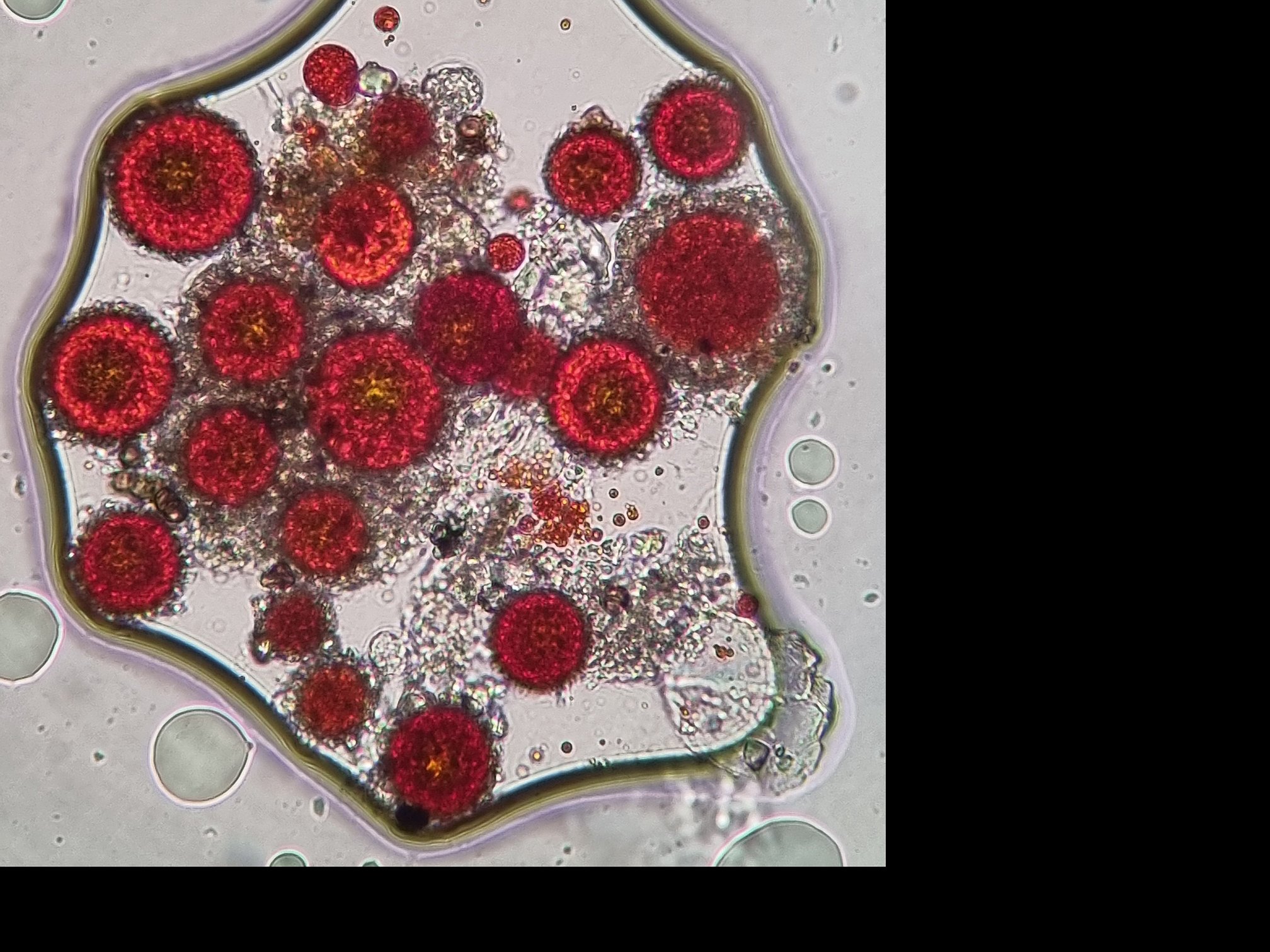 Red snow algal cells mingle with other microscopic critters in a snow sample. (Courtesy of Ashley Beck)
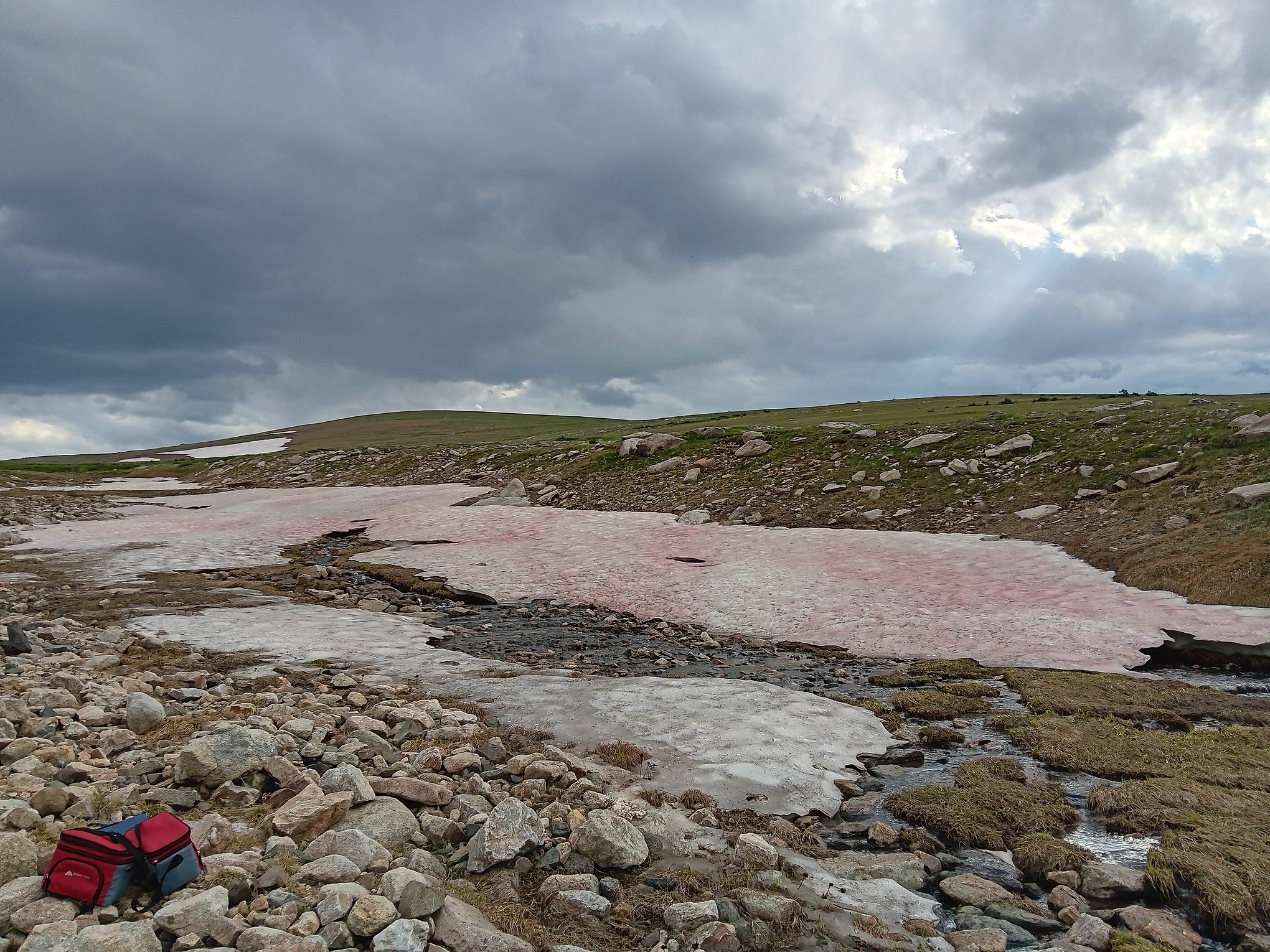 Snow algae blooms on top of a melting snow field. (Courtesy of Ashley Beck)
ARTICLES BY HAILEY SMALLEY

Trump stumps for Flint in Kalispell as Election Day nears
President Donald Trump, wearing a dark suit, red tie and red USA cap, ambled into the Majestic Valley Arena to the raucous roar of a crowd.

Flathead National Forest greenlights Swan Valley timber project
A 2,307-acre timber project is now under way in the Swan Valley.
Flathead National Forest greenlights Swan Valley timber project
A 2,307-acre timber project is now under way in the Swan Valley.