
Converting Equipment International creates cutting-edge tech for labeling industry
TAYLOR INMAN | Hagadone News Network | UPDATED 3 hours, 1 minute AGO
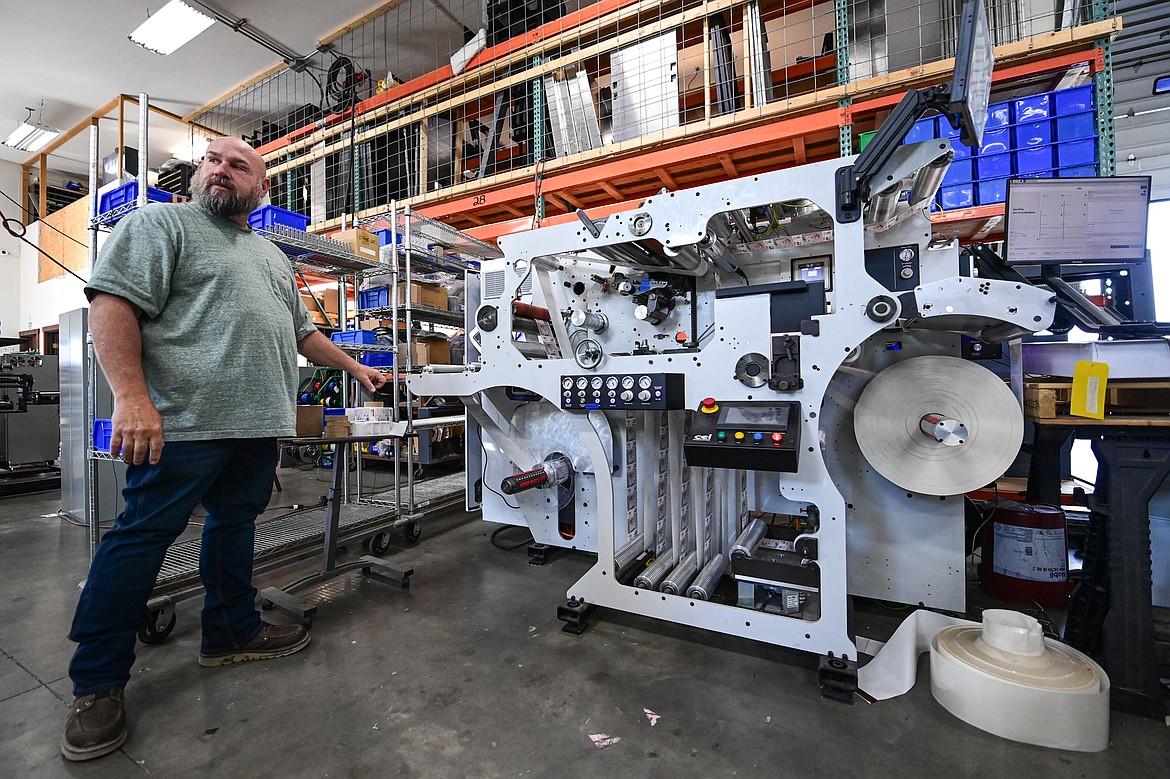
Engineering manager and manufacturing coordinator Daryl Hall speaks about an RFID (Radio Frequency Identification) tag printing machine during a tour of Converting Equipment International in Columbia Falls on Monday, Oct. 5. (Casey Kreider/Daily Inter Lake)
Casey Kreider
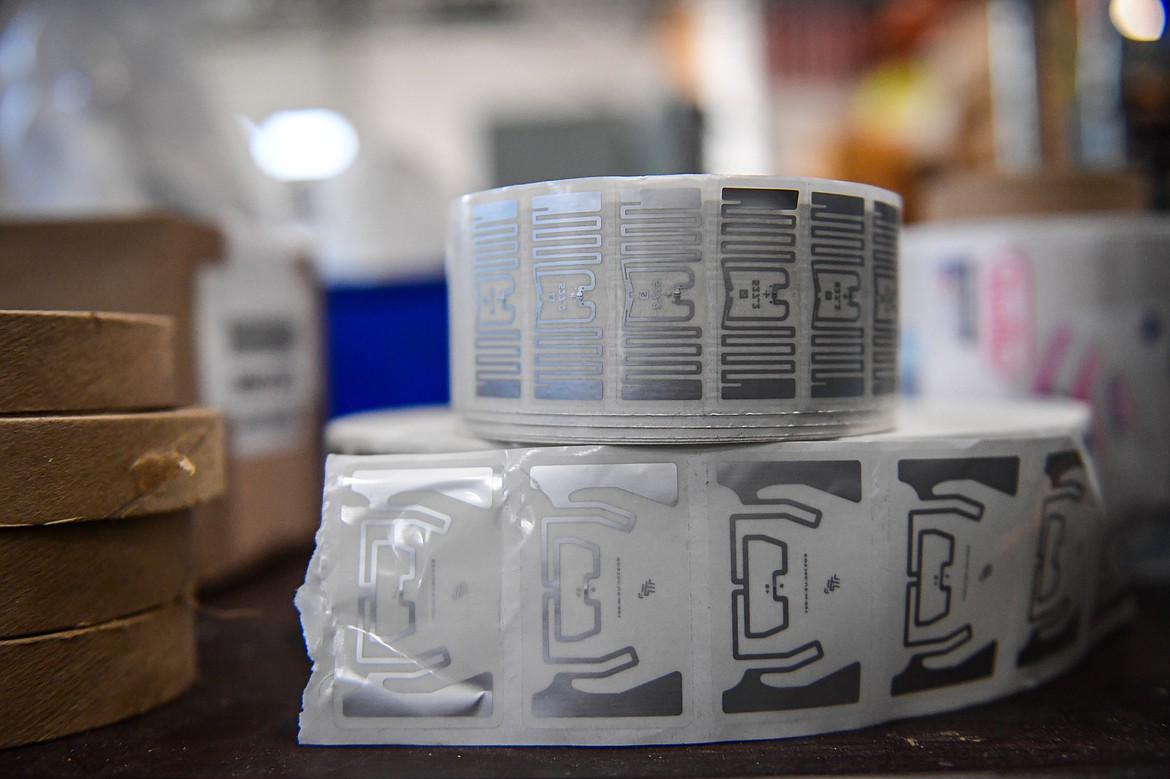
Rolls of RFID (Radio Frequency Identification) tags printed at Converting Equipment International in Columbia Falls on Monday, Oct. 5. (Casey Kreider/Daily Inter Lake)
Casey Kreider
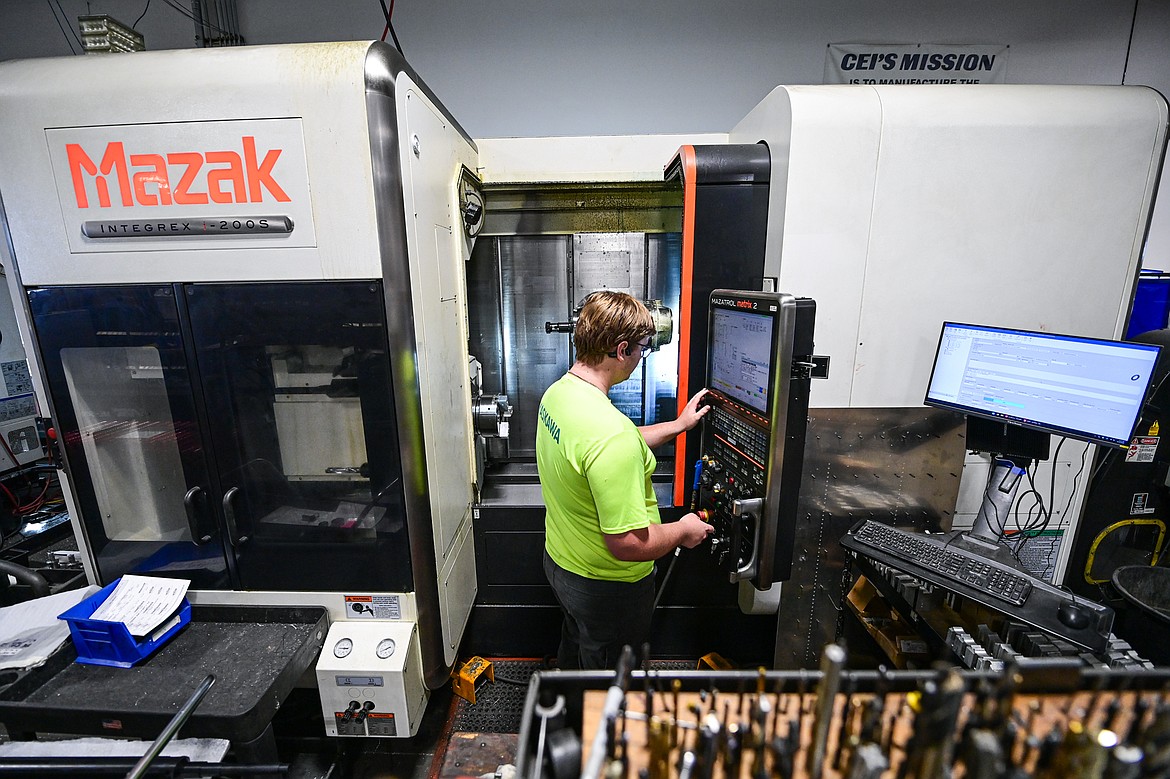
Programmer and machinist Rowan Scantlin works on a Mazak Integrex i-200S five-axis mill with lathe capabilities at Converting Equipment International on Monday, Oct. 5. (Casey Kreider/Daily Inter Lake)
Casey Kreider
REPORTER AND PODCAST HOST Taylor Inman covers Bigfork and the north shore of Flathead Lake for the Bigfork Eagle and the Daily Inter Lake. Her reporting focuses on local government, community issues and the people who shape life in Northwest Montana. Inman began her journalism career at Murray State University’s public radio newsroom and later reported for WKMS, where her work aired on National Public Radio. In addition to reporting, she hosts and contributes to Daily Inter Lake podcasts including News Now. Her work connects listeners and readers with the stories shaping communities across the Flathead Valley. IMPACT: Taylor’s work expands local journalism through both traditional reporting and digital storytelling. | October 11, 2026 12:00 AM
At Converting Equipment International, Daryl Hall pulls apart a pricing sticker to reveal an RFID tag — used to identify and track objects. Though the technology has been around for years, manufacturers haven’t figured out a cost-effective, fast way to apply the tag in price stickers.
As the engineering manager and manufacturing coordinator at CEI, Hall said the company knew when retail giant Walmart started requiring some products to have Radio-Frequency Identification or RFID tags, it was an opportunity to design a more efficient labeling automation.
It’s not easy to design a machine that can pull apart a label, apply the RFID tag, then put it back together quickly. But CEI has a new RDX machine that the company is confident can meet rising demand from customers.
“This was a proof-of-concept machine. Our new RDX is much more compact and has much higher performance. We can run these at 1,000 labels a minute,” Hall said.
The machines made by CEI in its Columbia Falls facility may not be familiar to most consumers, but the labels they create can be seen on products used every day — like stickers on fruit or wrappers on bottles. The company makes a variety of machines used in the labeling process, including inspector-slitter-rewinders and other high-speed equipment like die-cutters, laminators, digital finishers and hybrid presses.
Some of those machines were on display last week during a tour as part of the Discover Kalispell Chamber of Commerce's events marking Manufacturing Month. Facility tours continue during October and are offered with preregistration at kalispellchamber.com.
CEI Founder and Chief Financial Officer Karl Gross has decades of experience building machines for the labeling industry, which originated when he worked in maintenance at a packaging tape-turned-labeling company in the 1980s. After many years of working on those machines, he decided to pursue building them himself.
He’s seen many advancements in technology since then, but staying ahead of the curve means anticipating what customers will need in the coming years — much like their recent strides to accommodate RFID technology.
“Customers come to us and say ‘Hey, we need a machine to do X, Y and Z,’ And you start trying to develop it and come up with as close as you can, so it's just listening, hearing the customers' needs and understanding where the market's trying to go,” Gross said.
Gross started his first company in Southern California, which he later sold around the turn of the millennium. Then he and his son Simon founded CEI in 2002 after moving to Lewiston, California. Though CEI was doing well, they soon started thinking about moving elsewhere. There were increasing regulations and logistical challenges of being in a small mountain town. Being 45 minutes away from the next largest town (Redding, California) meant not having easy access to necessary materials, like sheet metal, nuts and bolts and powder coating.
But on a road trip that Simon took after a trade show, he and his wife visited some of her family who lived in Kalispell.
“So, as they drove into Kalispell, they saw a powder coat shop. They drove a little bit further and saw a place to buy nuts and bolts, and a little bit further was a place to buy metal. And as far as sheet metal, all he had to do was look it up and it was like 10 miles away,” Gross said.
All of these resources coupled with the Flathead Valley’s ample water supply made Kalispell a perfect candidate for CEI’s new home. And after working to find the right property with the help of John King at Three Rivers Bank, Gross said they were able to purchase the current property off U.S. 2 in 2015.
The17,000-square-foot facility in Columbia Falls staffs about 30 people and is where CEI makes all its labeling machines, which are largely sent around the U.S., but also to customers abroad.
In between the offices where engineers design new products and the machine shop where parts are crafted, workers who specialize in inventory are organizing for the next build. Carts with wheels have several bins tagged with a number corresponding to an order for a machine, and as inventory workers complete part lists, they send them off to be built.
The machines can cost between tens of thousands and hundreds of thousands of dollars, according to Hall. The I-MAX Slitters are the “bread and butter,” he said, and they sell around 40 per year.
The new RDX machine costs $250,000. After running it at a recent trade show, they got three orders and several more in queue, Hall noted.
Labeling can be a tricky expense for companies — Hall said it’s sometimes more cost-effective for companies to buy several smaller machines to do labeling, while larger corporations can afford much larger operations.
Despite all that effort, it’s part of the product that gets tossed first after a consumer uses it. Still, labeling is often what convinces someone to make a purchase.
“What's funny is all of that work, all that expense ... It’s the one thing you're going to throw in the trash, nobody uses it ever,” Hall said. “But if you go into a wine store, it's the only thing that matters while you're standing there, because you can't taste every bottle of wine. When you go to buy ketchup, you can’t taste every bottle. So, the only thing that sells you the product is the part you throw away.”
To learn more, visit slitandrewind.com.
Reporter Taylor Inman can be reached at 406-758-4440 or [email protected]. If you value local journalism, pledge your support at dailyinterlake.com/support.
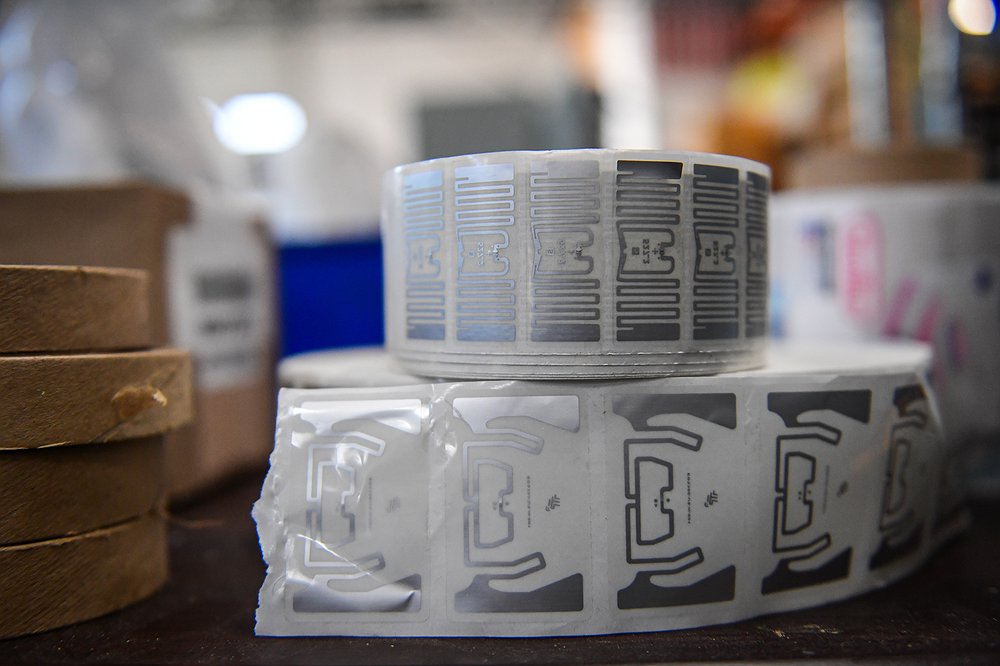 Rolls of RFID (Radio Frequency Identification) tags printed at Converting Equipment International in Columbia Falls on Monday, Oct. 5. (Casey Kreider/Daily Inter Lake)
Casey Kreider
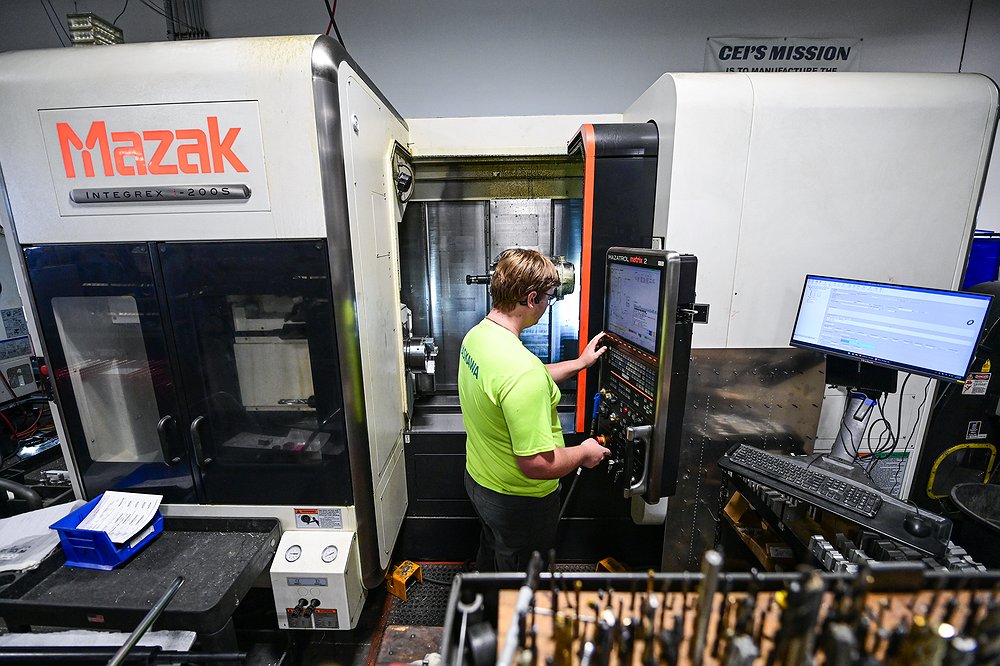 Programmer and machinist Rowan Scantlin works on a Mazak Integrex i-200S five-axis mill with lathe capabilities at Converting Equipment International on Monday, Oct. 5. (Casey Kreider/Daily Inter Lake)
Casey Kreider
ARTICLES BY TAYLOR INMAN
Converting Equipment International creates cutting-edge tech for labeling industry
As the engineering manager and manufacturing coordinator at CEI, Daryl Hall said the company knew when retail giant Walmart started requiring some products to have Radio-Frequency Identification or RFID tags, it was an opportunity to design a more efficient labeling automation.
Four-year grant aims to expand Flathead County's Crisis Assistance Team
Efforts to expand Flathead County's Crisis Assistance Team just got a roughly $2.5 million boost from the federal government.
Deep Dive: Outdoor Lab part two, bats and white-nose syndrome in Glacier
Daily Inter Lake reporter Hailey Smalley returns to talk with host Taylor Inman about the final story in her Outdoor Lab series - a night spent with Glacier National Park biologist Lisa Bate at her annual "Going Batty" event.