
Quality over quantity: Skin care manufacturers emphasize craftsmanship over volume
TAYLOR INMAN | Hagadone News Network | UPDATED 1 hour, 18 minutes AGO
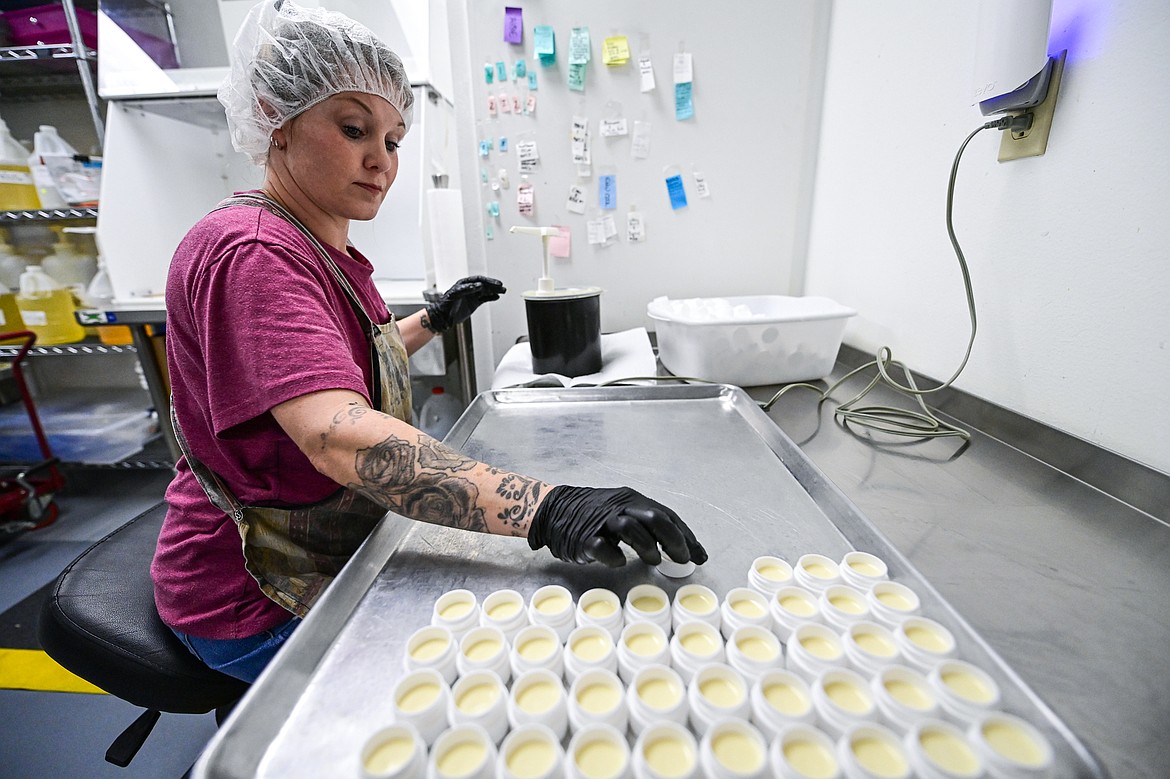
Amanda Garcia fills sample containers with Emutrients Sensitive Skin Cream at Montana Emu Ranch on Tuesday, Sept. 29. (Casey Kreider/Daily Inter Lake)
Casey Kreider
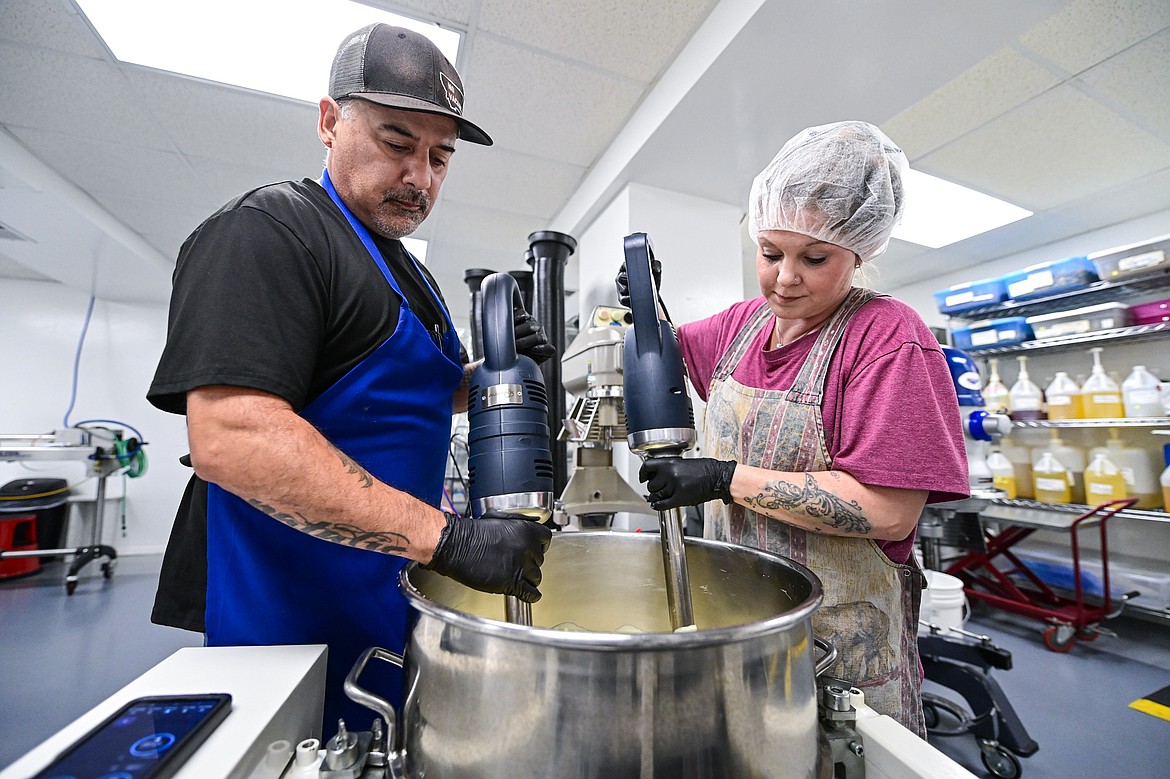
Jose and Amanda Garcia use food emulsifiers to mix the Emutrients Sensitive Skin Cream at Montana Emu Ranch on Tuesday, Sept. 29. (Casey Kreider/Daily Inter Lake)
Casey Kreider
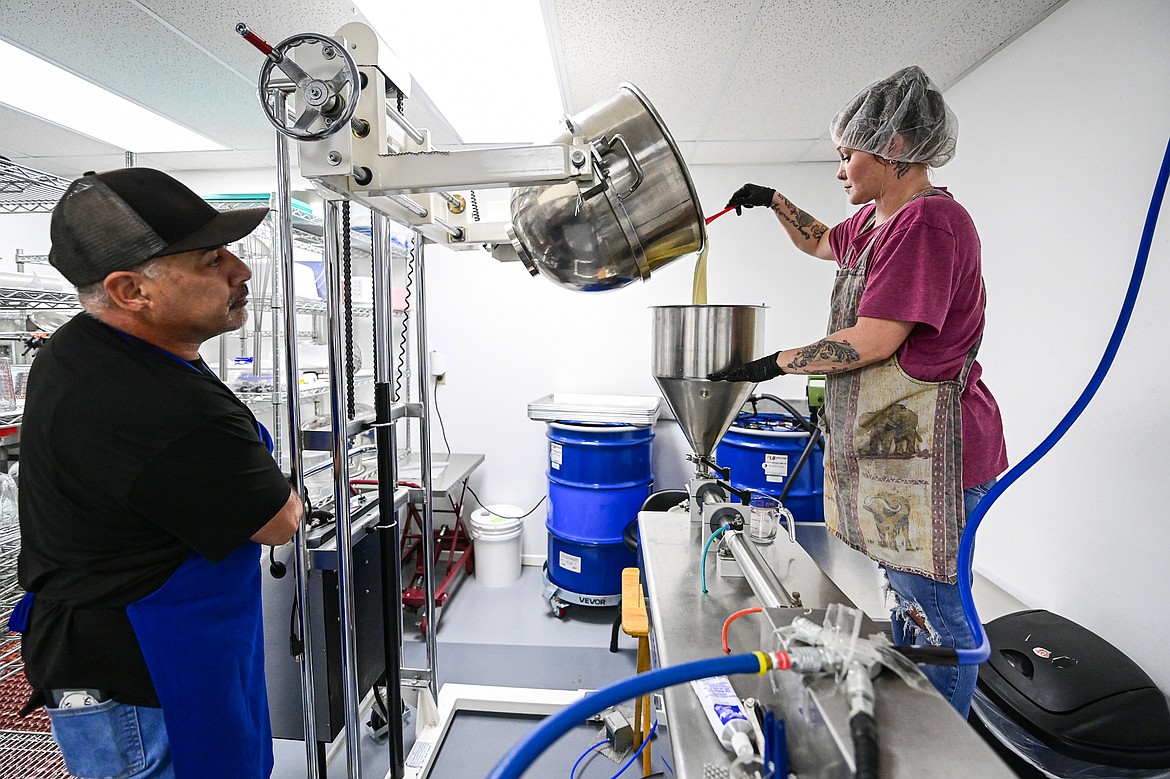
Jose and Amanda Garcia pour the Emutrients Sensitive Skin Cream into a hopper for weighing and packaging at Montana Emu Ranch on Tuesday, Sept. 29. (Casey Kreider/Daily Inter Lake)
Casey Kreider
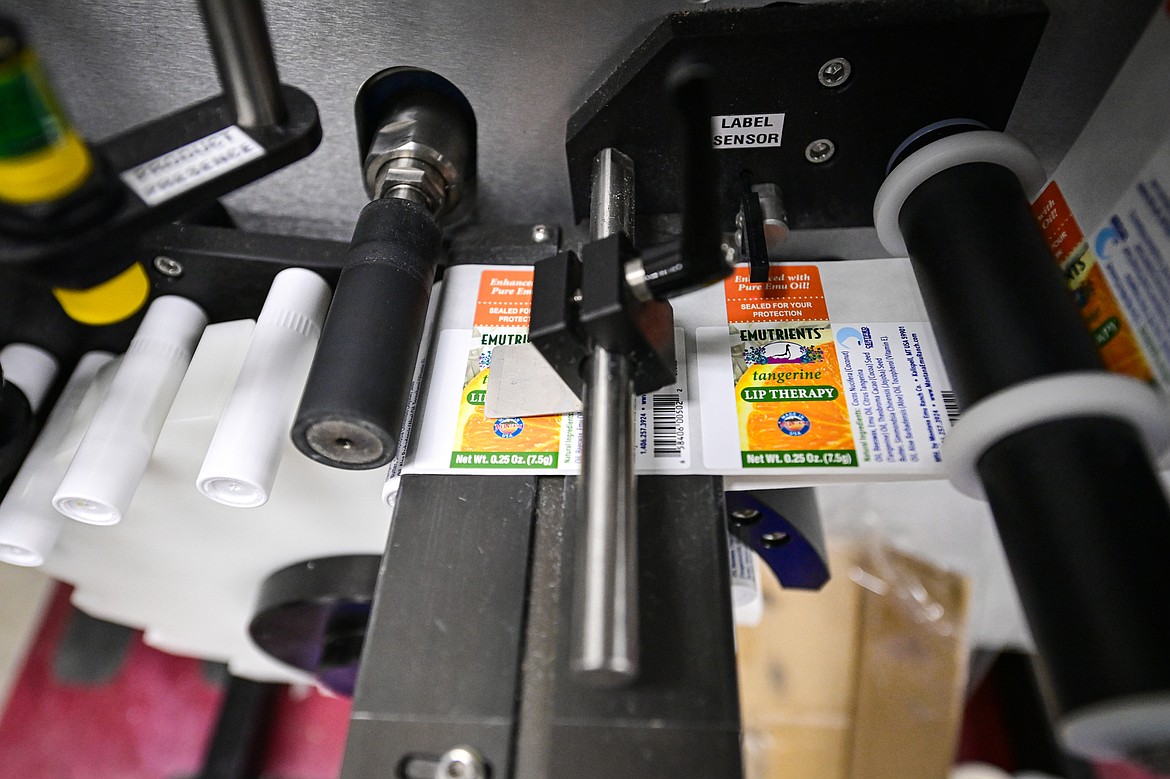
Labels for the Emutrients Lip Therapy lip balm are applied at Montana Emu Ranch on Tuesday, Sept. 29. (Casey Kreider/Daily Inter Lake)
Casey Kreider
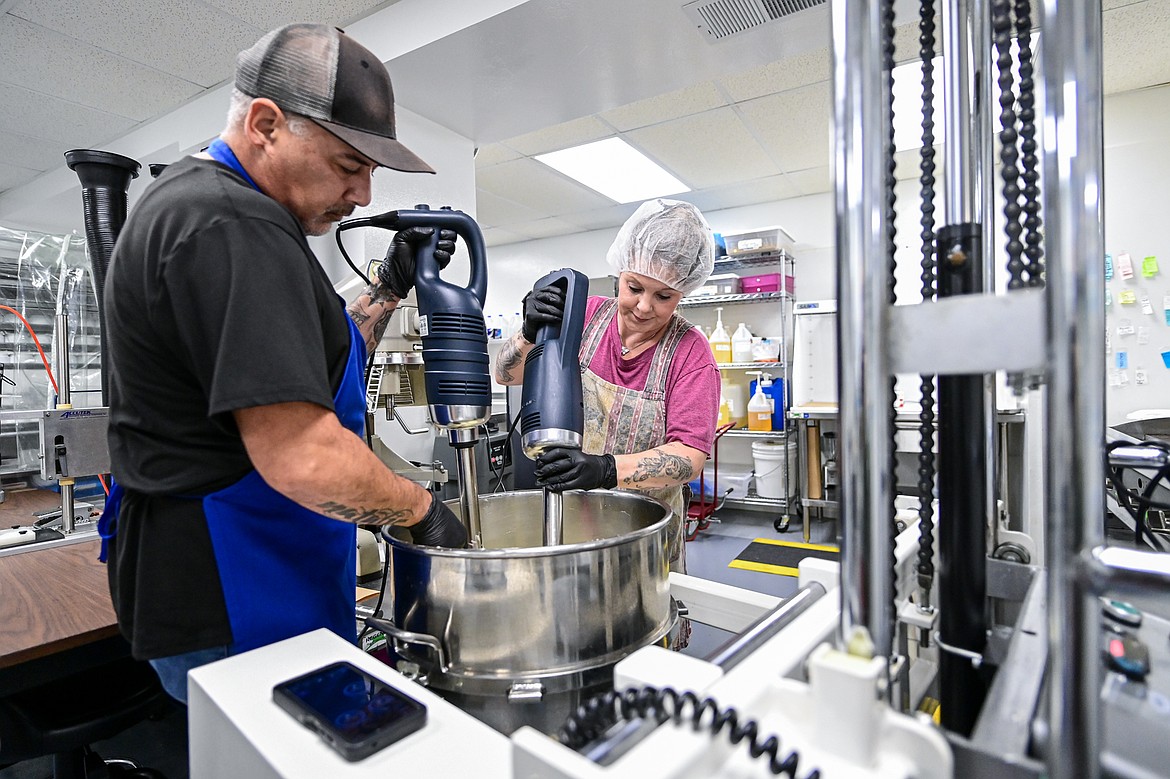
Jose and Amanda Garcia use food emulsifiers to mix the Emutrients Sensitive Skin Cream at Montana Emu Ranch on Tuesday, Sept. 29. (Casey Kreider/Daily Inter Lake)
Casey Kreider

A full grown emu at the Montana Emu Ranch west of Kalispell, on Wednesday, May 1, 2019. (Brenda Ahearn/Daily Inter Lake)

Month-old emu chicks are kept safe and warm inside the barn until they are a bit older and can join the larger flock at the Montana Emu Ranch west of Kalispell on Wednesday, May 1, 2019. Emus are the second largest bird in the world behind the ostrich.(Brenda Ahearn/Daily Inter Lake)
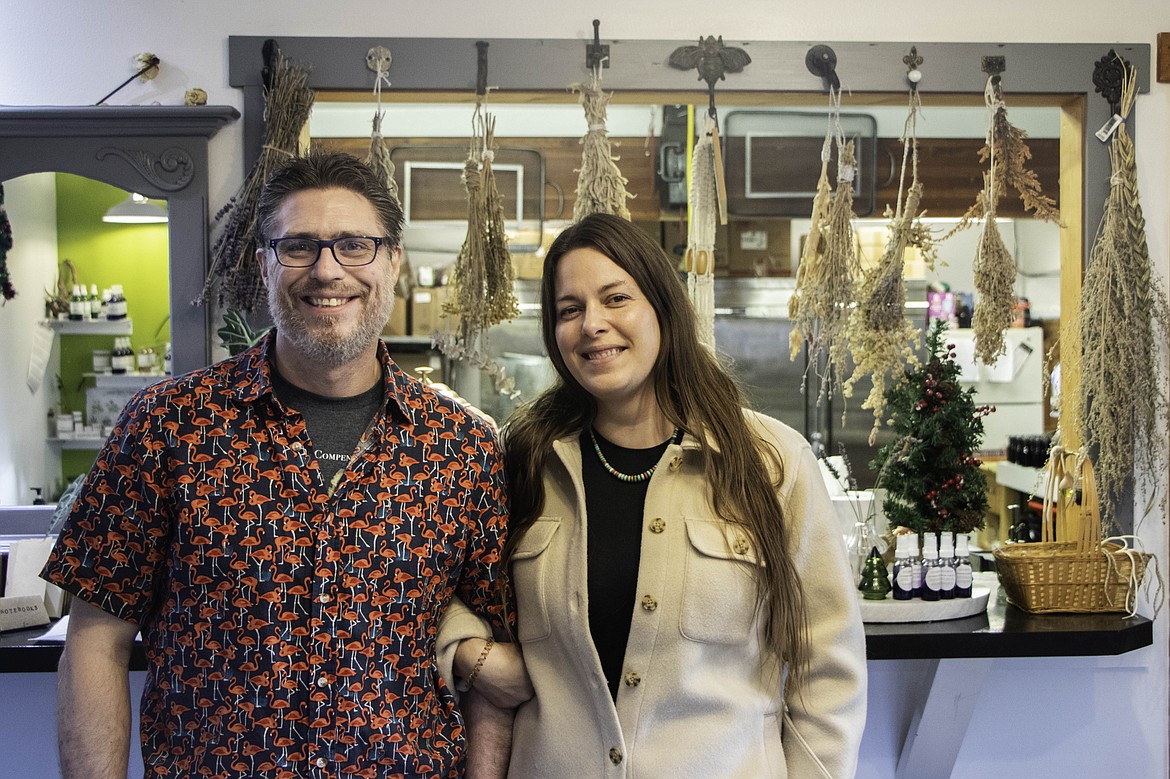
Michael and Maranda Johnson opened the Good Stuff Botanicals in Bigfork to create natural, organic skin care products. (Kate Heston/Daily Inter Lake)
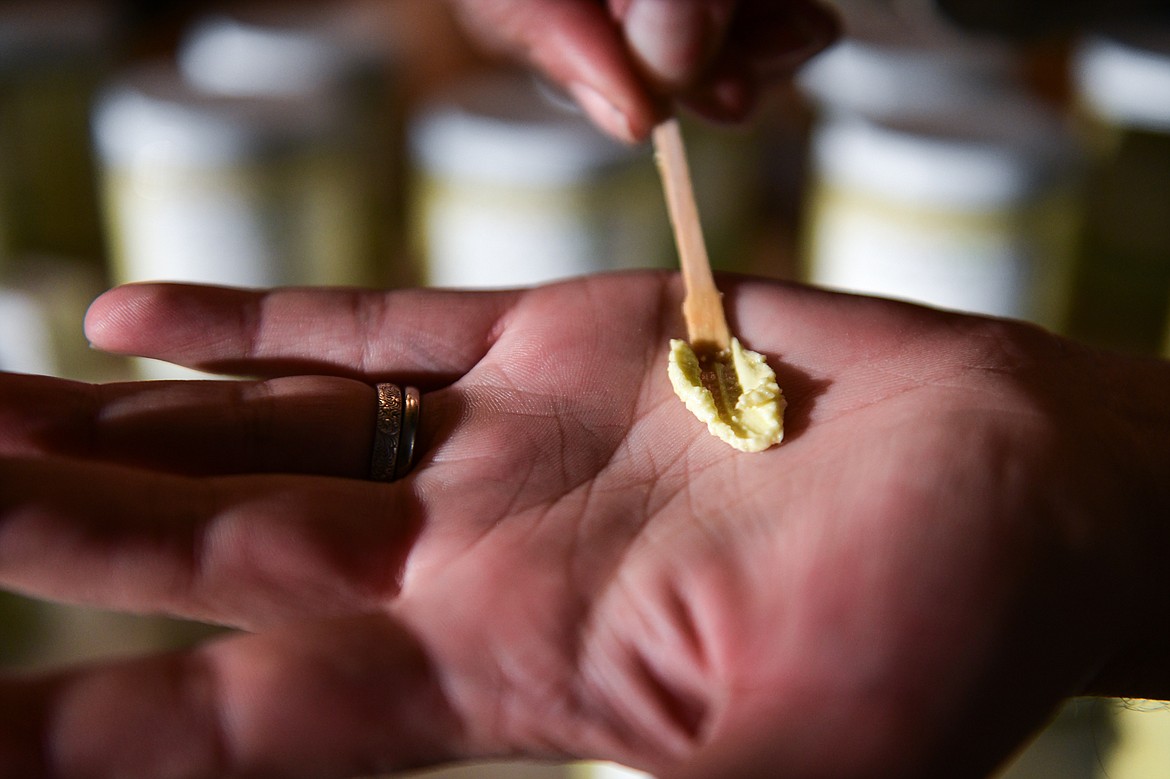
Gypsy Cream at The Good Stuff Botanicals in Bigfork on Tuesday, Nov. 21, 2023. (Casey Kreider/Daily Inter Lake)
Casey Kreider

The Good Stuff Botanicals in Bigfork on Tuesday, Nov. 21, 2023. (Casey Kreider/Daily Inter Lake)
Casey Kreider

Alpine Gold owner Megan Couser started her beef tallow based skin care brand after looking for a product that used USDA Certified Organic tallow. (photo courtesy of Alpine Gold)

Alpine Gold owner Megan Couser uses a special technique to fill jars so that the product don’t come in contact with plastic. (photo courtesy of Alpine Gold)
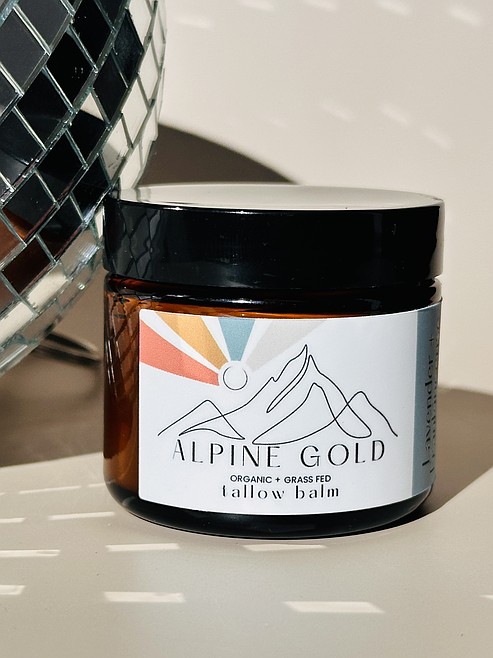
A jar of Alpine Gold, a beef tallow based skin care product. (photo courtesy of Alpine Gold)
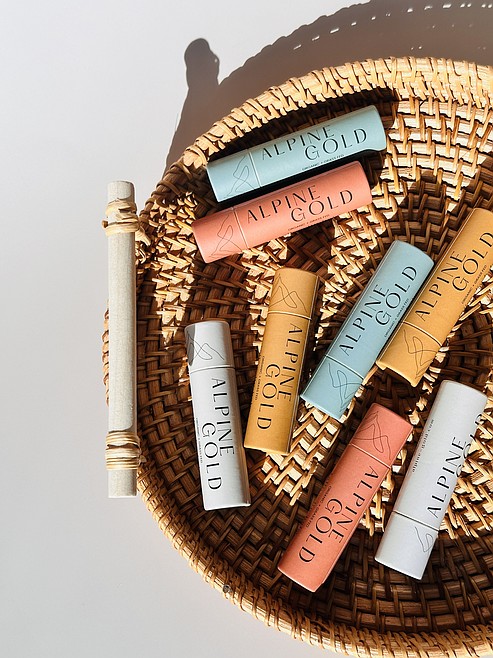
Alpine Gold lip balms made with organic beef tallow. (photo courtesy of Alpine Gold)
REPORTER AND PODCAST HOST Taylor Inman covers Bigfork and the north shore of Flathead Lake for the Bigfork Eagle and the Daily Inter Lake. Her reporting focuses on local government, community issues and the people who shape life in Northwest Montana. Inman began her journalism career at Murray State University’s public radio newsroom and later reported for WKMS, where her work aired on National Public Radio. In addition to reporting, she hosts and contributes to Daily Inter Lake podcasts including News Now. Her work connects listeners and readers with the stories shaping communities across the Flathead Valley. IMPACT: Taylor’s work expands local journalism through both traditional reporting and digital storytelling. | October 12, 2026 12:10 AM
Smells of herbs and spices hang in the air at Good Stuff Botanicals in Bigfork, and skin care products line a large wooden table in the middle of the store.
Co-owner Maranda Johnson pours a cup of tea — a blend made with mullein, chamomile, rosehip and lemon. In this cozy atmosphere, it’s no wonder she and co-owner MJ Johnson let out a small laugh when asked if they feel like manufacturers. “Manufacturer just sounds so cold and sterile and soulless. But, technically, yes,” Maranda said. “Maybe we’re tinkerers or concoctors?”
“We’re mad scientists,” said MJ.
October is designated as Manufacturing Month, according to the International Trade Administration.
The Montana Manufacturing Extension Center lists more than 900 manufacturing establishments in Flathead County, and $296 million in manufacturing wages were recorded in 2024 in Northwest Montana.
While Northwest Montana is home to many industries involved in manufacturing, a growing number of companies in the wellness industry are calling the region home — making everything from apparel to supplements and skincare products. Skin care companies have shown a desire to make holistic products that use organic ingredients, while keeping production processes transparent.
Sometimes prioritizing those values means going the extra mile to get the product they want, like at Montana Emu Ranch. Owner Karina Scholz said there used to be around 350 emus on her family’s historic ranch in the West Valley, but they are now raised on a farm near Helena.
Emu oil is the ingredient at the center of the business, which is made into skin care and gel capsules. It’s made from fat on an emu, harvested after the animal has been processed. Once processed, the oil is sent off for refinement and testing.
The fat is sent to a refinement plant in Tennessee that Scholz describes as a “clean refinery that doesn’t add chemicals” to the process.
“It's hard to find some of those refineries, because it's not the cheapest way to go for sure. But we don't want that — that’s not the point of it,” Scholz said.
She purchased the business this spring after learning the ropes from her aunt and uncle over the last several years. Scholz is deeply invested in the mission started by Don and Penni Collins, who based their hobby-turned business on the benefits of emu oil. Focused on the production of many different skincare and emu oil products, she made the decision to move the birds to Helena.
In the small production facility, located in a red building on the property, the team makes soaps, salves, lip balms and face creams. It’s hard to tell by the size of the operation, but the company makes 200,000 products each year.
Scholz said they are working on developing a couple of new products, but that process can take at least a year. Testing must be done on all ingredients and once the product is ready to go, a wait period will reveal how stable it is — because working with all organic ingredients means a shorter shelf life.
“Natural products mold faster. They don't have extra preservatives in them,” she said.
As part of quality control, the product is stored in a cool, dark place for at least six months before it can be labeled and made in batches.
SHELF LIFE is one challenge in selling organic products. MJ with The Good Stuff Botanicals said it poses a logistical limitation when it comes to potentially getting products into bigger stores.
“Our stuff can't sit in a warehouse for six months before it's shipped off to somewhere in Connecticut or wherever, where it will then sit on the shelf for another six months before somebody buys it and expects a year-long shelf life out of it,” he said.
Although that aspect of the business allows them to work particularly well with other small stores, Maranda added. The Good Stuff currently sells products in more than 60 stores nationwide.
Despite the success, Maranda wants to keep The Good Stuff grounded. She started making salves to help with MJ’s psoriasis in 2012, which would eventually turn into their best-selling product, Gypsy Cream.
Sustainability is at the core of the business, as they get many of their ingredients through foraging.
“What we can't find here, we build trusted friendships with people all over the world that are just as passionate about our planet as we are,” a post on their website reads.
Maranda relied on family recipes as the basis for many of her early balms and salves. Eventually, the couple started selling them at local farmers' markets, where they would hear about different ailments from people in the community — a tradition they continue today in the Bigfork storefront.
But due to FDA regulations, they can’t incorporate customer testimonials into their marketing for any product that helped with a medical issue, like a skin cream for rosacea.
“People can write a review on our website, but if we share that review, it's marketing,” Maranda said.
Scholz at Montana Emu Ranch said the company had to change labeling in 2017 after the FDA found some of the product descriptions to be advertising for medical use. The facility closed down while they amended products like Emugency Aid Spray, Deep Muscle Rub, Hot Spice and Ice and Herbal Wound Spray.
“The claims on your website and in your brochures establish that these products are drugs because they are intended for use in the cure, mitigation, treatment, or prevention of disease. As explained further below, introducing or delivering these products for introduction into interstate commerce for such uses violates the Act,” reads a warning letter from the FDA sent to Montana Emu Ranch in April 2017.
They are even cautious about reviews on their website following the incident with the federal agency, Scholz said.
“I have to read through them and make sure there aren’t terms that the FDA doesn’t like. If that’s the case, I have to amend the review or use an asterisk and hope people can get the clue. I hate having to change people's testimonies. It doesn't seem right to me,” Scholz said.
Even though some FDA regulations around labeling and marketing can cause some challenges, MJ said it’s good to have a regulatory body with standards for skin care products.
“But also, don't you want your skin care, which your body absorbs 60% of to be made in a commercial kitchen? And if someone says this product helps with rosacea, shouldn’t it be clinically proven?” MJ said. “But without somebody coming in and throwing $1,000,000 for clinical trials and investments ... Moving up the ladder is hard.”
Industry publication Nutrition Business Journal points to rising consumer demand, a mainstream focus on health after the Covid-19 pandemic, the “Make America Healthy Again” movement from President Donald Trump’s administration and the rising cost of healthcare as reasons the wellness industry is growing.
A 2026 study from Global Wellness Institute shows rapid growth in nearly all sectors of the wellness industry, which is valued around $2.1 trillion, according to the nonprofit. With “traditional and complementary medicine" making up 10% of the fastest-growing sectors.
AS SOMEONE who just started her business, a beef-tallow-based skin care brand called Alpine Gold, Megan Couser said she wishes the FDA had more tailored regulations for skin care.
“The stuff you put on your skin is entering your body, so I wish the standards were different,” she said.
Creating a 100% organic, grass-fed tallow has always been the goal since Couser started making skin care for herself. She became interested in anti-aging skin care around 2021, investing in a six-step routine that cost around $300. It didn’t do anything for her, so she started looking at alternatives.
She began learning about beef tallow, which has been used as a moisturizer across cultures throughout history. However, she couldn’t find a skin care company that used U.S. Department of Agriculture Certified Organic tallow. As a chemistry teacher, Couser felt drawn to figuring out the process herself.
She partnered with a ranch making organic tallow out of Colorado and has been making lotions, balms and oil cleansers since.
“The moisturizer that I make with beef tallow has two, maybe three ingredients. All of the ingredients are food-based. They're all things that your body recognizes and can utilize well. Sourcing ingredients is a huge priority, I'm trying to source the highest quality ingredients possible,” Couser said.
Couser sells products online and in stores across the Flathead Valley, as well as Billings and Bozeman.
She makes the products in her own kitchen and asks her family to leave the house for a couple of days each month to churn out about 150 products per batch.
“I may find a production facility in the future, but I think as a business like this grows, there can be some issues in manufacturing in larger volumes. Just because all of these ingredients are so natural and I don't use any emulsifiers or deodorizers or stabilizers,” Couser said.
She enjoys the “chemistry piece” of it, by figuring out exactly how all of the ingredients will best work together and how it will be processed to get the nicest product.
The popularity of all-natural products makes sense to Couser. She believes people are wanting to come back to products that “feel real.”
“I do think that these smaller handmade brands hold a lot of value for people, because so much care and attention went into the details of making it,” Couser said.
Reporter Taylor Inman can be reached at 406-758-4440 or [email protected]. If you value local journalism, pledge your support at dailyinterlake.com/support.
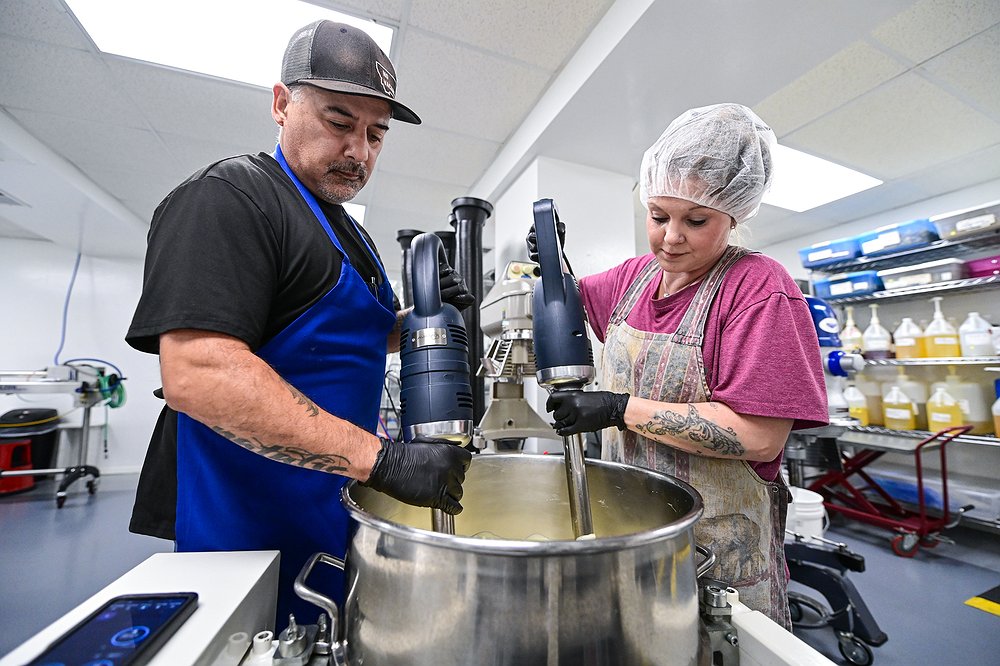 Jose and Amanda Garcia use food emulsifiers to mix the Emutrients Sensitive Skin Cream at Montana Emu Ranch on Tuesday, Sept. 29. (Casey Kreider/Daily Inter Lake)
Casey Kreider
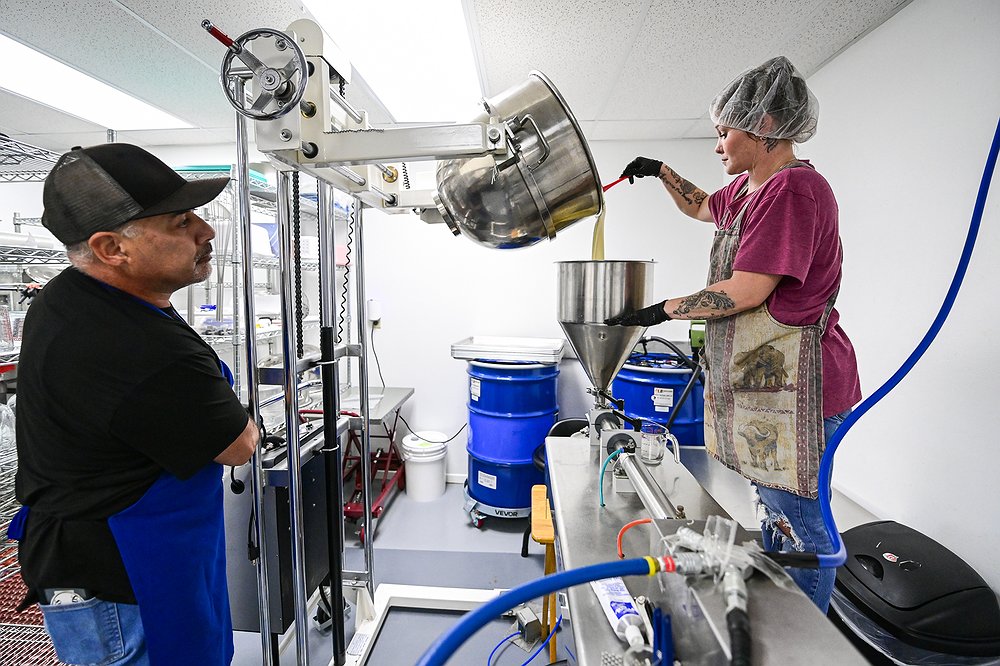 Jose and Amanda Garcia pour the Emutrients Sensitive Skin Cream into a hopper for weighing and packaging at Montana Emu Ranch on Tuesday, Sept. 29. (Casey Kreider/Daily Inter Lake)
Casey Kreider
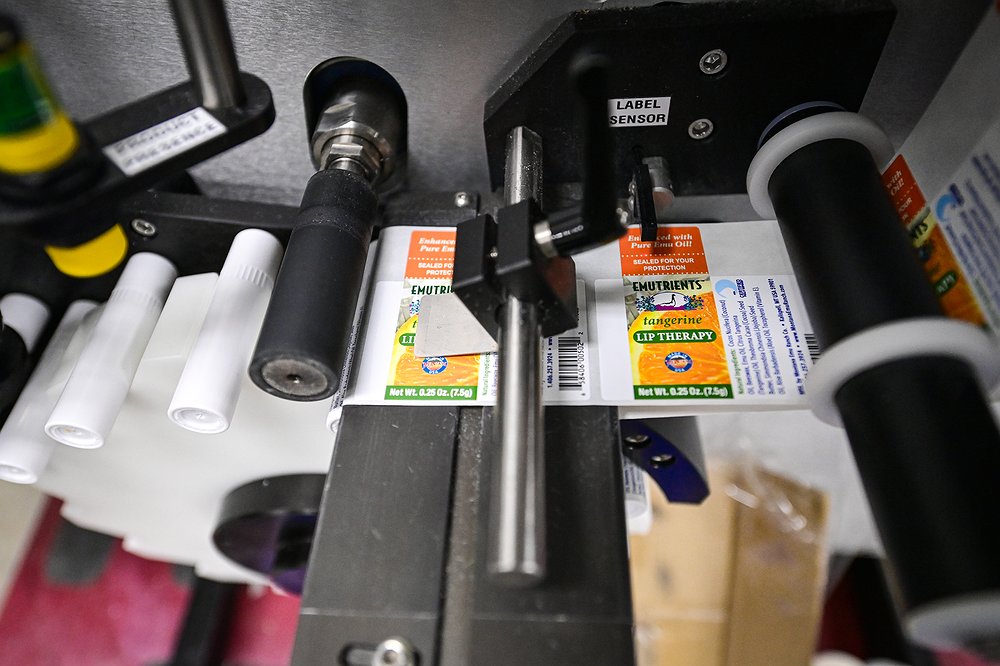 Labels for the Emutrients Lip Therapy lip balm are applied at Montana Emu Ranch on Tuesday, Sept. 29. (Casey Kreider/Daily Inter Lake)
Casey Kreider
 A full grown emu at the Montana Emu Ranch west of Kalispell, on Wednesday, May 1, 2019. (Brenda Ahearn/Daily Inter Lake)
 Month-old emu chicks are kept safe and warm inside the barn until they are a bit older and can join the larger flock at the Montana Emu Ranch west of Kalispell on Wednesday, May 1, 2019. Emus are the second largest bird in the world behind the ostrich.(Brenda Ahearn/Daily Inter Lake)
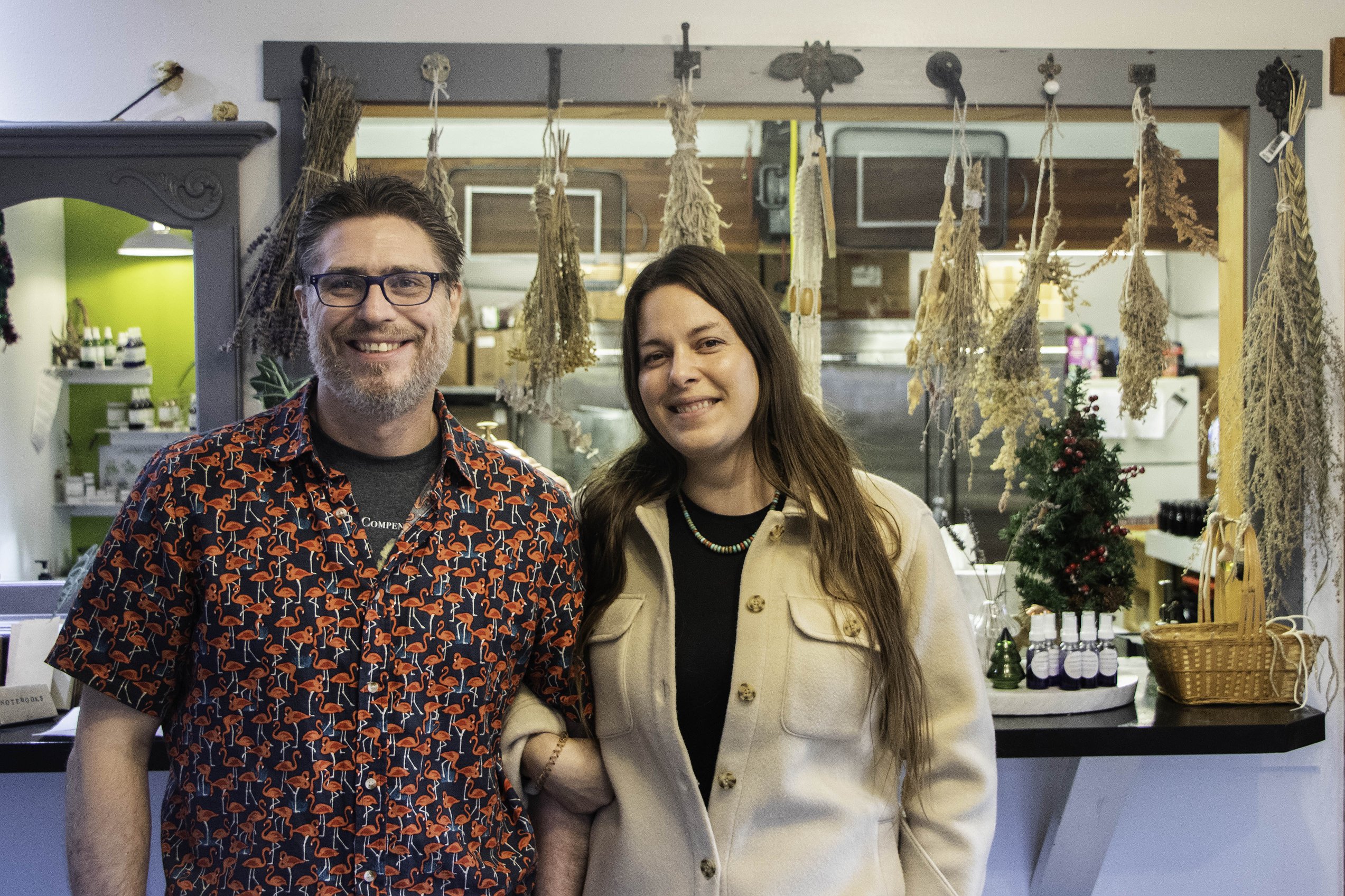 Michael and Maranda Johnson opened the Good Stuff Botanicals in Bigfork to create natural, organic skin care products. (Kate Heston/Daily Inter Lake)
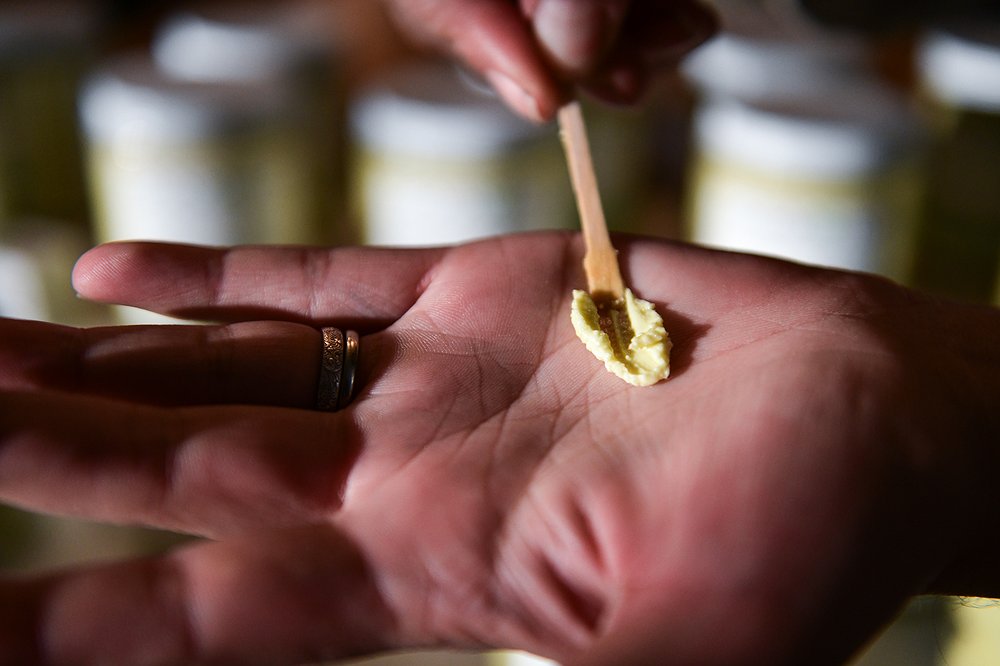 Gypsy Cream at The Good Stuff Botanicals in Bigfork on Tuesday, Nov. 21. (Casey Kreider/Daily Inter Lake)
Casey Kreider
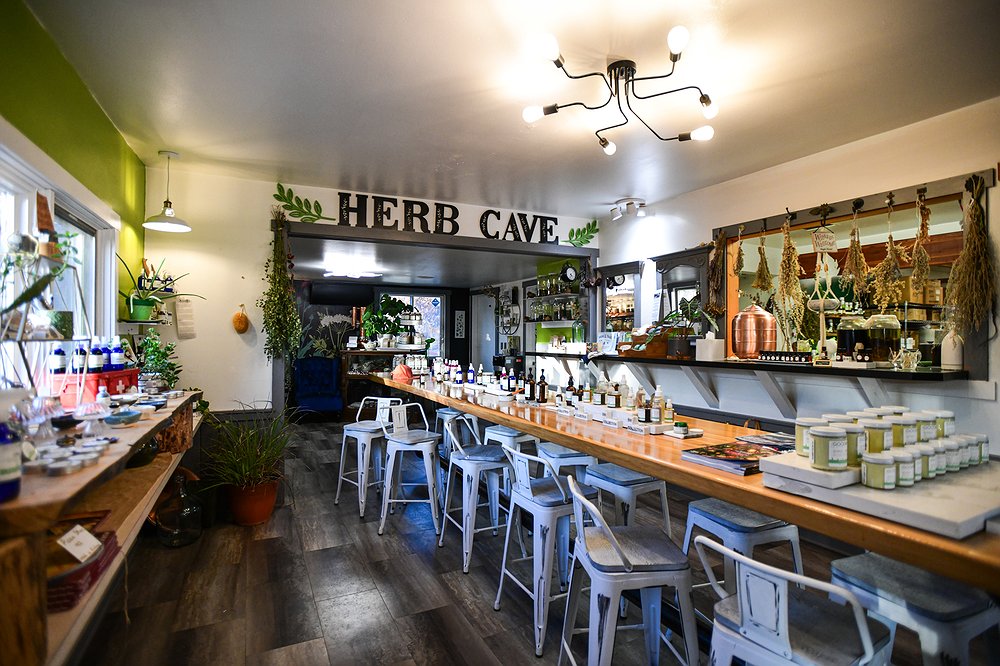 The Good Stuff Botanicals in Bigfork on Tuesday, Nov. 21. (Casey Kreider/Daily Inter Lake)
Casey Kreider
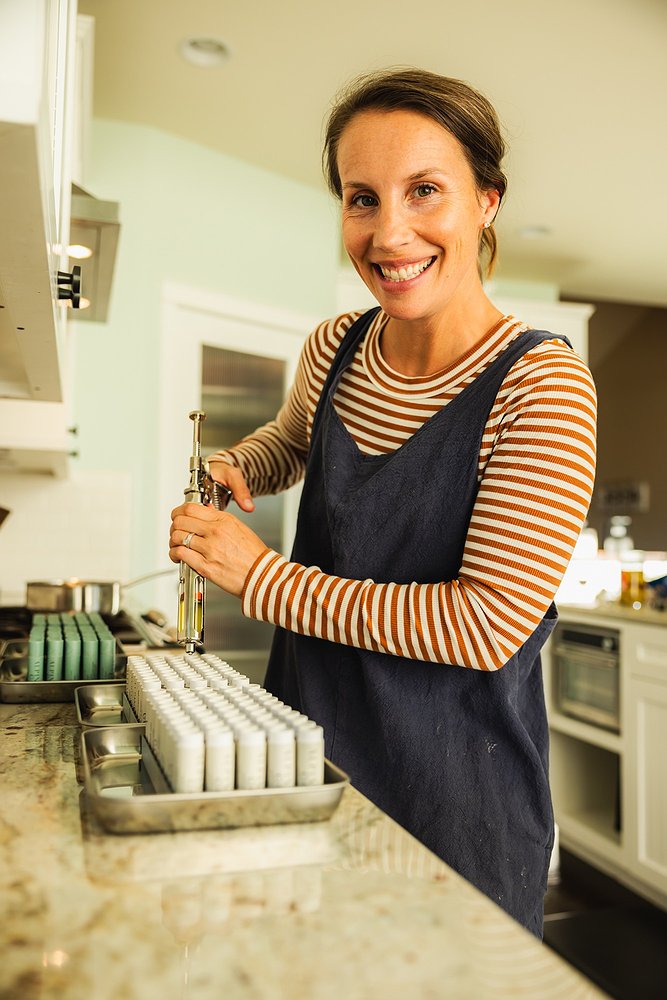 Alpine Gold owner Megan Couser started her beef tallow based skin care brand after looking for a product that used USDA Certified Organic tallow. (photo courtesy of Alpine Gold)
 Alpine Gold owner Megan Couser uses a special technique to fill jars so that the product don’t come in contact with plastic. (photo courtesy of Alpine Gold)
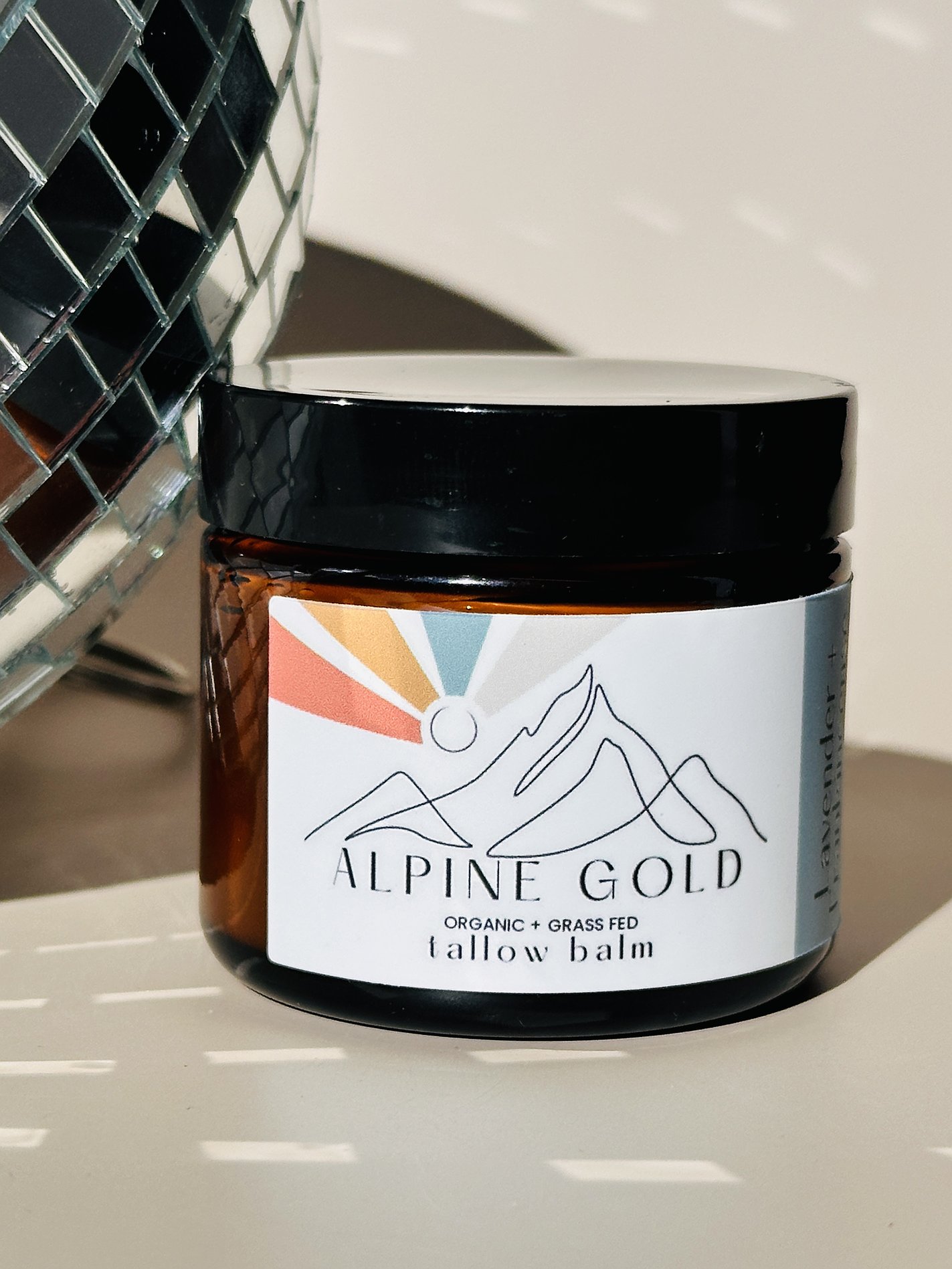 A jar of Alpine Gold, a beef tallow based skin care product. (photo courtesy of Alpine Gold)
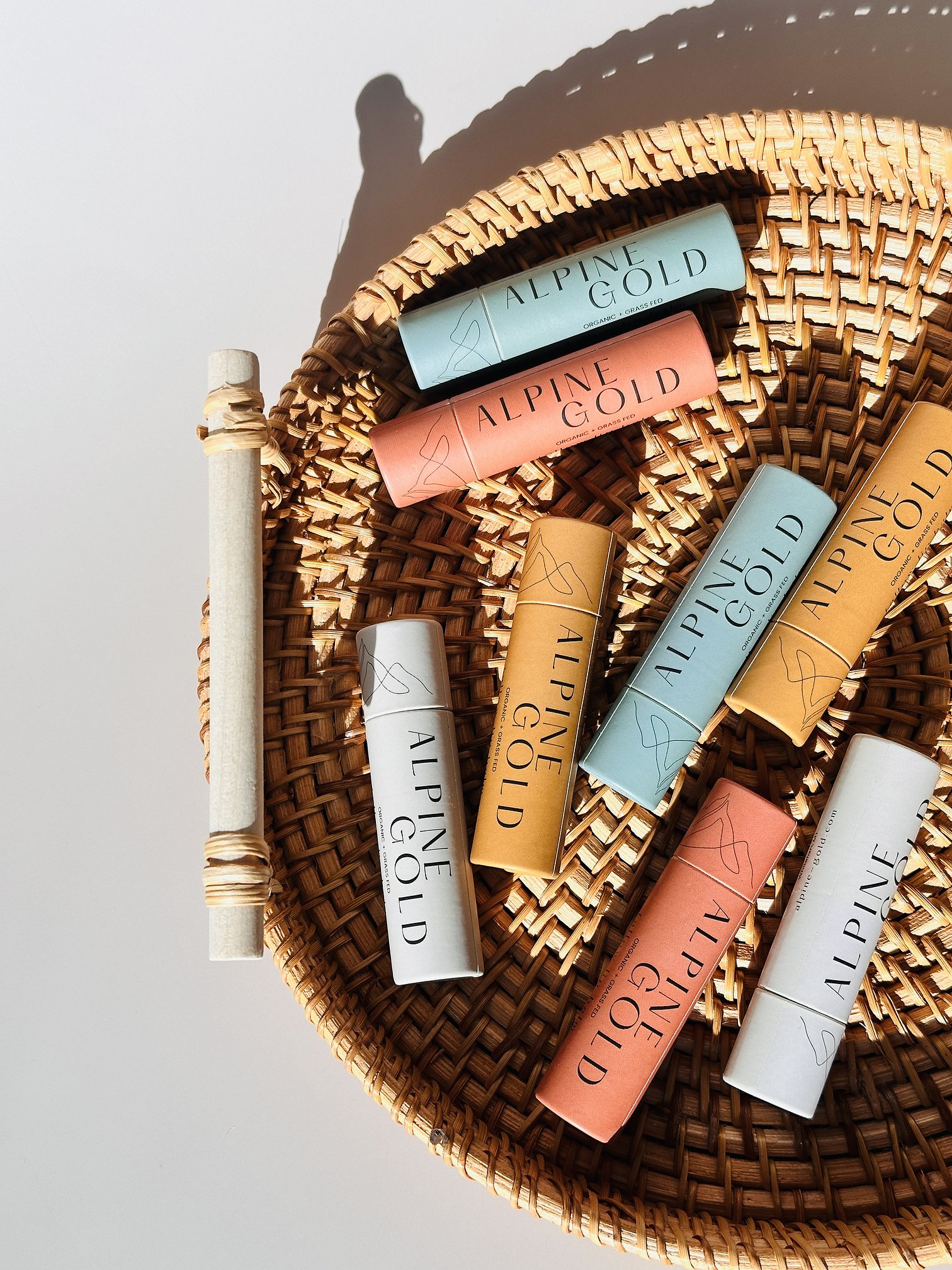 Alpine Gold lip balms made with organic beef tallow. (photo courtesy of Alpine Gold)
ARTICLES BY TAYLOR INMAN

Converting Equipment International creates cutting-edge tech for labeling industry
As the engineering manager and manufacturing coordinator at CEI, Daryl Hall said the company knew when retail giant Walmart started requiring some products to have Radio-Frequency Identification or RFID tags, it was an opportunity to design a more efficient labeling automation.

Four-year grant aims to expand Flathead County's Crisis Assistance Team
Efforts to expand Flathead County's Crisis Assistance Team just got a roughly $2.5 million boost from the federal government.

Growth for Montana Global Health is an easy pill to swallow
It all begins when a client comes forward with an idea for a product. The company sources all of the raw materials, which are tested, then measured and mixed. From there, the product starts to take shape — powders are put into capsules, and drinks are bottled.