
Mountain goat study results in changes to rivers plan
CHRIS PETERSON | Hagadone News Network | UPDATED 2 hours, 16 minutes AGO
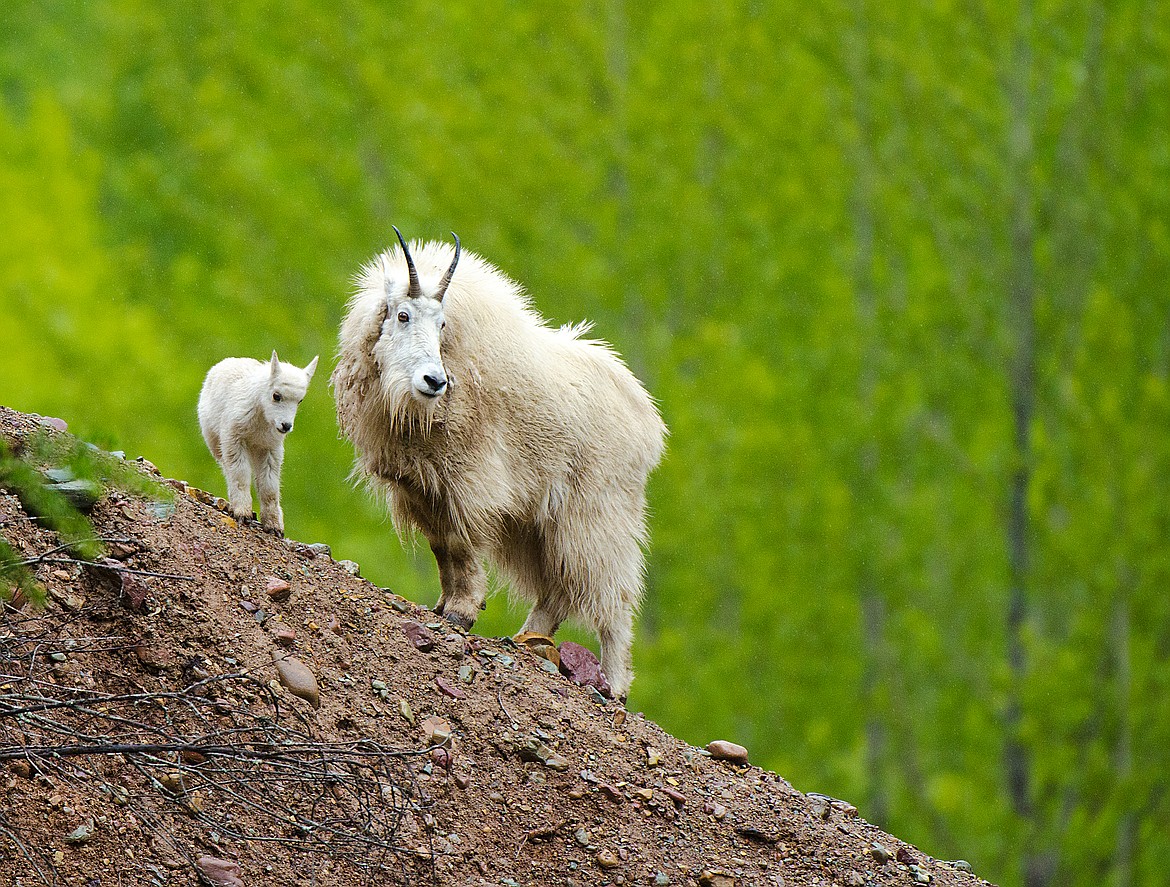
A nanny and her kid at the Goat Lick in this file photo in Glacier National Park.
Chris Peterson is the editor of the Hungry Horse News. He covers Columbia Falls, the Canyon, Glacier National Park and the Bob Marshall Wilderness. All told, about 4 million acres of the best parts of the planet. He can be reached at [email protected] or 406-892-2151. | October 14, 2026 7:10 AM
Glacier National Park has been examining the movements of mountain goats and whether recreational use of the Middle Fork of the Flathead River is having an impact on them.
The park over the past two years has now GPS collared 20 goats in the area near the Goat Lick off U.S. Highway 2, where the iconic creatures are drawn to the mineral-rich cliffs along the river, noted Mark Biel, natural resources program manager for Glacier.
Biel was part of a “Glacier Conversations” talk hosted by the Glacier National Park Conservancy last week. The Conservancy, in part, has funded the study.
The area is unique because it’s high use habitat for goats and for rafters alike. While current rafting regulations require that floaters not get out of their rafts to photograph or observe the goats, some people do, and they also often have dogs as well.
Disturbing the goats at the lick can cause problems for the animals, as nannies are often nursing kids and they need to replenish vital minerals they’ve lost during the winter from eating cured and dried vegetation for months.
Coupled with childbirth, the animals are salt and mineral deficient, so they’re attracted to the soil minerals exposed by the constantly eroding river banks. In some cases, humans have been displacing the goats for four to six hours at a time.
Biel and graduate student Eric Boyd, a Columbia Falls native, are heading up the study with support from a host of volunteers and other agencies.
By tracking the goats they’ve learned that they use a much longer length of the river corridor than previously thought — a stretch from the Staircase Rapids to Split Rock.
The study has already resulted in management actions. The Comprehensive River Management plan, which is expected to be finalized soon, will prohibit rafters from stopping in the longer section between the above-mentioned landmarks, Biel Noted.
The study has also resulted in more insights into goat behavior, as it’s the one population that roams from Glacier to the Flathead National Forest and the Great Bear Wilderness.
Many of the goats, it turns out, have summer range near Great Northern Mountain and travel long distances in largely wooded areas to reach the mountain that towers over the Hungry Horse Reservoir.
It’s just one of several wildlife studies funded in whole or in part by the Conservancy over the years. Previous studies have looked at wolverines, harlequin ducks, fishers and in 2027, Glacier will study its beaver population. It also hopes to work with the Blackfeet Tribe to establish bison populations in Glacier.
The tribe previously released bison near the park’s border near Chief Mountain, but they didn’t stay.
Biel said the goat study wouldn’t have been possible without Conservancy support.
ARTICLES BY CHRIS PETERSON
Mountain goat study results in changes to rivers plan
Glacier National Park has been examining the movements of mountain goats and whether recreational use of the Middle Fork of the Flathead River is having an impact on them.
Man faces charges for shooting incident
A Hungry Horse man has been charged with allegedly shooting at a neighbor on Sept. 29.
Council has good-natured debate over rocks
As the first phase of the city’s Gateway to Glacier Safety and Mobility project comes to fruition this fall, the city council last week had a good-natured debate on whether the resulting boulevards on Seventh Street West and Fourth Avenue West should be rocks or grass.