
Bears stock up for winter in feeding frenzy
KATIE MIHALIK | Hagadone News Network | UPDATED 2 days AGO
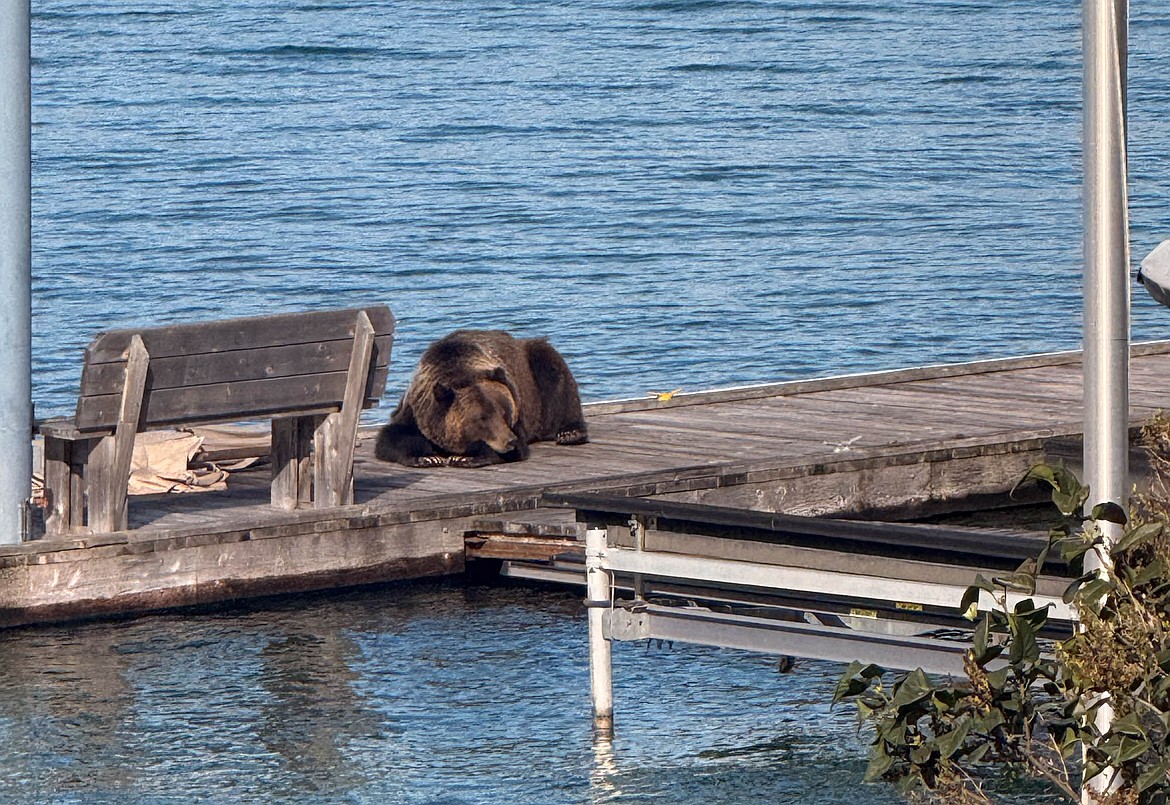
A grizzly bear was caught taking a nap earlier this fall on a Polson dock. (Payton Adams/CSKT Wildlife Program)
The cold winds of the lake have blown the orange and yellow leaves around Polson Bay, and with the fall breeze come two hungry bears sniffing out their next meal. These two bears, who visited Polson earlier this fall, are just like the others roaming around, just looking for a good snack or a nap on the dock.
Bears in town this time of year are a sign of Hyperphagia — a time when bears stuff as much food as they can into their fat reserves before hibernation. Once those summer berries are eaten, they’re down the mountain and into the valley.
Following recent bear sightings in Polson, wildlife officials are reminding residents to secure existing attractants and informing them about new ones. According to Payton Adams, a wildlife biologist at the Confederated Salish and Kootenai Wildlife Management Program, bears can come down early if the summer berry crop isn’t as good and start feasting on attractants such as fruit trees, gardens and garbage earlier in the summer.
“We start seeing them again in the valley around August into September when fruit trees are becoming ripe. That’s around the time hyperphagia starts,” Adams said. “Then it goes until the snow falls and stays. Which is something that hasn’t been typical in the last few years.”
Bears can plant their own attractants in the woods as well, says Adams. When a bear feasts on an apple tree, it replants the tree in the woods from the seeds in its scat. Now, letting the bears have their own localized apple trees away from people, where it isn’t a problem.
The wildlife team at CSKT has also noticed an increase in a new attractant for bears this year. Recently, there have been outbreaks of episodic hemorrhagic disease (EHD) among deer. Many areas in the state are affected; it happens during very dry years in areas with high deer populations.
Flies called midges cause it by burrowing into deer coats and infecting them. With deer close together, midges can easily jump from one to another. Before the deer die, they tend to go to a water source, according to Adams. Then, as bears travel next to water as they come off the mountain and into the valley, they find the deer. The bears then utilize their findings, decreasing the amount they would normally eat in residential areas.
“Both of those things happen in areas where it's an attractant, but it’s in the woods where the bear isn’t hurting anybody. That's not 100% what’s happening; it’s just been observed,” Adams said. “Usually, a good freeze kills those flies; we didn’t see a good freeze last year. If someone finds a dead deer in their yard, they won’t have a grizzly in their yard the next day.”
Even with homemade apple trees and deer meat to last, they will still make use of residential attractants. With their hungry appetite comes more aggressive behavior. Bears can come into residential areas as soon as spring; Adams said it’s important not to make them feel comfortable. Hungry animals will return to the same street or house when they know there’s food.
Garbage and fruit trees are the two biggest attractants for hyperphagia, and both are easy to protect from the hungry critters. Bear-resistant trash cans and electric fences are effective tools to stop bears from eating and returning to one area. Grizzly Disposal and Republic Services both have bear-resistant trash available. Loner electric fences are also available at the Polson CSKT Wildlife office for fruit trees or anything a bear could feast on in a yard.
“The longer they linger, the more they get comfortable. If we’re getting to this point now, they have an attractant; that’s what’s keeping them around,” Adam said. “The noises, yelling at the bear, it usually doesn’t work at this point. A lot of times, they don’t care anymore during hyperphagia.”
To keep the bears away, things such as bear spray, electric fencing and bear-resistant trash cans are always a good method. If a bear climbs into a tree, yelling and trying to scare it will only make it climb higher. Once it’s nighttime and things are quiet, the bear will leave and not want to stay around, according to Adams.
For more information on bear resistance questions, concerns, or removal, call the wildlife hotline at 406-275-2774 to reach the wildlife office or, on weekends, a game warden.
ARTICLES BY KATIE MIHALIK
Registration to representation: Tribal organization encourages Native voters
As the end of election season approaches, tribal efforts are working to make sure Native voters get to the ballot box.
Bears stock up for winter in feeding frenzy
The cold winds of the lake have blown the orange and yellow leaves around Polson bay, and with the fall breeze come two hungry bears sniffing out their next meal. These two bears, who visited Polson earlier this fall, are just like the others roaming around, just looking for a good snack or a nap on the dock.

SKC builds new generation of Indigenous leaders with national business chapter
It's the first week of classes at Salish Kootenai College for the fall semester. As class lets out, students, new and returning, are making their way into the John Peter Paul building for the first meeting of an important club on campus. This club gives students hands-on experience by inspiring Indigenous students with leadership, networking, scholarships and business experience.