
Northwest Montana ranchers band together to ease meat packing pressures through co-op
TAYLOR INMAN | Hagadone News Network | UPDATED 2 weeks, 3 days AGO
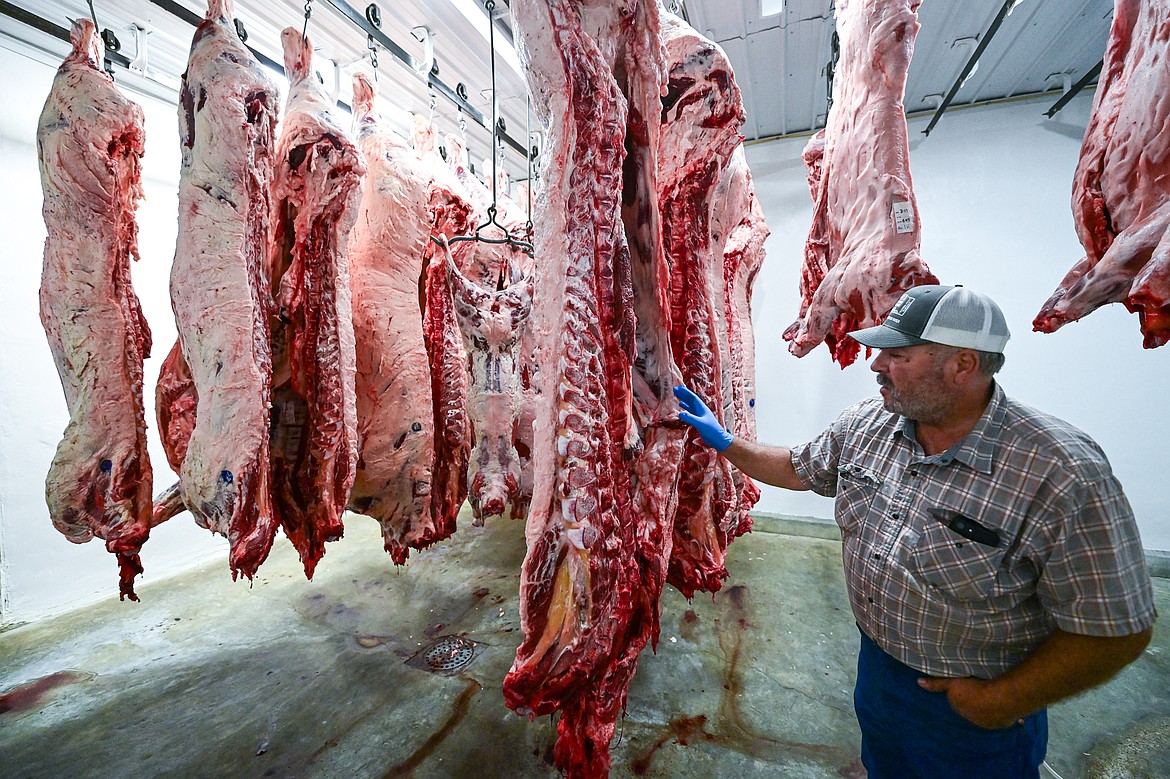
Casey Olson shows animal carcasses inside the drip cooler waiting to be processed at Glacier Processing Cooperative in Columbia Falls on Friday, Aug. 21. (Casey Kreider/Daily Inter Lake)
Casey Kreider
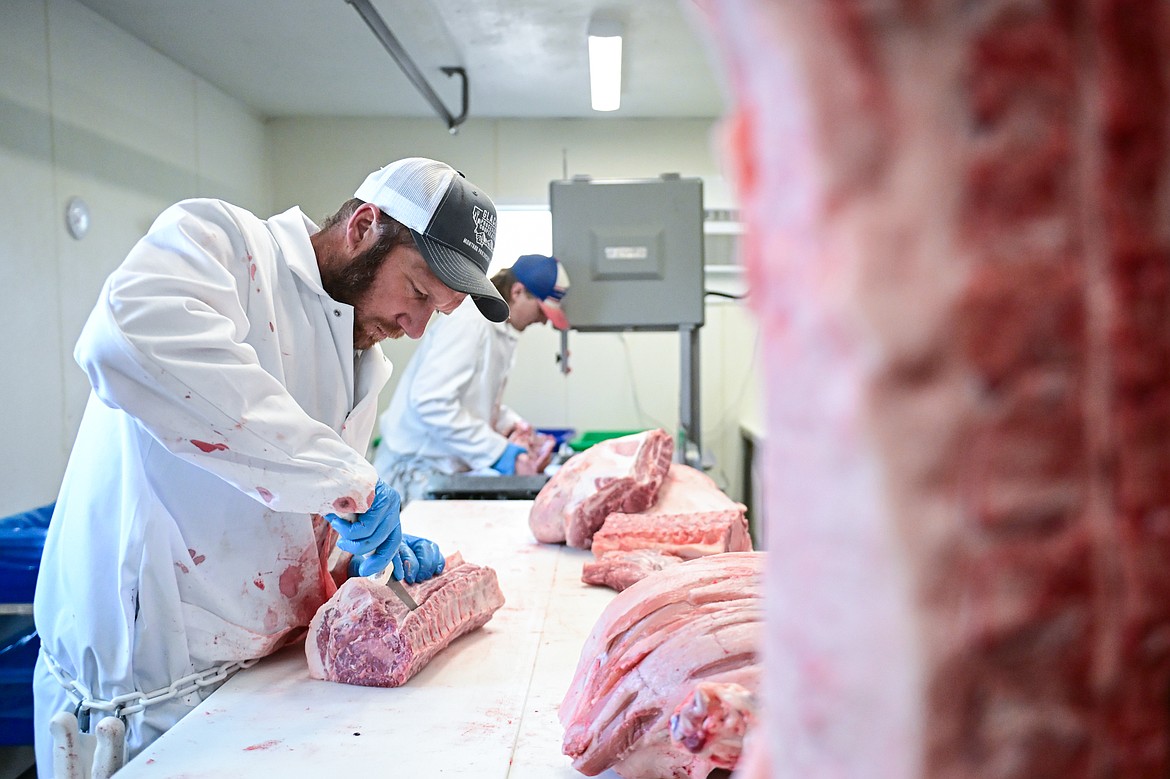
Jeremy Smith processes pieces of pork at Glacier Processing Cooperative in Columbia Falls on Friday, Aug. 21. (Casey Kreider/Daily Inter Lake)
Casey Kreider
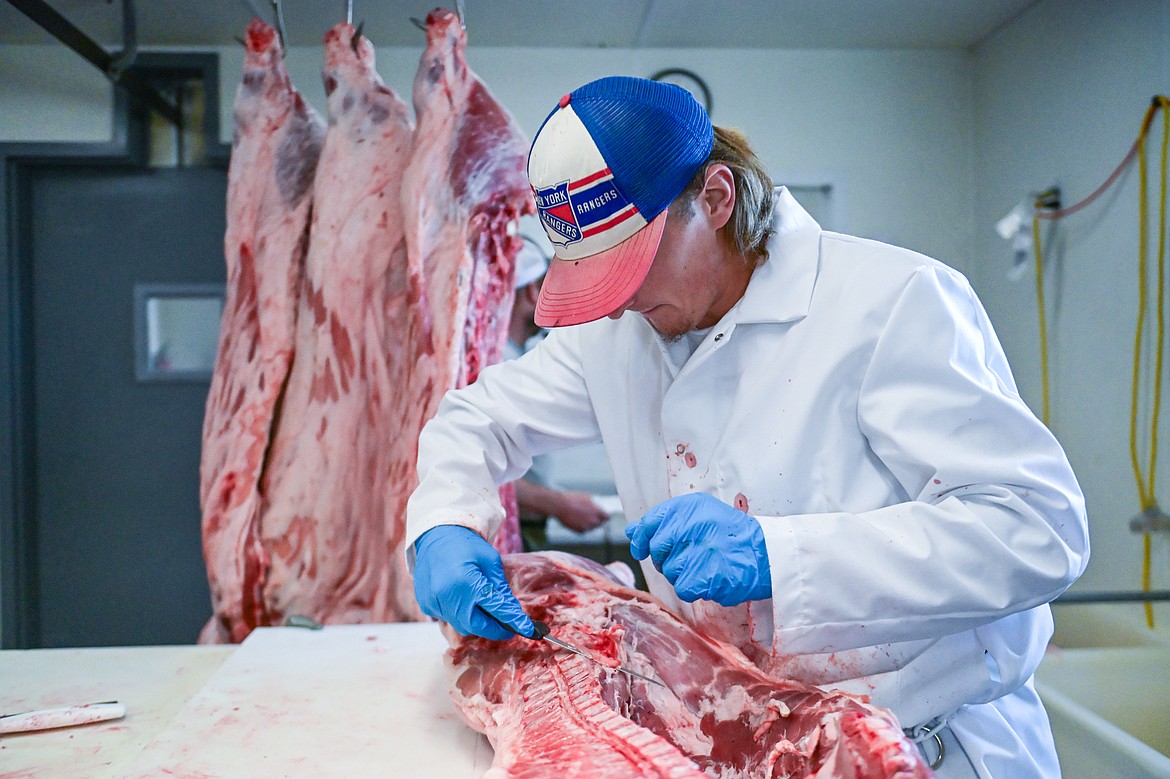
Hunter Rousch process pieces of pork at Glacier Processing Cooperative in Columbia Falls on Friday, Aug. 21. (Casey Kreider/Daily Inter Lake)
Casey Kreider
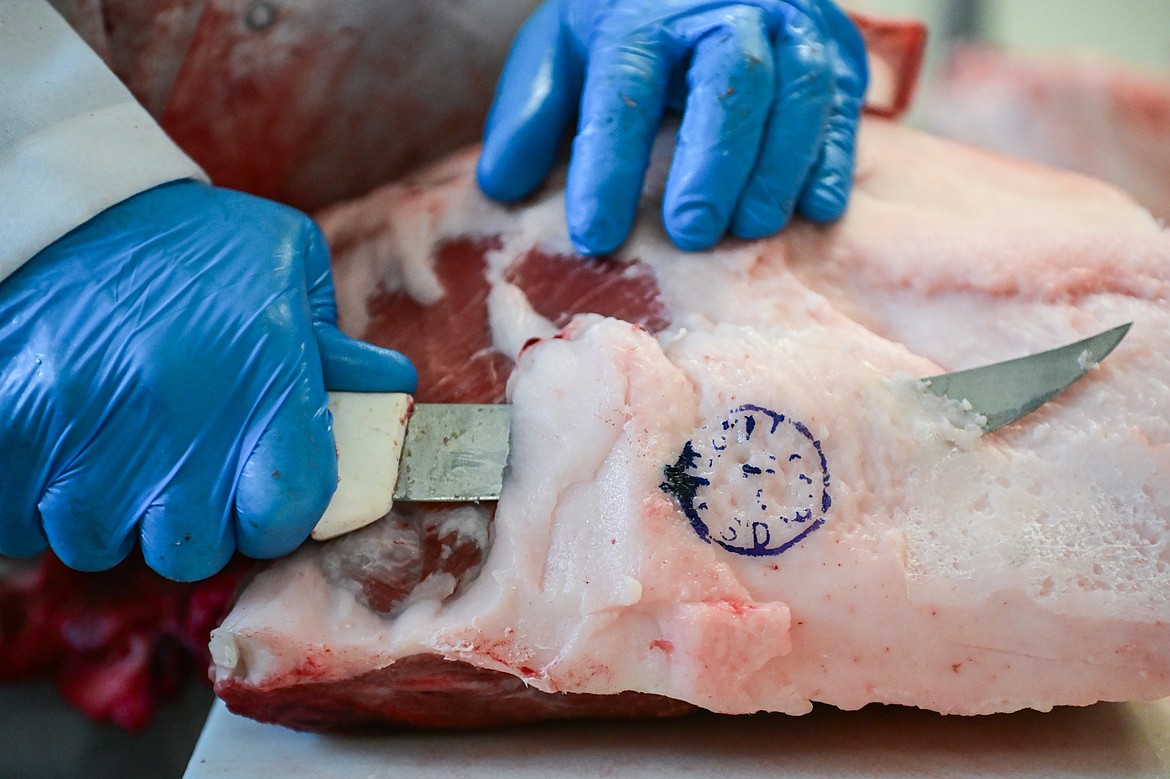
Jeremy Smith removes the USDA mark of inspection stamp while processing pieces of pork at Glacier Processing Cooperative in Columbia Falls on Friday, Aug. 21. (Casey Kreider/Daily Inter Lake)
Casey Kreider
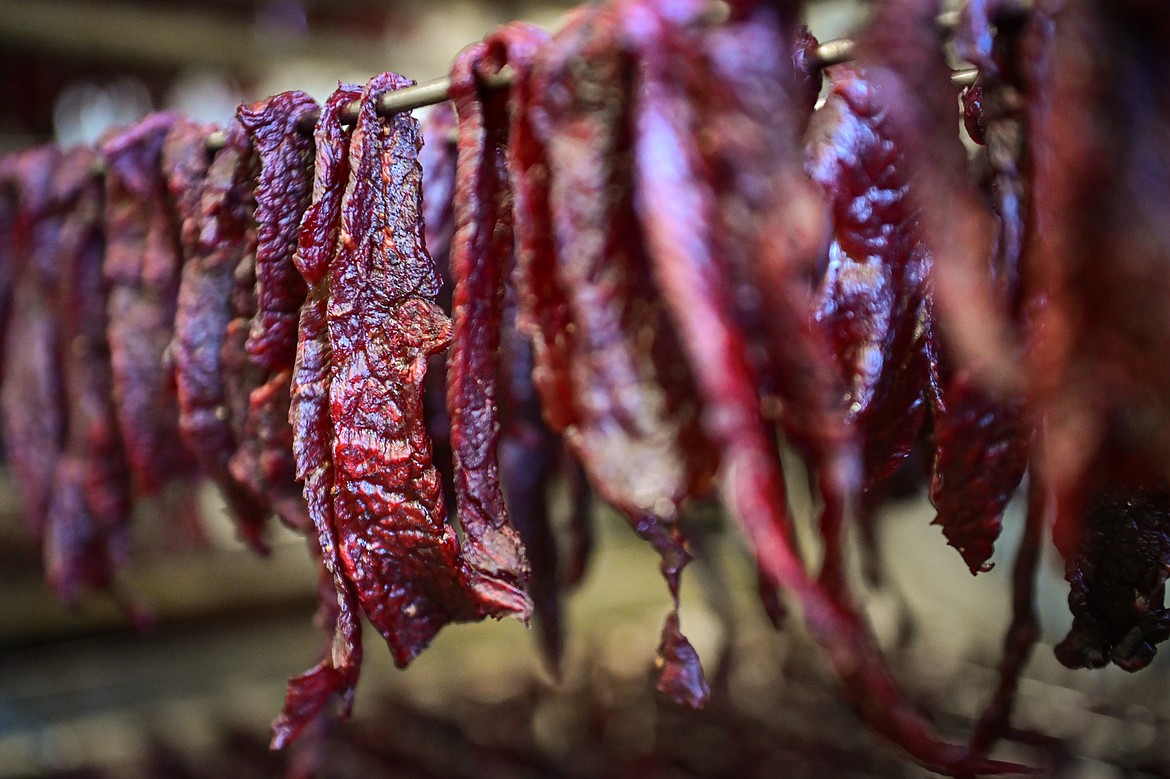
Strips of Montana Jerky Co. beef jerky dry on a rack at Glacier Processing Cooperative in Columbia Falls on Friday, Aug. 21. (Casey Kreider/Daily Inter Lake)
Casey Kreider
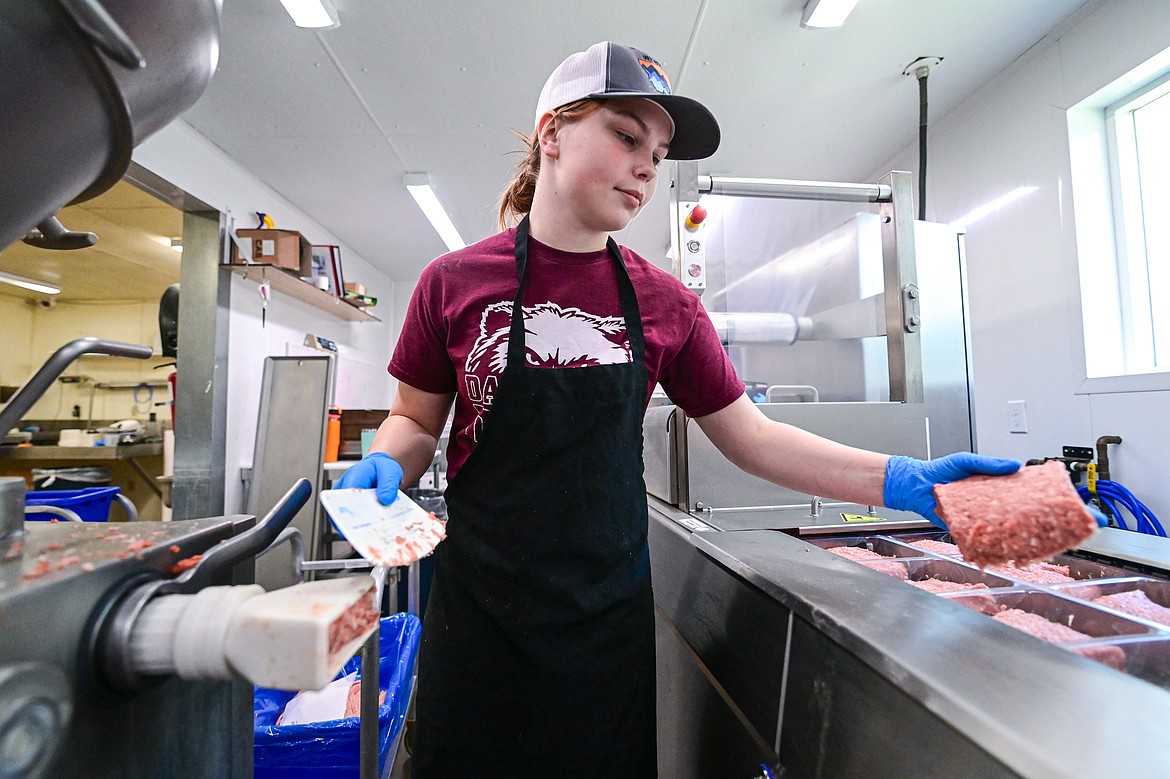
Jessie Wehr packages ground pork breakfast sausage at Glacier Processing Cooperative in Columbia Falls on Friday, Aug. 21. (Casey Kreider/Daily Inter Lake)
Casey Kreider
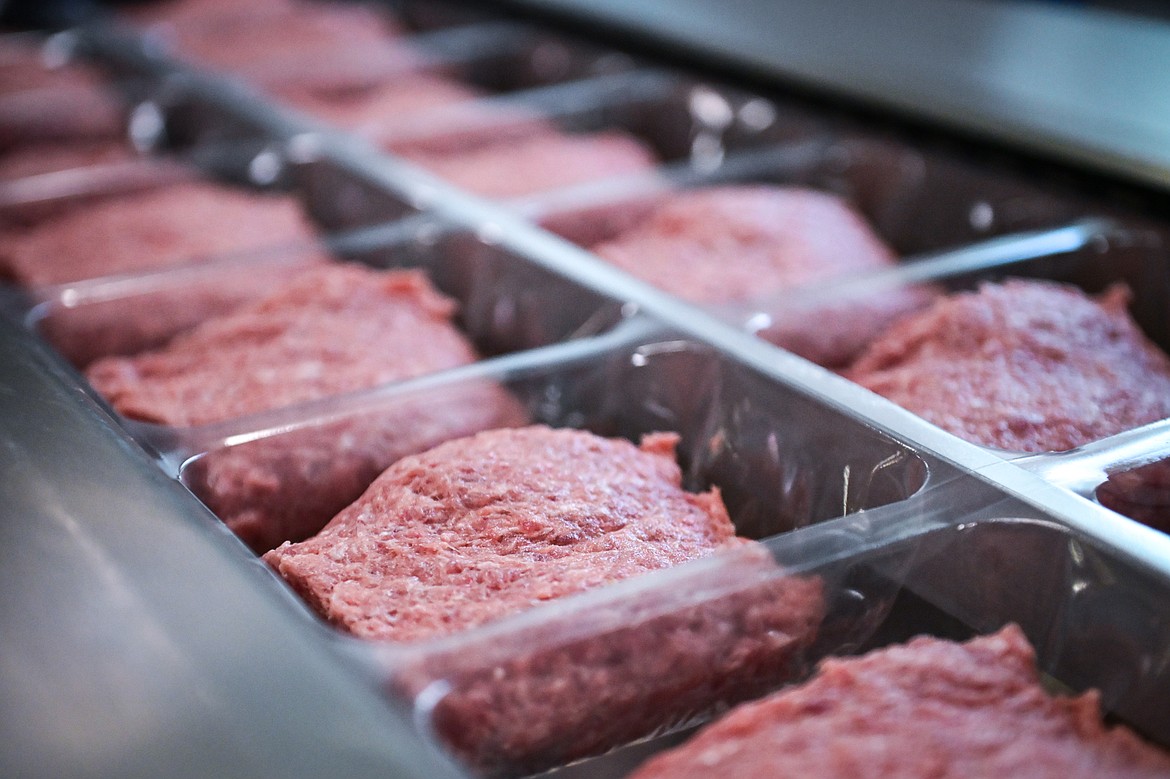
Pork breakfast sausage is packaged at Glacier Processing Cooperative on Friday, Aug. 21. (Casey Kreider/Daily Inter Lake)
Casey Kreider
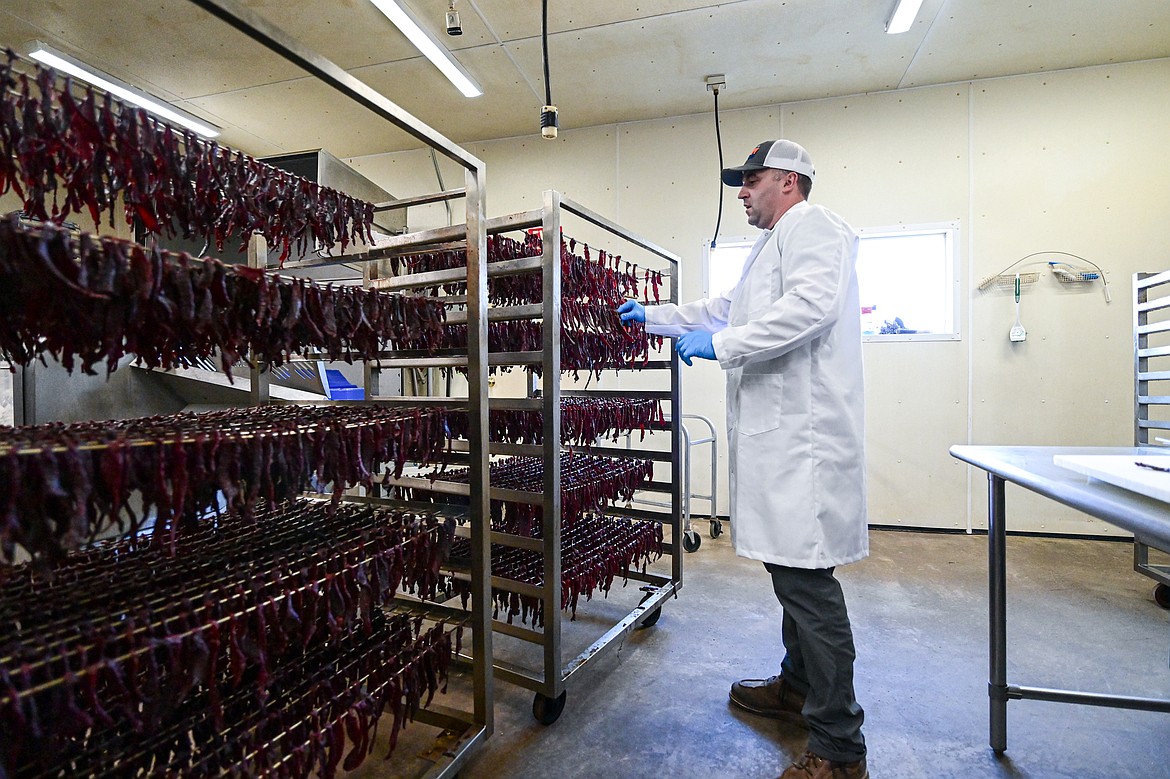
Lance Parsely pulls pieces of beef jerky off a drying rack to be packaged as Montana Jerky Company products at Glacier Processing Cooperative in Columbia Falls on Friday, Aug. 21. (Casey Kreider/Daily Inter Lake)
Casey Kreider
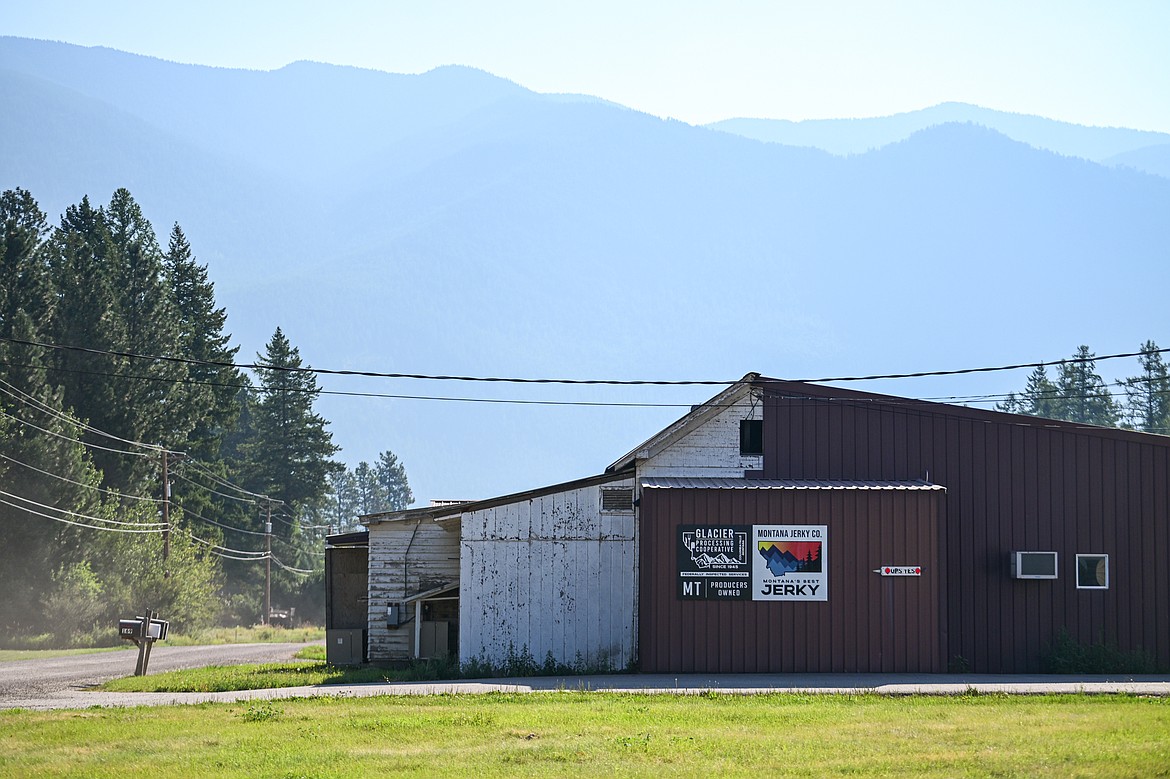
Glacier Processing Cooperative and Montana Jerky Company in Columbia Falls on Friday, Aug. 21. (Casey Kreider/Daily Inter Lake)
Casey Kreider
REPORTER AND PODCAST HOST Taylor Inman covers Bigfork and the north shore of Flathead Lake for the Bigfork Eagle and the Daily Inter Lake. Her reporting focuses on local government, community issues and the people who shape life in Northwest Montana. Inman began her journalism career at Murray State University’s public radio newsroom and later reported for WKMS, where her work aired on National Public Radio. In addition to reporting, she hosts and contributes to Daily Inter Lake podcasts including News Now. Her work connects listeners and readers with the stories shaping communities across the Flathead Valley. IMPACT: Taylor’s work expands local journalism through both traditional reporting and digital storytelling. | September 14, 2026 12:10 AM
The weeks following the Northwest Montana Fair & Rodeo are a little busy at the Glacier Processing Cooperative. Butchers work fast to carve up the hundreds of livestock sold by youth competitors at the fair, careful to label each product to ensure the animal is returned to the owner.
It’s part of what makes a local processing facility special, according to farmer Casey Olson, who said ground meat from the grocery store contains multiple animals, while meat from the co-op comes from one animal.
“The integrity of that animal stays together all the way through to the consumer. Unfortunately, buying local is more expensive, but the quality is worth the price of it,” he said.
Olson serves as vice chair of the Glacier Processing Cooperative’s Board of Directors. The co-op was formed in 2023 when five ranching families banded together to secure a U.S. Department of Agriculture backed loan to purchase the longtime processing facility.
Board President Mark Siderius remembers when former plant owner Ron Vandevanter of Vandevanter Meats announced he was planning to retire. At that time, Siderius said booking dates for processing an animal were out 18 months to two-plus years.
“So, it was nearly impossible. With our farm, we probably would have had to buy into Montana Premium Processing Cooperative in Havre, where we would have had to haul livestock 250 miles away to find adequate space to accommodate what we needed. Even today, it's a necessity to have this processing plant,” Siderius said.
Montana is a state that’s famous for having more cows than people (which is still true, despite the state’s population growth in recent years.) But processing the animals is an entirely different story, as industry consolidation in the 80s and 90s led to fewer processing plants across the U.S. and bottleneck issues at the local level.
By 2019, four of the largest meat packing companies were handling 85% of all steer and heifer purchases and 67% of all hog purchases, according to the U.S. Department of Agriculture’s Economic Research Service.
The meat and poultry industry in Montana creates about 6,000 jobs, according to the Meat Institute trade organization, and added $329 million to the state's economy in 2025.
In Northwest Montana, there are six meat processing facilities that are part of the Montana Meat Processors Association. The Glacier Processing Cooperative serves 40 Montana farms and ranches as members, four Montana fairs, and many non-member customers also using the service.
The current facility was built in 1945, so many of the ranchers who are part of the co-op have processed meat there for decades. In 1986, Vandevanter started Montana Jerky Company to try to fill in gaps during the winter, according to Siderius. The co-op bought the jerky business, Vandevanter Meats and the 20-acre property that includes the processing facility in 2024.
The co-op was able to make the purchase using a grant from the Meat and Poultry Processing Expansion program, designed by the U.S. Department of Agriculture Rural Development to encourage competition and sustainable growth in the U.S. meat processing sector and to help improve supply chain resiliency.
The applicant’s facility must primarily process cattle in order for the project to be eligible for the program, however, funds or equipment may be used for processing meat and poultry at the facility, according to the federal agriculture agency.
Glacier Processing Cooperative has the only USDA-inspected facility in the Flathead Valley, according to the USDA’s Food Safety and Inspection Service. Getting that elusive blue stamp of approval is not only the top-tier mark for meat inspection but also allows members to ship out-of-state and internationally.
Olson said the team had to make several improvements to the facilities before getting a USDA Grant of Inspection. He said everything in a federal plant must be “a clean, bright, impermeable surface that could be cleaned enough to eat off it.”
“And that wasn't what the plant was when we came in. To get the right of inspection was a was an ordeal, it took Mark and I and several other members volunteering for a year. It took around $200,000 to get the plant to a place that was acceptable for the USDA,” Olson said.
“It can be a challenge for folks with a brand new building to get a federally granted inspection. So, with an 80-year-old building, they had a pretty steep mountain to climb,” added Plant Manager Lance Parsley.
The facility is never without a federal inspector, Siderius said. Though the co-op doesn’t have to pay the inspector’s salary, they must provide them with office space and compensate for overtime.
In the corner of the white-walled kill floor, a small box outlined in tape marked “USDA” shows where the inspector stands.
“Otherwise, the inspector is moving throughout the process — they inspect heads, tongues and lymph nodes as they go. They’re looking at internal organs from liver flukes or any abnormalities coming out here at this point when it's exiting here,” Siderius said.
Though it’s been costly at times to invest in the facility, it’s been a success, and a new expansion promises to open more markets to local ranchers.
The cooperative is planning to start construction soon on a new building for processing that will add 6,000 square feet to the operation. This will allow Montana Jerky Company to take over the entirety of the current building, which is also being used by the harvest team to butcher animals and pack meat.
“I’m not saying we’re tripling overnight, but we’ve got room for a decade or more of growth, hopefully,” Siderius said.
There will be more space for packaging meat and more coolers for aging beef — enough to hold and age 100 head of beef at a time, according to Siderius. The expansion will allow co-op members to expand in the retail markets, like direct-to-consumer or supermarkets.
Limitation on space is one reason some ranches can’t expand, so added hook space will allow co-op members to grow their business however they’d like.
“The desire is there for people to know where the food's coming from. But space in these plants — that's the hard part. So, for our members, it’s going to put them at another level,” Siderius said.
The pandemic sparked supply chain issues that led to closures of meat packing plants across the U.S. and an overall uptick in interest for people to seek out local meat. Amsterdam Meat Shop in Manhattan, Montana told Yellowstone Public Radio in 2020 that they saw a 300% increase in sales that spring.
Though those pandemic numbers have plateaued, interest still remains. Selling high-quality, locally raised meat is important to ranchers like Olson and Siderius, who said they feel like they are providing a service to their communities.
“We’re packing a lot of stuff for the local food banks and packing stuff for schools. We have all these donated animals that are coming in from the fair, so that's a really nice part of this as well,” Siderius said.
Olson said it also helps keep money local, as the ranchers turn around and reinvest in the community. For him, joining the co-op allowed him to keep costs low enough to make his farming operation viable.
Locally grown Montana foods contributed $158 million to the state's economy, according to a 2022 report by Highland Economics.
Beyond the victories with the co-op, Olson would still like to see more processing facilities open in the region.
“The valley needs more. Even with this plant being preserved, the valley could still use more capacity,” he said.
To learn more about Glacier Processing Cooperative, including how to use their processing services, visit glacierprocessing.com.
Reporter Taylor Inman can be reached at 406-758-4440 or [email protected]. If you value local journalism, pledge your support at dailyinterlake.com/support.
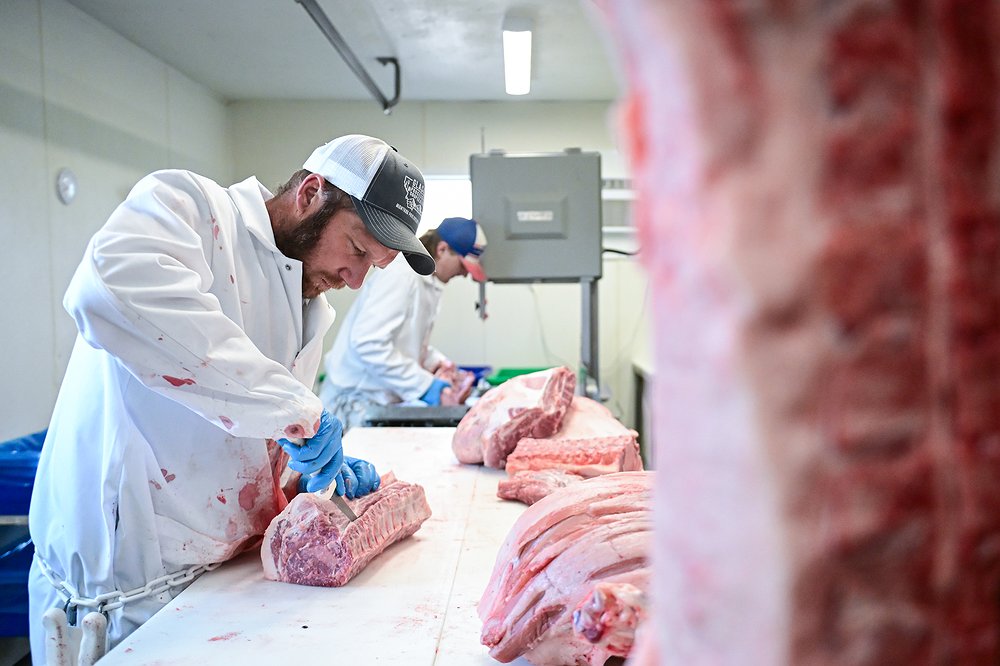 Jeremy Smith processes pieces of pork at Glacier Processing Cooperative in Columbia Falls on Friday, Aug. 21. (Casey Kreider/Daily Inter Lake)
Casey Kreider
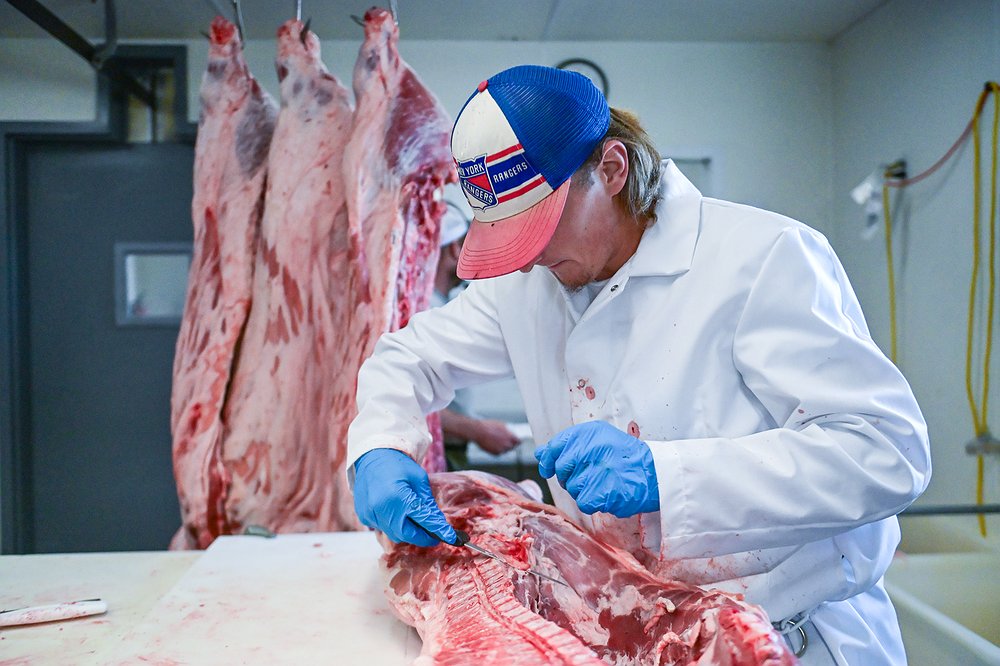 Hunter Rousch process pieces of pork at Glacier Processing Cooperative in Columbia Falls on Friday, Aug. 21. (Casey Kreider/Daily Inter Lake)
Casey Kreider
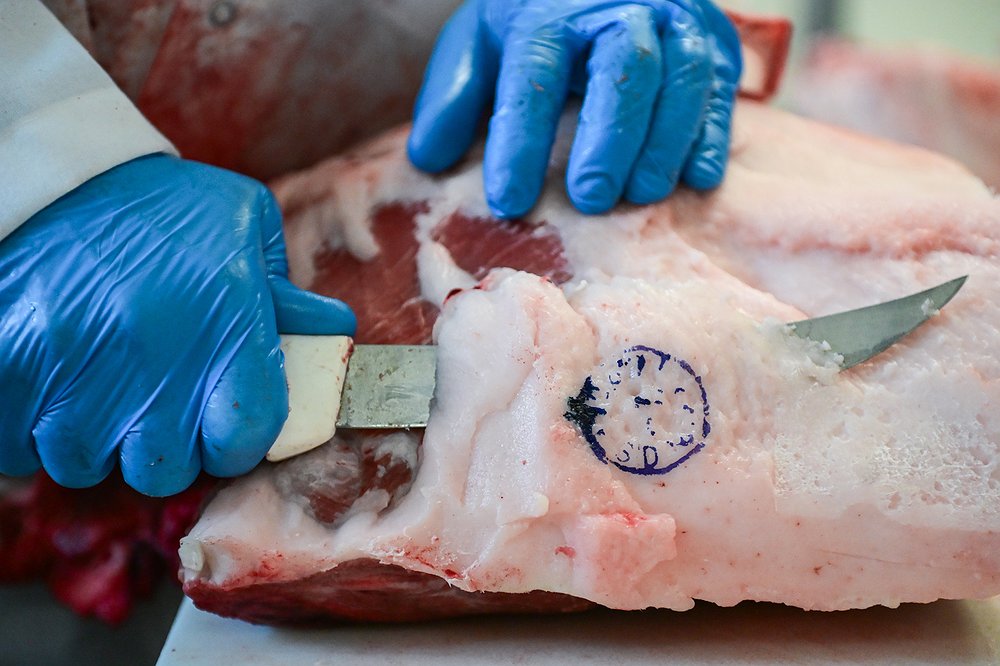 Jeremy Smith removes the USDA mark of inspection stamp while processing pieces of pork at Glacier Processing Cooperative in Columbia Falls on Friday, Aug. 21. (Casey Kreider/Daily Inter Lake)
Casey Kreider
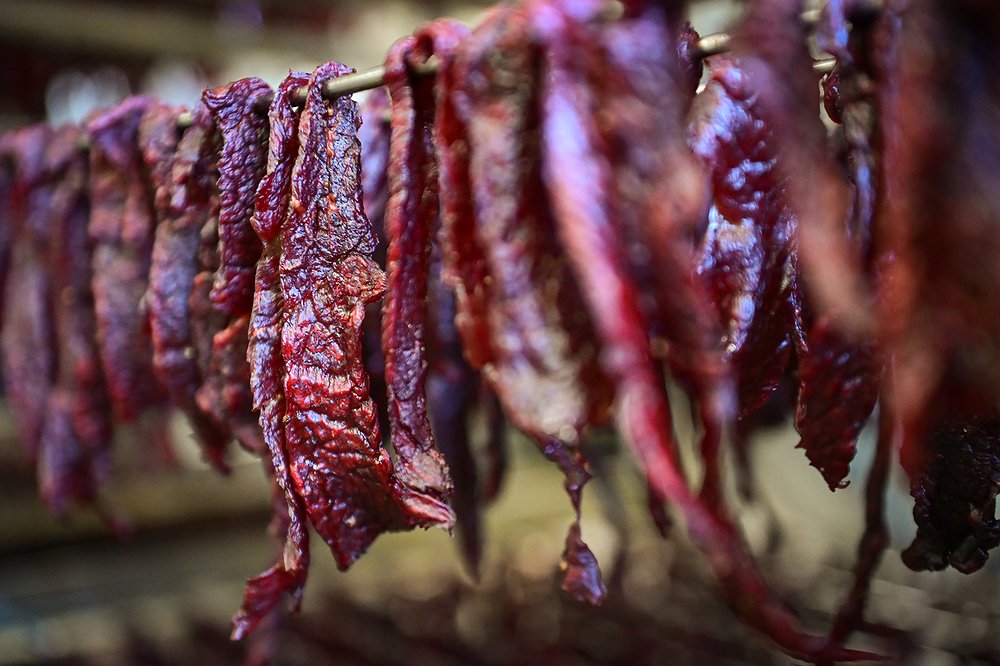 Strips of Montana Jerky Co. beef jerky dry on a rack at Glacier Processing Cooperative in Columbia Falls on Friday, Aug. 21. (Casey Kreider/Daily Inter Lake)
Casey Kreider
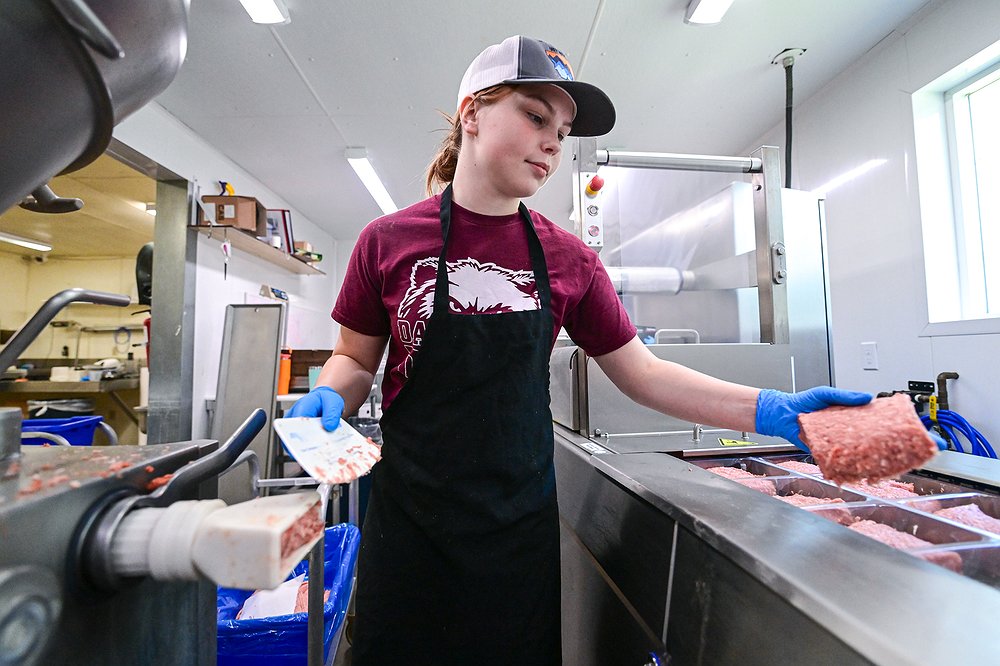 Jessie Wehr packages ground pork breakfast sausage at Glacier Processing Cooperative in Columbia Falls on Friday, Aug. 21. (Casey Kreider/Daily Inter Lake)
Casey Kreider
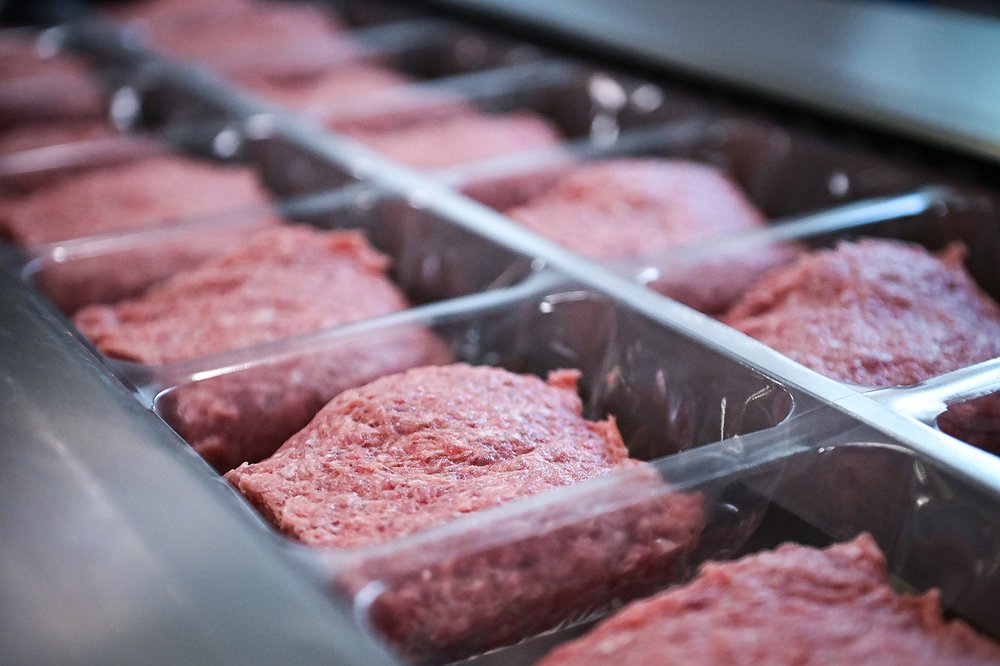 Pork breakfast sausage is packaged at Glacier Processing Cooperative on Friday, Aug. 21. (Casey Kreider/Daily Inter Lake)
Casey Kreider
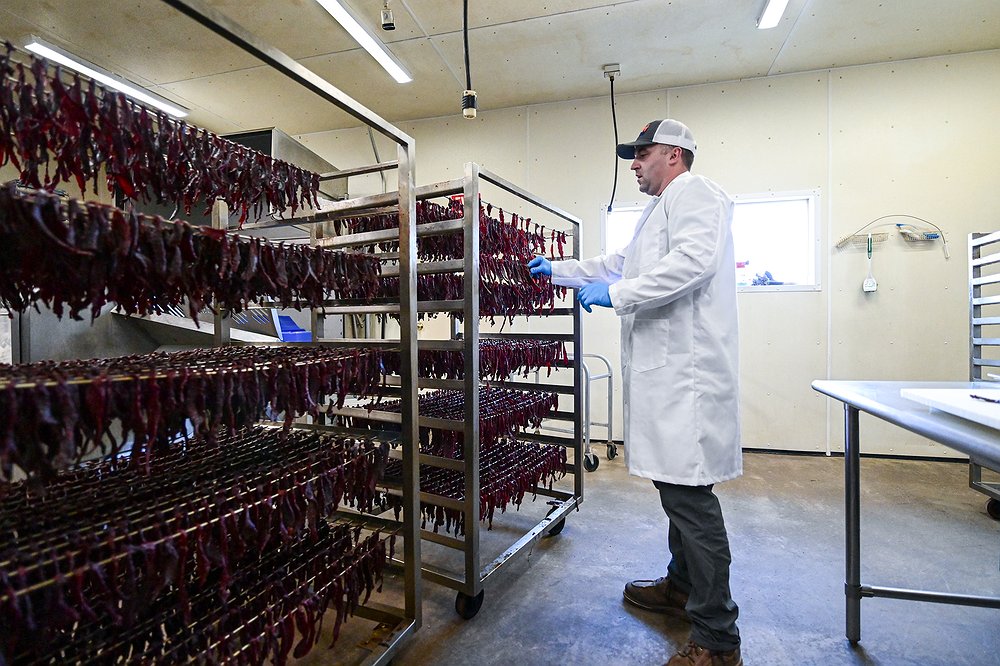 Lance Parsely pulls pieces of beef jerky off a drying rack to be packaged as Montana Jerky Company products at Glacier Processing Cooperative in Columbia Falls on Friday, Aug. 21. (Casey Kreider/Daily Inter Lake)
Casey Kreider
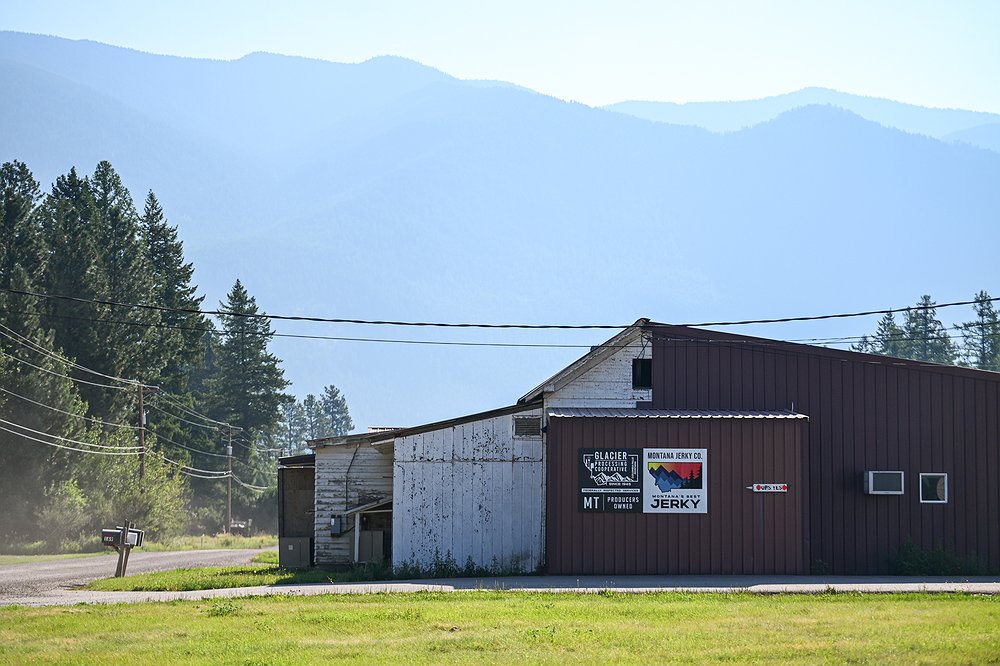 Glacier Processing Cooperative and Montana Jerky Company in Columbia Falls on Friday, Aug. 21. (Casey Kreider/Daily Inter Lake)
Casey Kreider
ARTICLES BY TAYLOR INMAN

Logan Health nurses union ratifies new contract with major across-the-board raises
Nurses at Logan Health in Kalispell say their newest union contract includes "life changing" pay raises that benefit both tenured and new nurses.
Fall job fair gives employers a chance to connect with job seekers in person
Learning what local companies are offering new hires is just one benefit of the job fair, which is held at the Flathead County Fairgrounds Trade Center in the spring and fall.
Summit Cookhaus offers commercial kitchen space for valley's caterers, home bakers and chefs
Summit Cookhaus owner Jake Kuntz said the rentable kitchen space in Kalispell offers an opportunity for batch bakers, caterers and others who want to work from a larger space than their home kitchens.