
Gianforte highlights cleanup at Columbia Falls Superfund site with EPA chief
HAILEY SMALLEY | Hagadone News Network | UPDATED 3 weeks, 5 days AGO
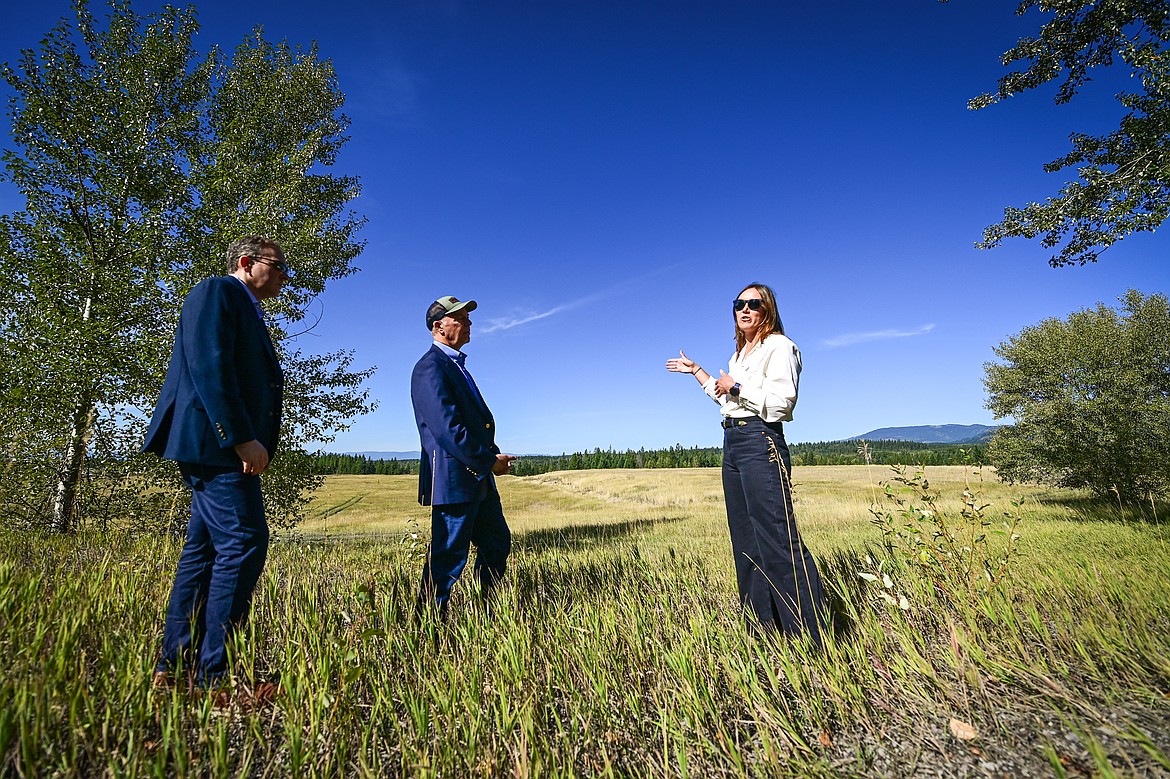
Allie Archer, right, a project manager with the Environmental Protection Agency, speaks with EPA Administrator Lee Zeldin, left, and Gov. Greg Gianforte during a tour of the Columbia Falls Aluminum Company superfund site in Columbia Falls on Thursday, Sept. 17. (Casey Kreider/Daily Inter Lake)
Casey Kreider
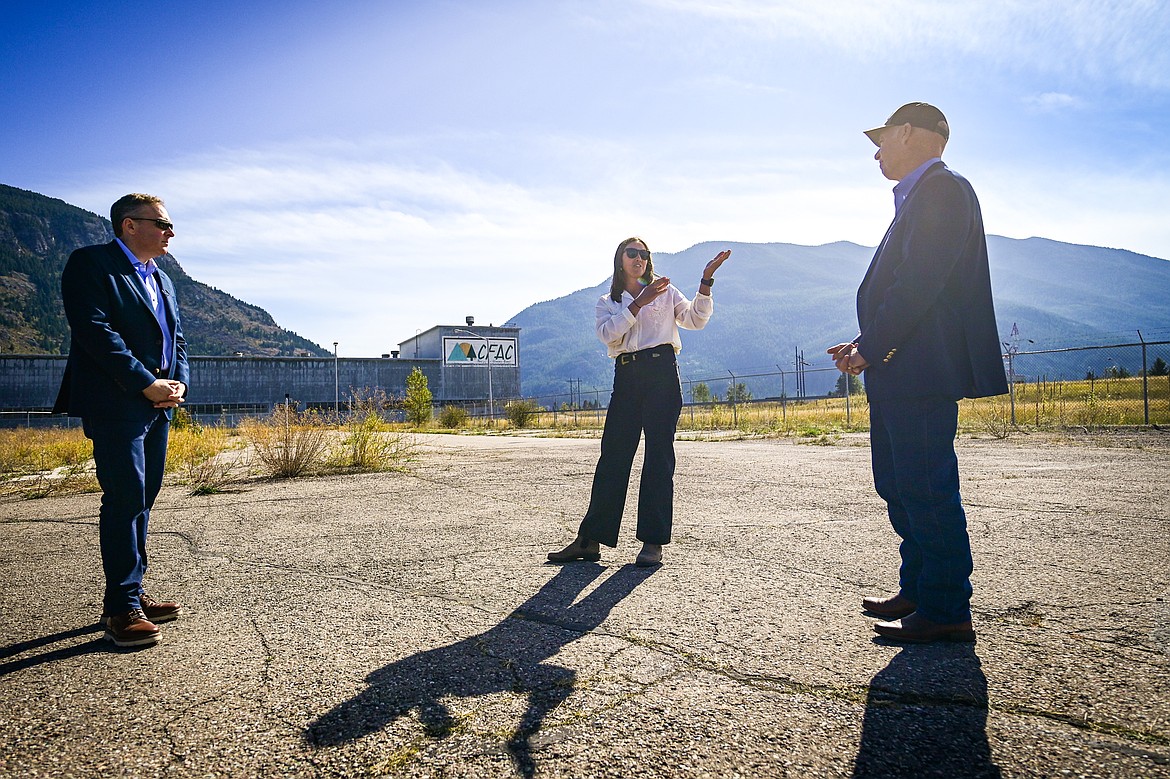
Allie Archer, center, a project manager with the Environmental Protection Agency, speaks with EPA Administrator Lee Zeldin, left, and Gov. Greg Gianforte, right, during a tour of the Columbia Falls Aluminum Company superfund site in Columbia Falls on Thursday, Sept. 17. (Casey Kreider/Daily Inter Lake)
Casey Kreider
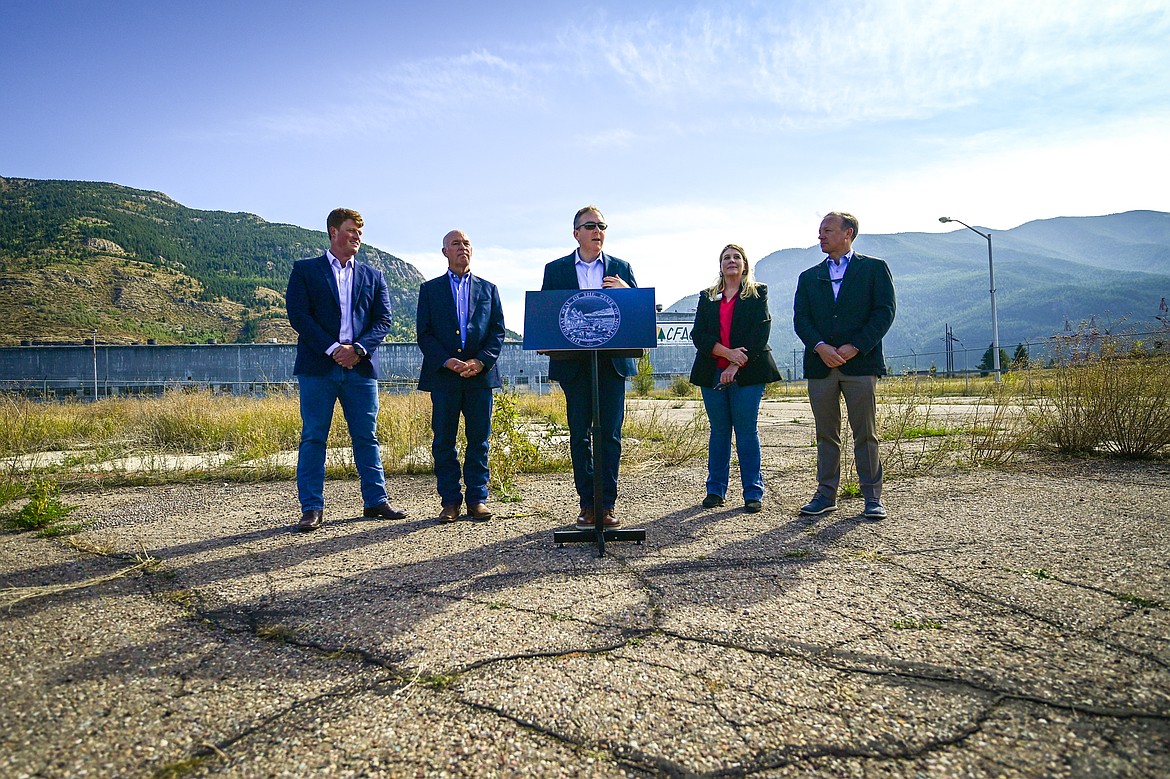
Environmental Protection Agency Administrator Lee Zeldin speaks at a press conference held after touring the Columbia Falls Aluminum Company superfund site with Gov. Greg Gianforte, second from left, in Columbia Falls on Thursday, Sept. 17. (Casey Kreider/Daily Inter Lake)
Casey Kreider
Remediation of the Columbia Falls Aluminum Co. Superfund Site will likely wrap up by 2029, mere years after cleanup efforts began on one of Montana’s most polluted post-industrial sites.
“While I've had the chance to visit a lot of Superfund sites, I have to tell you that some are facing what will likely be decades of work and, really, never-ending work,” Environmental Protection Agency Administrator Lee Zeldin said at the conclusion of a Sept. 17 tour of the site. “Fortunately, we are at a very important milestone moment here in Columbia Falls, where there is just so much incredible progress imminently ahead on this project.”
Gov. Greg Gianforte accompanied Zeldin on the tour, along with about a dozen employees from the federal and state environmental agencies and proxies from the offices of Rep. Ryan Zinke and U.S. Sens. Steve Daines and Tim Sheehy.
The blazer-clad officials gathered under a bluebird sky outside the remnants of the old smelting plant, which sits just northeast of Columbia Falls and near the banks of the Flathead River, and caravaned along rutted dirt roads to witness the sites the EPA identified as sources of toxic pollution.
The site operated under various owners from 1955 until 2009, generating hundreds of thousands of tons of waste in the form of spent potliner material. The aluminum byproduct is a federally listed hazardous waste because it contains cyanide that can leach into the soil and groundwater.
Concerns about lingering effects from the spent potliner spurred the EPA to add the 3,200-acre property to the National Priorities List in 2016. Designation on the list, which is more commonly known as Superfund, streamlines the federal government’s ability to hold polluting companies financially liable for clean-up.
Columbia Falls Aluminum Co., the most recent facility operator, agreed in August 2026 to pay $57.6 million for remediation of the site. The price tag covers a suite of cleanup operations, including excavation and removal of contaminated soils, installation of several protective barriers in former landfill locations and long-term monitoring of the site.
The first leg of the cleanup, excavating an estimated 67,500 cubic yards of soil contaminated by arsenic and other potentially harmful materials, will likely be completed this month, EPA Remedial Project Manager Allie Archer said.
“You're going to see some of that cleanup in action,” she told tour participants. “There are areas of the site where the top two feet of soil were identified to have elevated contaminants. We are currently in the process of cleaning up that contamination and disposing of it on-site in the landfill.”
Several pre-existing landfills are expected to receive improved caps and soil covers by the end of October 2026, which will prevent potentially toxic refuse from leaching into the nearby environment and minimize the potential for human or animal exposure.
Once that is complete, attention will shift to construction of an underground concrete barrier known as a slurry wall, which will separate contaminated groundwater from the rest of the aquifer and ensure pollutants are kept from spilling into the Flathead River.
“When we talk about cleanup at Columbia Falls Aluminum Co., this is really the big ticket item that we’re focused on,” Archer said, gesturing toward a seemingly barren field where the slurry wall will be installed.
When the plant was in operation, the field functioned as a landfill and sludge pond, where workers deposited spent potliner and other refuse from the smelting process.
Groundwater samples collected between 2016 and 2018 from beneath the field revealed cyanide concentrations up to 1,000 times the threshold considered safe for drinking water. Fluoride concentrations in some samples also exceeded safe levels for drinking water.
Levels of both chemicals dissipated as the groundwater moved away from the area underlying the landfill and sludge pond, and the groundwater samples taken nearest the Flathead River had cyanide and fluoride concentrations within the parameters for safe drinking water. Samples taken from wells in the nearby neighborhood of Aluminum City also showed no elevated levels of either chemical.
"We’ve always seen [the contaminated groundwater] naturally attenuating as it makes its way toward the river, and that’s why we don’t really have impacts in the Flathead,” Archer said. “But to be protected and to make sure we have great water quality forever and into the future, we’re doing the slurry wall.”
The barrier will likely be completed by 2029, marking the conclusion of the cleanup effort. Long-term monitoring, including regular groundwater sampling, will continue to ensure all the landfill caps and the slurry wall remain effective.
Columbia Falls Aluminum Company will retain ownership of 200 acres of remediated land, including the former landfills and sludge pond, into perpetuity. The sheer amount of spent potliner in that area means the land and underlying groundwater will likely never be considered safe for other uses, Archer said.
“There is unlimited amounts of [cyanide and fluoride contamination] right now because of how prolific this operation was,” she said. “So that [contamination] will remain there, but it will no longer be picked up through groundwater and move. It’ll just stay owned by Columbia Falls Aluminum Co. forever in that spot.”
The remainder of the site has already exchanged ownership, after extensive testing by the EPA turned up no significant health risks.
Columbia Falls developer Mick Ruis purchased 2,300 acres of the former site, 76 acres of which is slated for a residential subdivision. Montana Fish, Wildlife and Parks purchased another 772 acres of undeveloped land from Columbia Falls Aluminum Co. in 2021. That parcel, which sits across the Flathead River from the former smelting facility, is now known as the Bad Rock Canyon Wildlife Management Area.
“During our visit, it was great to hear about the future plans to redevelop this site, initially for residential and other uses later on, and I look forward to seeing this continued progress,” Gianforte said in his remarks following the site tour. “Montana Department of Environmental Quality couldn’t do this alone. With the help of our federal partners at the Environmental Protection Agency, we are taking clear and decisive action to return this site to productive use.”
Reporter Hailey Smalley can be reached at 406-758-4433 or [email protected]. If you value local journalism, pledge your support at dailyinterlake.com/support.
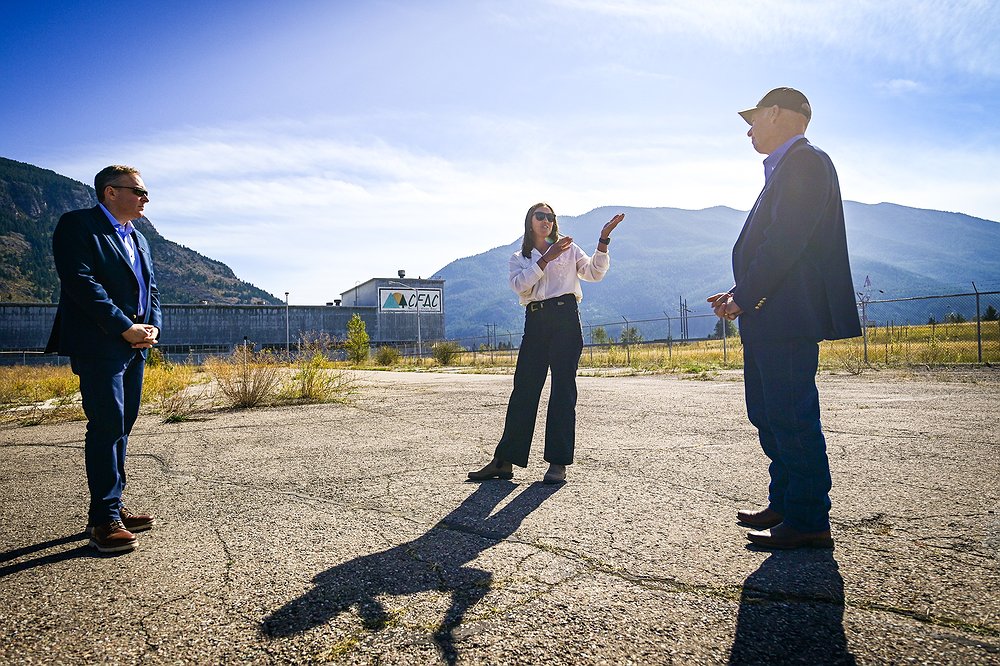 Allie Archer, center, a project manager with the Environmental Protection Agency, speaks with EPA Administrator Lee Zeldin, left, and Gov. Greg Gianforte, right, during a tour of the Columbia Falls Aluminum Company superfund site in Columbia Falls on Thursday, Sept. 17. (Casey Kreider/Daily Inter Lake)
Casey Kreider
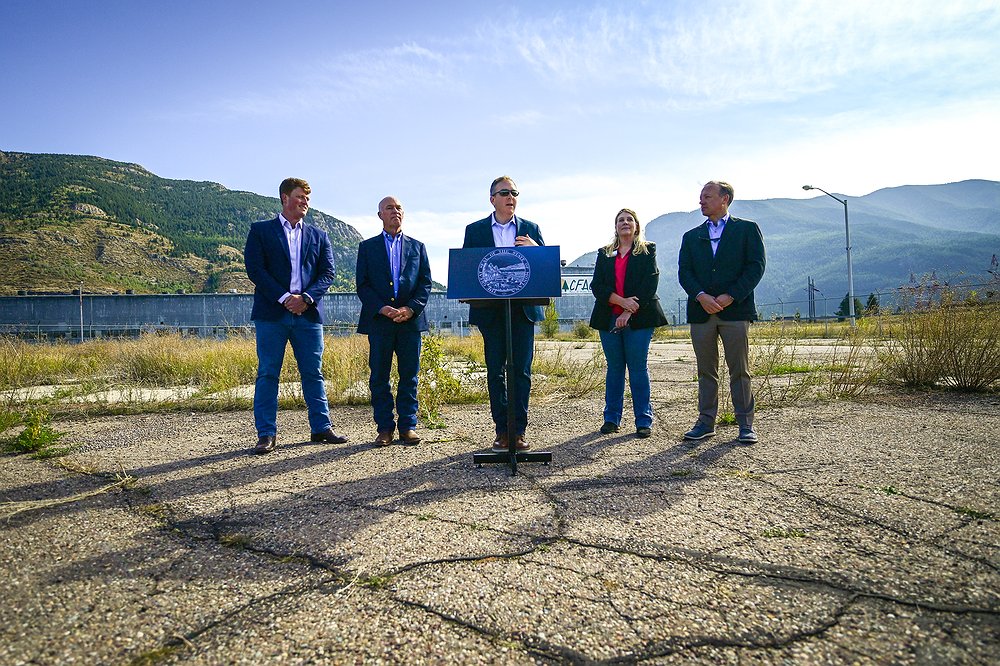 Environmental Protection Agency Administrator Lee Zeldin speaks at a press conference held after touring the Columbia Falls Aluminum Company superfund site with Gov. Greg Gianforte, second from left, in Columbia Falls on Thursday, Sept. 17. (Casey Kreider/Daily Inter Lake)
Casey Kreider
ARTICLES BY HAILEY SMALLEY

Two more cases of rare zoonotic disease detected in Glacier National Park
While most commonly associated with hares, rabbits and rodents, tularemia has been documented in dozens of species, including humans.

Trump packs Kalispell arena in campaign event to boost GOP candidates
President Donald Trump, wearing a dark suit, red tie and red USA cap, ambled into the Majestic Valley Arena to the raucous roar of a crowd.

Trump packs Kalispell arena in campaign event to boost GOP candidates
President Donald Trump, wearing a dark suit, red tie and red USA cap, ambled into the Majestic Valley Arena to the raucous roar of a crowd.