
It’s all in the genes
HAILEY SMALLEY | Hagadone News Network | UPDATED 1 month, 1 week AGO
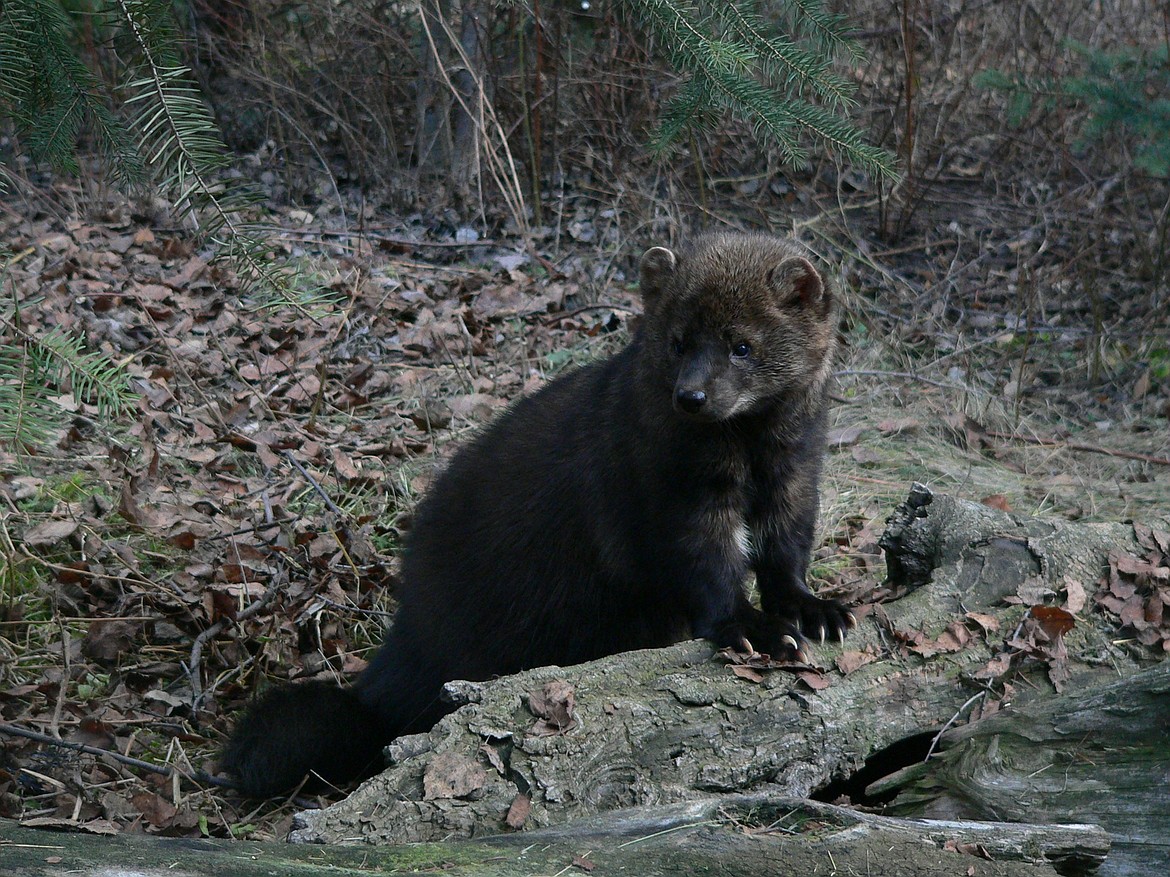
Fishers are members of the mustelid family, with close relatives including wolverines and pine martens. (Courtesy of Mike Schwartz, USDA Forest Service Researcher)
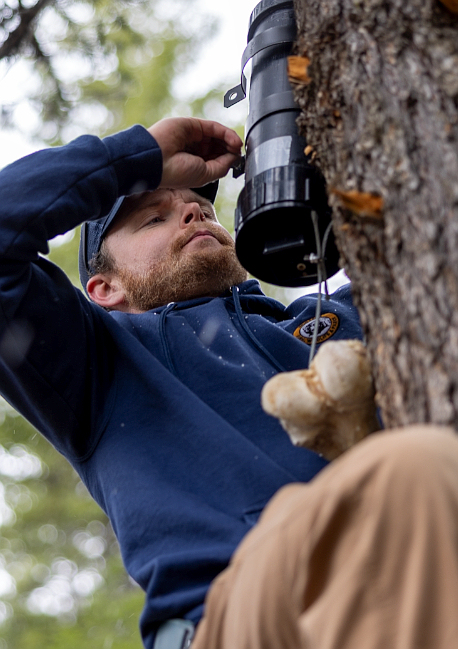
Nathan Kluge affixes a scent pump to a tree. (Courtesy of Montana Fish, Wildlife and Parks)
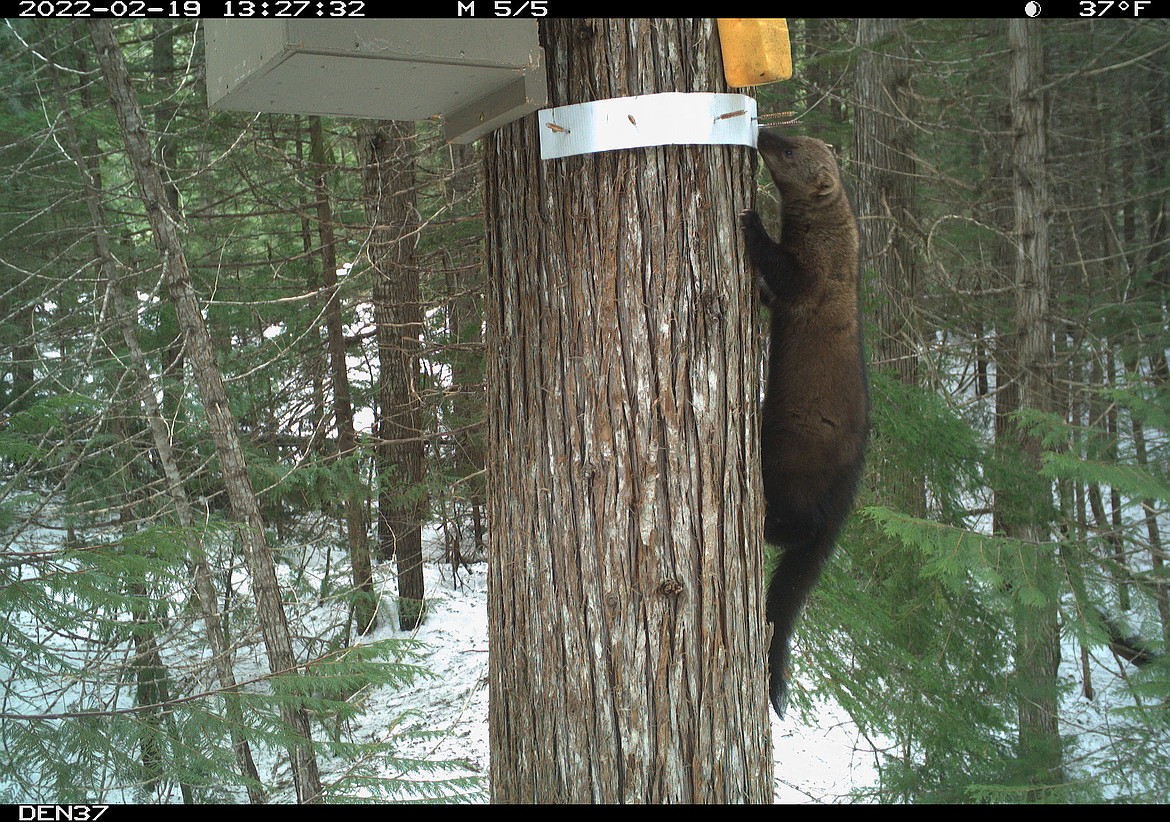
A fisher investigates a hair snare set by Montana Fish, Wildlife and Parks. (Courtesy of Montana Fish, Wildlife and Parks)
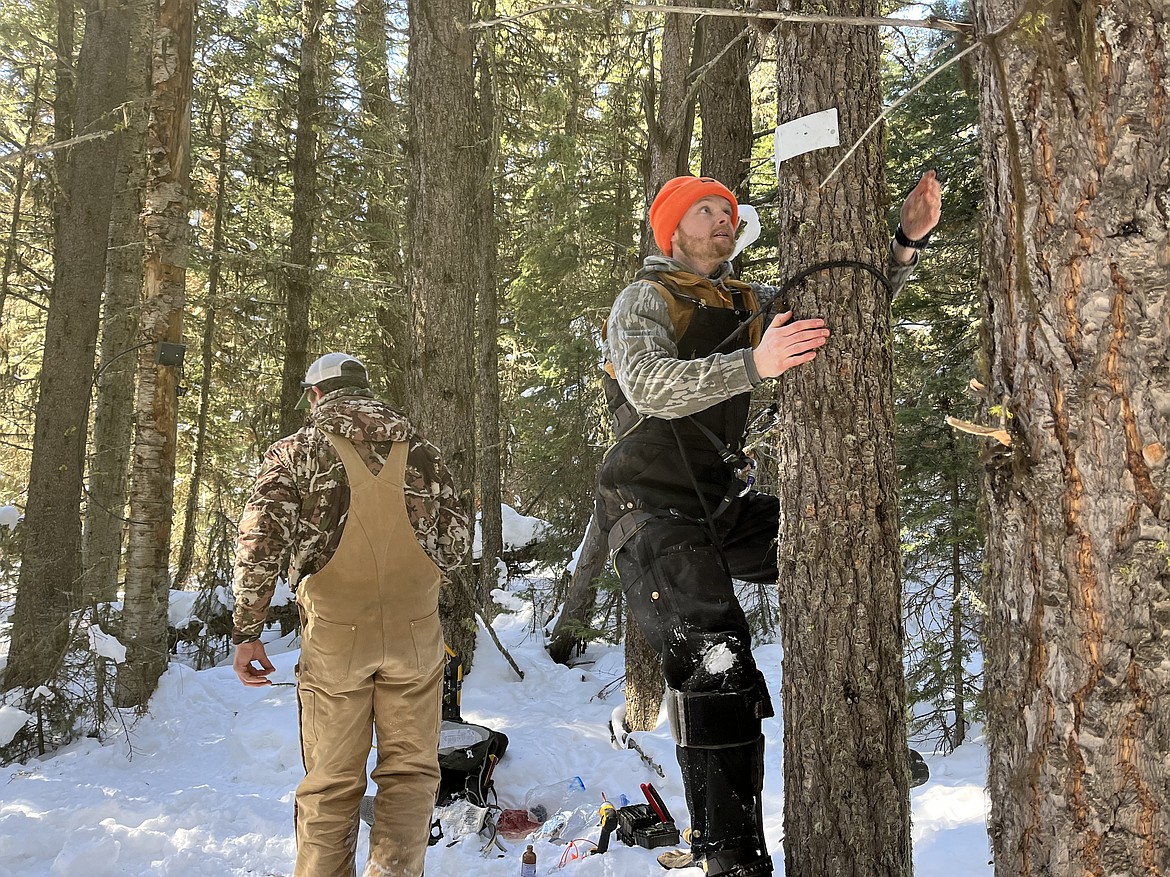
Biologists with Montana Fish, Wildlife and Parks set up a site to monitor fishers. (Courtesy of Montana Fish, Wildlife and Parks)
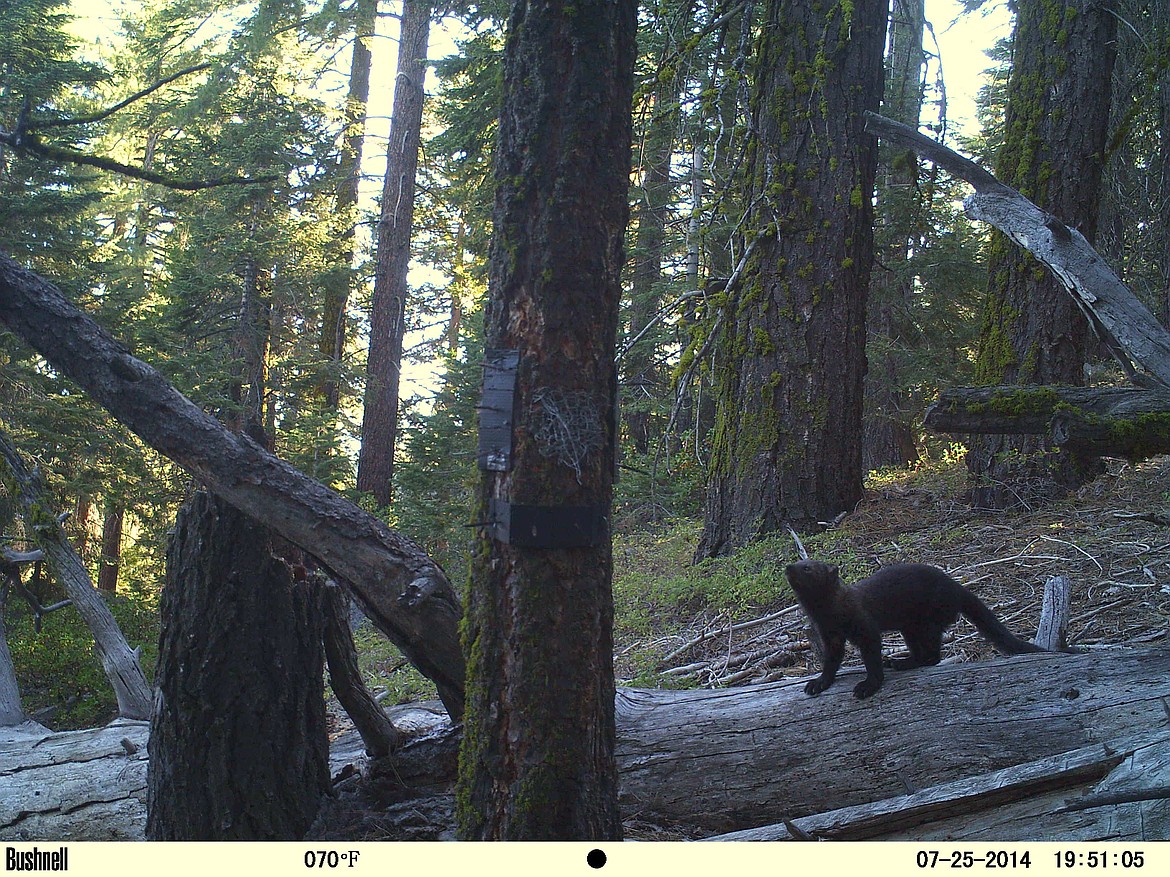
A fisher is captured on camera traps set by the U.S Forest Service. A hair snare can be seen in the foreground. (Courtesy of USDA Forest Service)
The fishers slipped into the Cabinet Mountains on New Year’s Day 1989. Moving quietly and stealthily, their elongated bodies were hardly more than a shadow against the bright winter snowscape. It was their first taste of freedom in months.
The fishers had been live-captured from Minnesota forests in November and transported by pickup truck to a research facility in Northwest Montana. There, biologists prepared the small, weasel-like creatures for release back into the wild. They examined each animal for signs of injury or disease, drew blood samples, and affixed radio collars around scruffy brown necks. The final step was a five-day acclimation period, in which the fishers lived in wire cages on the outskirts of the Cabinet Mountains Wilderness.
Researchers had painstakingly recorded every step of the journey, but when it finally came time to open the cage doors and release the fishers, the scientists turned away. They wanted the fishers to have the best chance for a stress-free reintroduction.
“On the morning of the release date, the cage doors were opened and all humans immediately left the area,” wrote Kevin Roy, a graduate student who worked on the project.
There were no witnesses to the fishers’ first moments back in the wild. They were ghosts, dissolving seamlessly into the forest shadows.
More than 100 fishers would be translocated to the Cabinet Mountains between 1989 and 1991. Radio tags helped biologists track a few of the transplants, but most vanished from the scientific record as soon as they set foot outside their cages.
Their fates remained a mystery until a few years ago, when Alex Fraik began scouring the archives of state and federal wildlife agencies. A trained geneticist with the U.S. Forest Service’s Rocky Mountain Research Station, Fraik wasn’t looking for paper documents. She was far more interested in the scraps of fur, scat and tissue that various agencies had collected and preserved over the years.
Each sample contained a wealth of genetic information that Fraik could use to reconstruct the long-term outcomes of a suite of fisher translocations that occurred in western Montana and northern Idaho during the 20th century. The analysis would also provide an unprecedented look into the region’s current fisher population, enabling land managers to make more informed decisions about the conservation of one of the region’s most enigmatic creatures.
“The main function of this study was to see how all of these translocations and movements of fishers are impacting contemporary genetic diversity and what we call population structure, or essentially our way of measuring how well these populations of animals are connected and how much they're reproducing together,” said Fraik.
FISHERS ARE native to boreal forests throughout Canada and the northern United States. Still, the rampant fur trade of the 1800s extirpated much of the population in western Montana and northern Idaho. Weighing 5 to 10 pounds, they were once commonly called “fisher cats,” likely because of their cat-like scream, partially retractable claws, and ability to climb trees.
The tides turned back in favor of the fisher in the early 1900s, when timber overtook trapping as the region’s industry of choice. Loggers shipped fishers from British Columbia in the hopes that the mustelids would hunt down the bark-loving porcupines that regularly girdled prime timber prospects.
State and federal wildlife agencies supplemented early informal translocations with their own projects throughout the 1950s and 1960s. Fishers were captured in British Columbia and released into the Kootenai, Flathead, Bitterroot, and Nez Perce-Clearwater National Forests. The reintroduction to the Cabinet Mountains between 1989 and 1991 represented the final fisher translocation project in the region.
Nathan Kluge, the furbearer coordinator for Montana Fish, Wildlife and Parks, said the state led several initiatives to study fishers in the intervening years, including two occupancy studies. However, that research provided only a broad overview of where fishers were in western Montana, with little information on overall population sizes and even fewer insights into factors such as genetic diversity.
“We didn’t have a really good understanding of our fisher population in Montana,” said Kluge.
However, the state wildlife agency did have a wealth of fur samples. While completing the first occupancy study in the winter of 2018-19, biologists had erected hair snares at 344 locations across Montana, Idaho and eastern Washington. An additional 132 monitoring stations were deployed during the winter of 2023-2024.
The contraptions consisted of a piece of metal pocked with wire coils designed to snag onto the fisher’s fur. Front country monitoring stations were regularly supplied with slabs of roadkill to entice the fishers, while more remote locations utilized scent pumps that automatically drip what biologists called “a liquid lure” onto a piece of bone once per day.
Back at the Rocky Mountain Research Station, Fraik tweezered the hairs that researchers had gathered into sterile plastic tubes and set the samples spinning in a centrifuge. Several cycles of rapid rotation and heat amplified strands of DNA in the hair, enabling researchers to study the animals' genetics in detail.
In the samples from the Cabinet Mountains, Fraik saw clear evidence that at least some of the translocated fishers had survived long enough to reproduce.
“[The Cabinet Mountains samples] have genetic markers that are uniquely found in the Midwest, and so, it made it pretty easy to go, ‘Oh yes,’” said Fraik. “We know for sure that their ancestors are Midwestern fishers.”
More puzzling to Fraik was the absence of Midwestern genetics in samples taken outside the Cabinet Mountains.
The finding fits within the historical context of fisher translocations. Most biologists sourced fishers from British Columbia. The translocation to the Cabinet Mountains, which used fishers captured in Minnesota and Wisconsin, was an outlier.
In theory, the Midwestern transplants would have dispersed from the transplant site in the following years. Some would have mated with native fishers or transplants from British Columbia. Generation by generation, they would have spread their Midwestern genetics throughout the entire region. In reality, Fraik’s genetic analysis suggested that the Midwestern fishers and their offspring had stayed within the confines of the Cabinet Mountains.
“We expect when we translocate animals, they're going to move and take advantage of these resources, but in some cases, it seems like they kind of stay put and we don’t really know why,” said Fraik.
She suggested that I-90 could be a barrier for fishers attempting to move south from the Cabinet Mountains, but further studies would be needed to confirm this hypothesis.
In Idaho, a project is underway to improve connectivity for fishers in the Cabinet Mountains with more southerly populations in the Nez Perce-Clearwater National Forest. The Coeur d’Alene Mountains separate the two populations, which officials say “contain extensive modeled fisher habitat with limited documented fisher observations.”
Over the next two to three years, the Idaho Department of Fish and Game plans to translocate up to 15 fishers each year from the Nez Perce-Clearwater National Forest to the Coeur d’Alene Mountains.
“If successful, this effort will establish a third population center, provide genetic connectivity and improve our understanding of fisher ecology in Idaho,” reads a handout on the program from a January 2026 commission meeting.
There are currently no plans to translocate fishers in Montana, but Kluge said the recent genetic study would prove useful if officials decide to follow Idaho’s lead in the future. With the information supplied by Fraik’s analysis, biologists would be able to ensure any translocated fishers have genetic signatures similar to the native population — something that Kluge said biologists are already doing with pine marten translocations in Southwest Montana.
For now, he said the agency is conducting research to ascertain better why the Cabinet Mountains continue to host fewer fishers than other areas of Northwest Montana. The prevailing hypothesis for several years was that the extensive history of timber extraction had left few old-growth trees for fishers to den in.
Biologists distributed man-made den boxes throughout the Cabinet Mountains to test the theory. Game cameras recorded fishers visiting several of the boxes between 2019 and 2025, but none lingered long enough to give birth and raise their kits.
Despite the less-than-inspiring results, Kluge said the venture expanded biologists’ understanding of fishers and put the agency one step closer to its goal of conserving Montana’s native wildlife species.
“All of this is an effort to ensure that we have a sustainable fisher population for the foreseeable future,” he said.
Reporter Hailey Smalley can be reached at 758-4433 or [email protected].
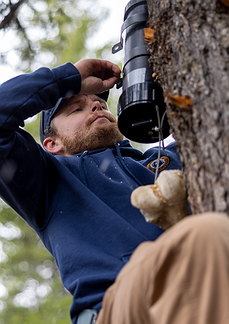 Nathan Kluge affixes a scent pump to a tree. (Courtesy of Montana Fish, Wildlife and Parks)
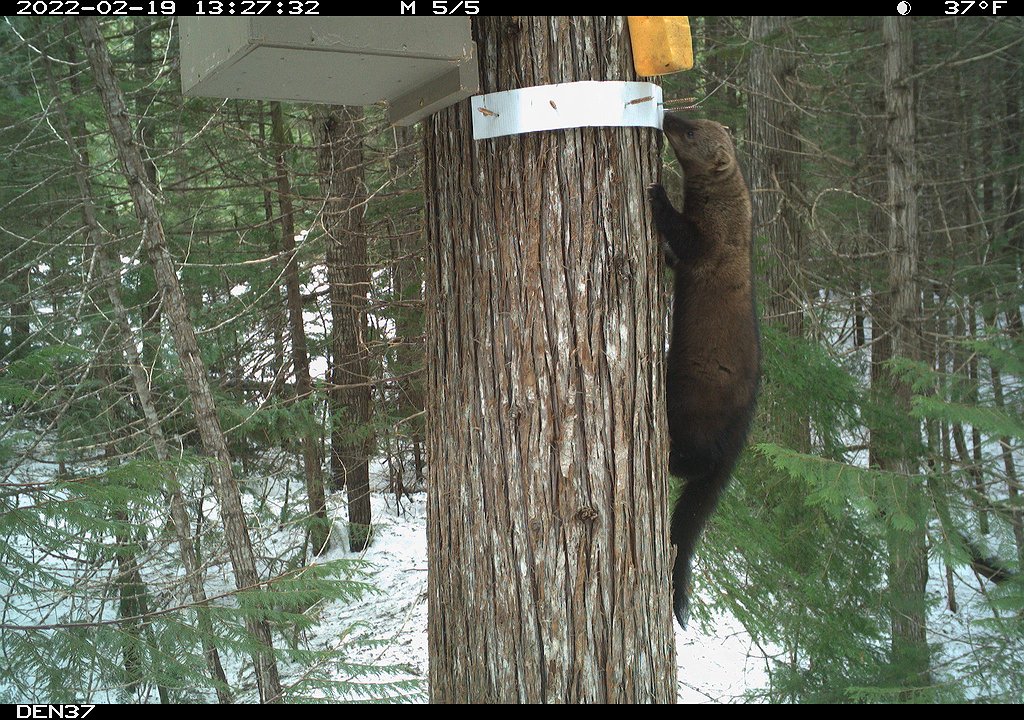 A fisher investigates a hair snare set by Montana Fish, Wildlife and Parks. (Courtesy of Montana Fish, Wildlife and Parks)
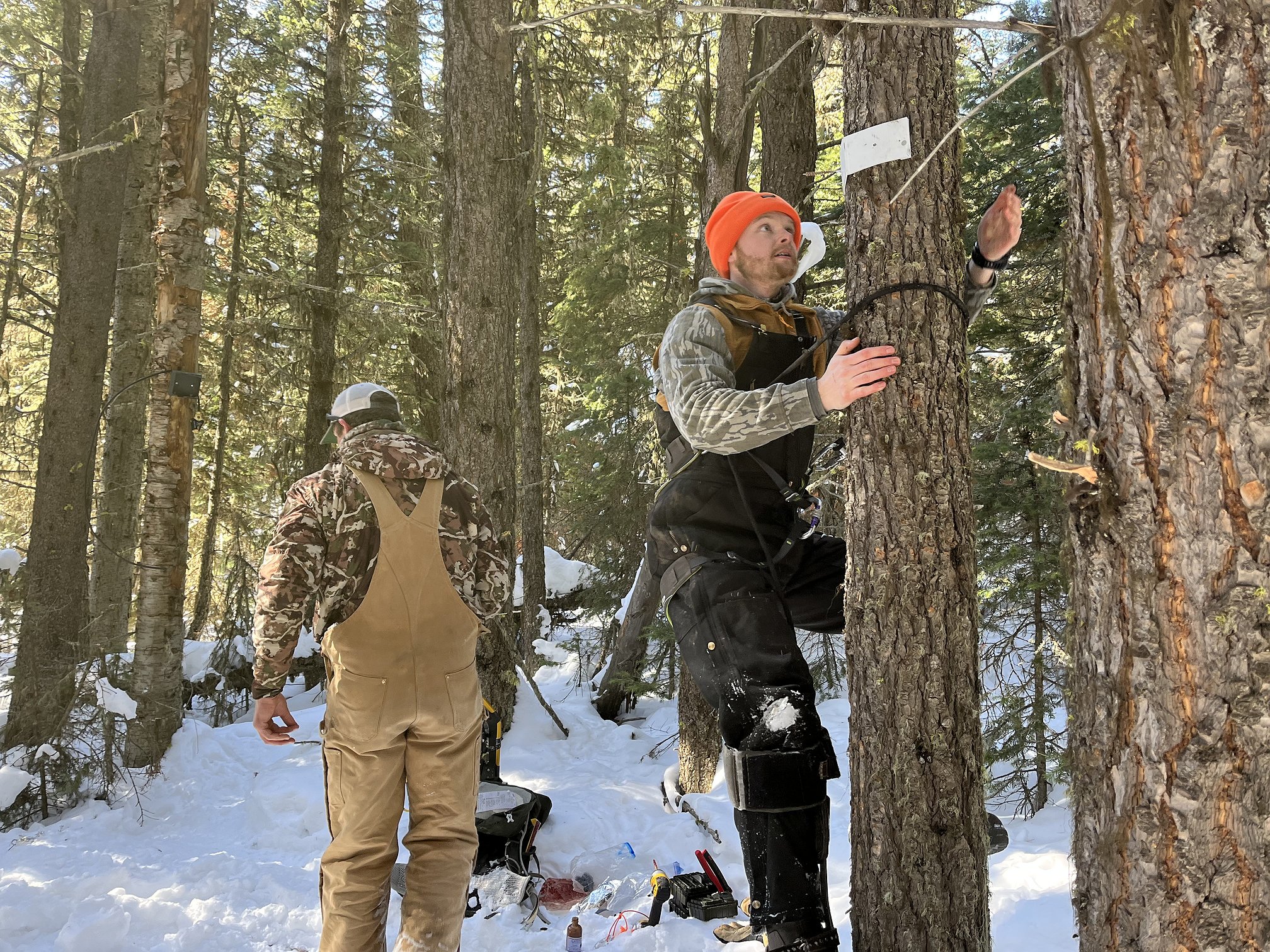 Biologists with Montana Fish, Wildlife and Parks set up a site to monitor fishers. (Courtesy of Montana Fish, Wildlife and Parks)
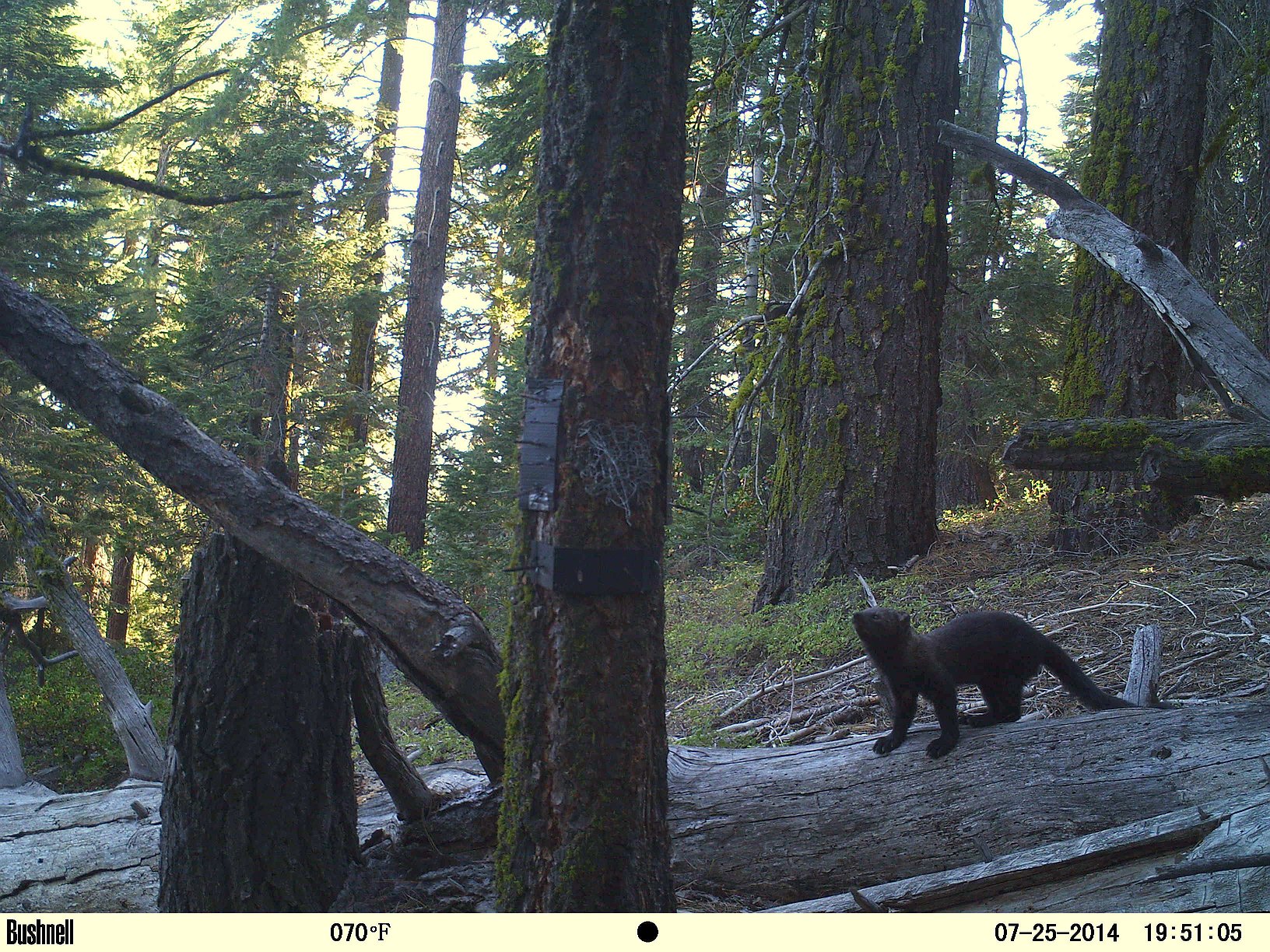 Camera traps set by the U.S Forest Service capture a fisher. A hair snare is in the foreground. (Courtesy of USDA Forest Service)
ARTICLES BY HAILEY SMALLEY
Winging it through winter: Rare Anna's hummingbird finds shelter in Bigfork backyard
The bird turned out to be an Anna’s hummingbird — a rare find in western Montana. The Montana Natural Heritage Program’s bird distribution database has logged only 158 sightings of Anna’s hummingbirds in the state, including 21 sightings in Flathead County.

Business groups sue to stop proposed ban on political spending in Montana
The Kalispell Chamber of Commerce is one of several organizations to file suit over a proposed ballot initiative to ban corporate spending in politics, arguing it infringes on the free speech rights of businesses.

Mexican man who led deputies on high-speed chase in Kalispell receives federal prison sentence
A Mexican national arrested after a high-speed chase through Kalispell in June 2025 received an 18-month sentence for illegal reentry in federal court last week.