
Growing together
JOEL MARTIN | Hagadone News Network | UPDATED 4 months AGO
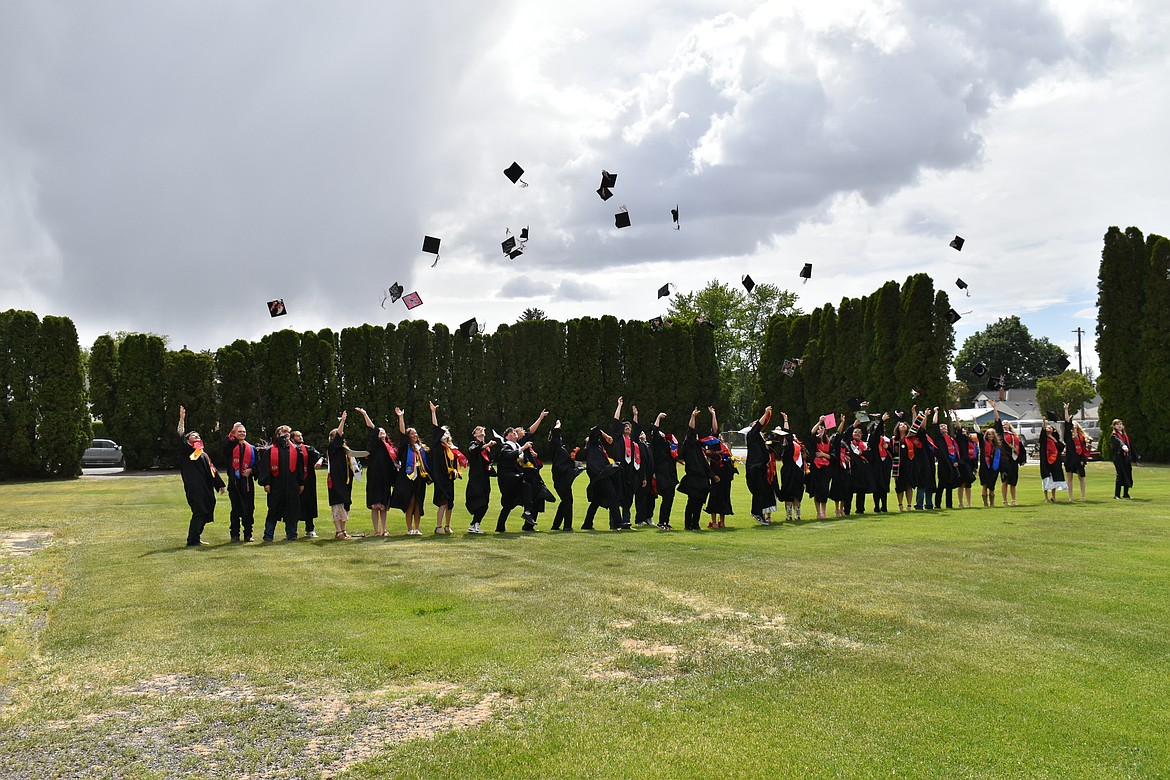
Mortarboards fill the sky above Lind-Ritzville High School as the Class of 2026 ends its high school years.
JOEL MARTIN/COLUMBIA BASIN HERALD
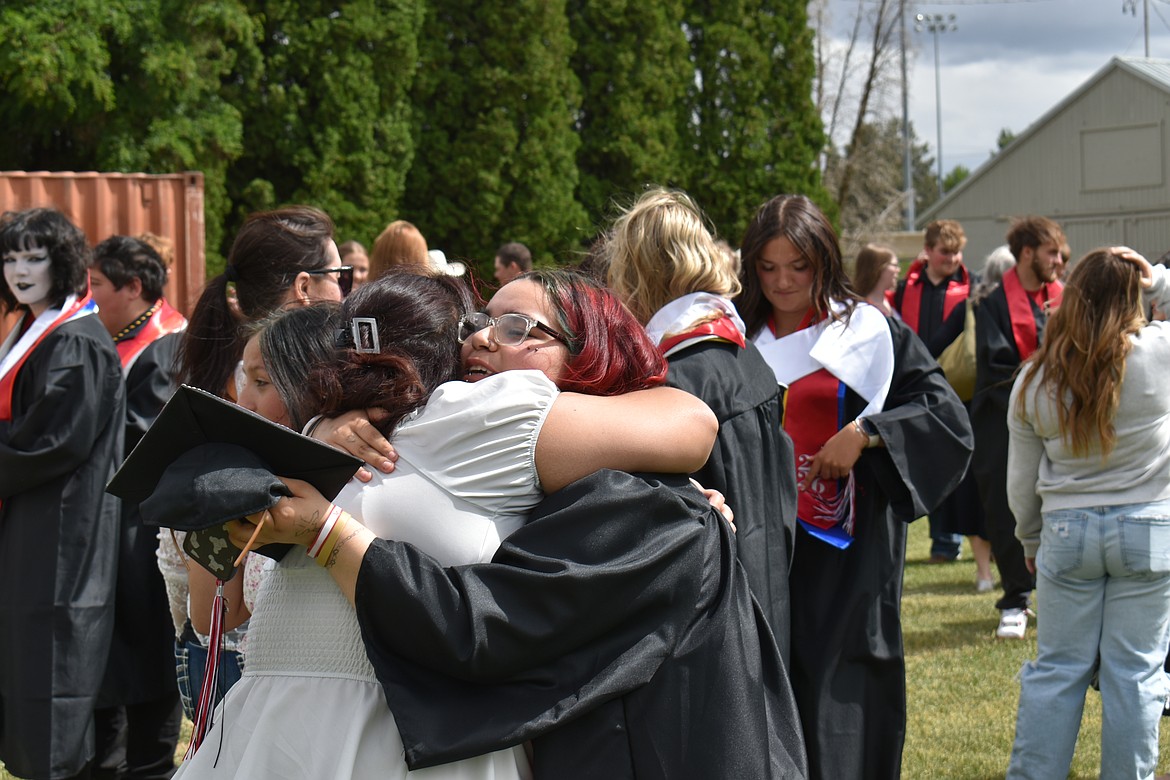
New Lind-Ritzville High School graduate Anahi Leal, right, hugs her friend Ashley Ramos after graduation June 6.
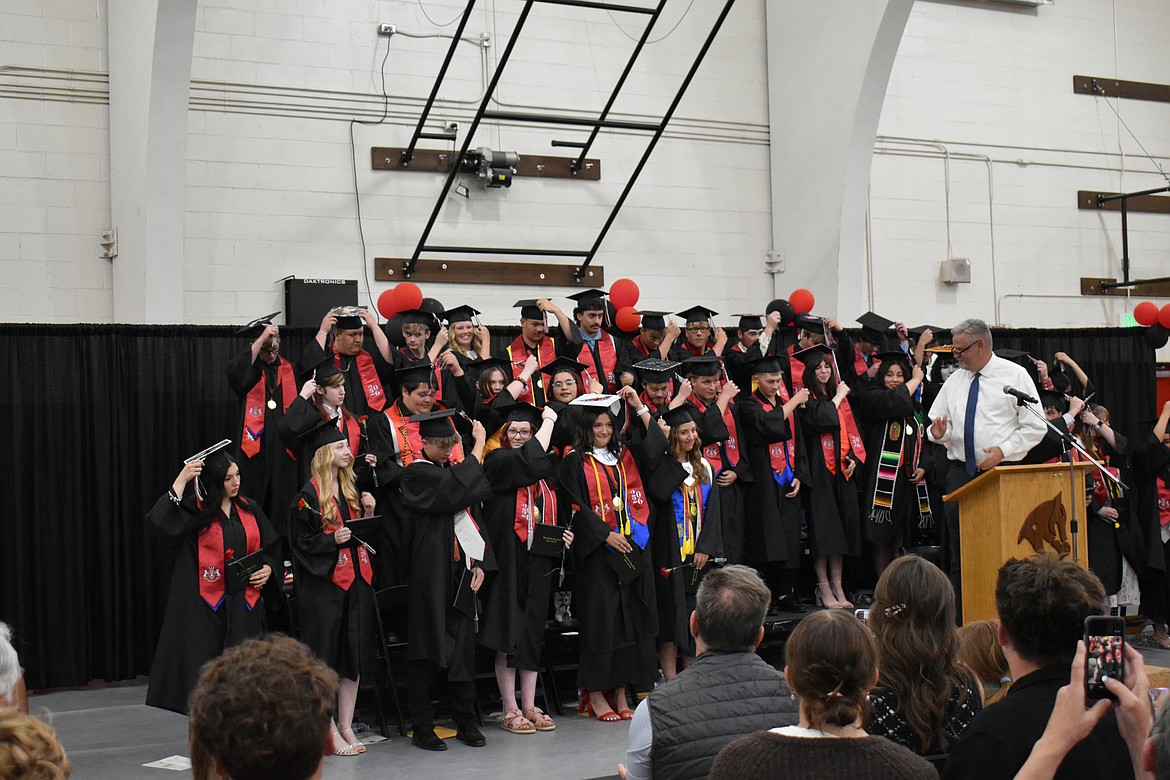
The Lind-Ritzville Class of 2026 turns its tassels June 6.
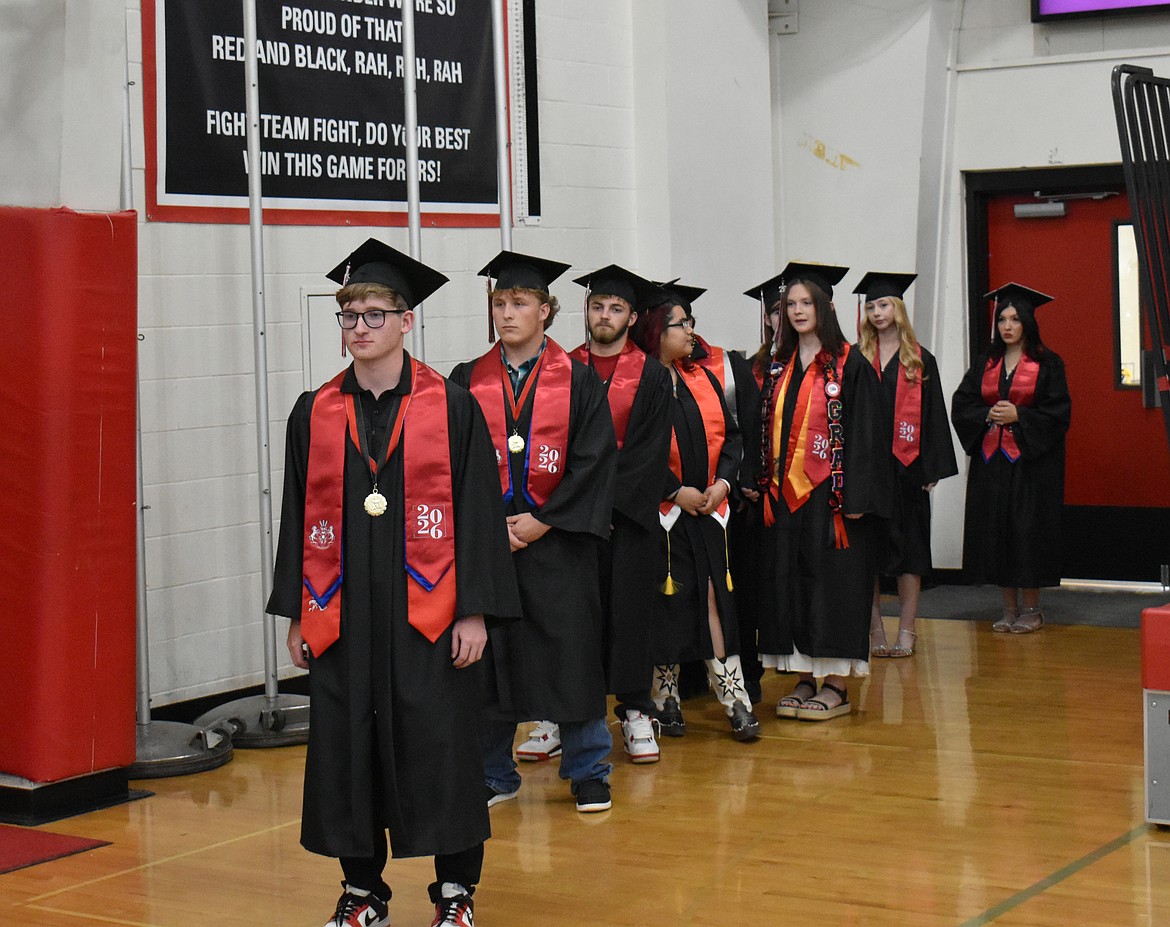
Lind-Ritzville high school seniors prepare to process into their graduation ceremony June 6.
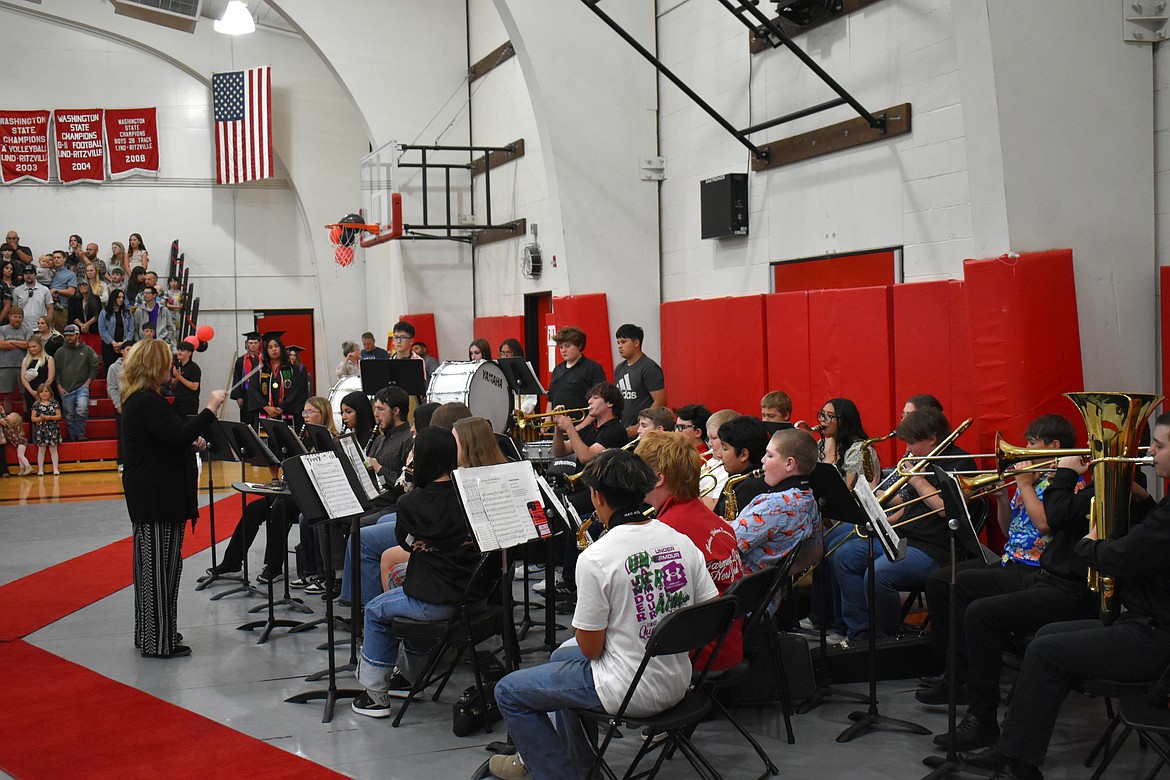
The Lind-Ritzville High School band plays “Pomp and Circumstance” at the beginning of graduation.
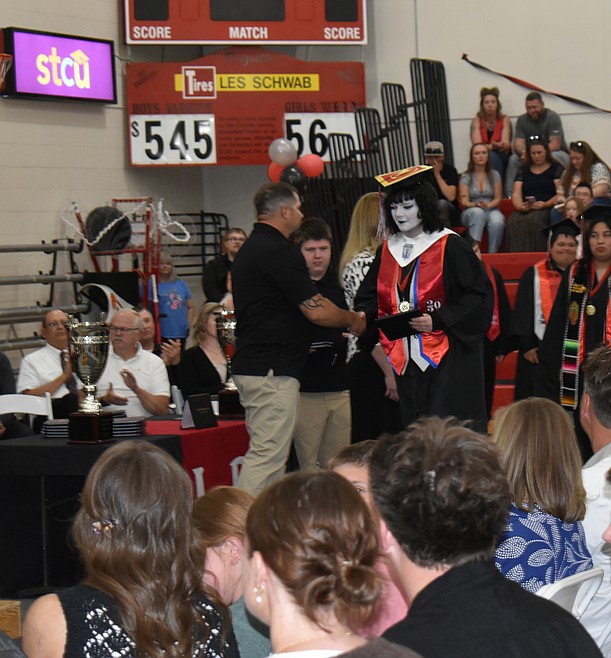
Erien Najera receives her diploma at the Lind-Ritzville High School graduation June 6.
Joel Martin has been with the Columbia Basin Herald for more than 25 years in a variety of roles and is the most-tenured employee in the building. Martin is a married father of eight and enjoys spending time with his children and his wife, Christina. He is passionate about the paper’s mission of informing the people of the Columbia Basin because he knows it is important to record the history of the communities the publication serves. | June 11, 2026 4:51 PM
RITZVILLE — The Lind-Ritzville High School Class of 2026 had a lot of shared history.
“Our classes had a unique journey,” said Salutatorian Lilly Fannin. “Before we were one graduating class, we were two separate classes from different schools. When we came together in middle school, none of us knew exactly what to expect, but instead of staying separated, we welcomed each other and formed new friendships. As the years went on, these two groups expanded into one, bringing a class of supporting each other, laughed together, and grew together.”
Thirty-five seniors graduated from Lind-Ritzville on June 6. They filed into the Gilson Gym two by two to the strains of “Pomp and Circumstance,” played by the Lind-Ritzville High School Band, then took their places while Principal Kevin Terris recognized them for their accomplishments.
“If you competed in the Future Business Leaders of America regional competition this year and qualified for the national competition, please stand,” Terris said. Next, he called on those who had helped freshman get oriented at the beginning of the year, those who competed at the state level in Future Farmers of America, those who exhibited an animal at the Wheatland Communities Fair.”
In addition to Fannin, the salutatorian, the graduation featured five valedictorians. Jackson Nichols went first.
“The summer going into my freshman year, I watched ‘High School Musical’ school almost every day of August to prepare for the first day,” Nichols said. “When I walked in those first front doors of high school, I was disappointed. There was no random singing, dancing, and we actually had to do schoolwork. It was here that I got my fear of red pens due to all the red markings to my papers.”
What seems important in high school isn’t important in the long run, Nichols said.
“It's important for us to start to separate ourselves from these external labels we were given in high school and start to focus on our internal characteristics,” he said. “At the end of the day, we're human beings, not human things. You may choose to do a certain career, but that doesn’t define who you are. What defines you is you being kind, caring, patient and other characteristics like that. As we leave here today, we have gained a few new labels – graduates, alumni – but it's important for us to look past those labels to really appreciate who you are,”
Not knowing the future is OK, Valedictorian Saige Galbreath said.
“People assume that I have a five-year plan mapped out to the smallest detail, that I know where I'll be living, what career I'll have and exactly what I want my future to look like,” Galbreath said. “Unfortunately, for all of you, what you're actually getting today is a girl who found out just this year that hash browns are actually made from potatoes … Traditionally this is the part where I'm supposed to give everyone some kind of life-changing advice for the future. The problem is that I don't have the future figured out, and if we're being honest, I don't think most of us do. We are 18-year-olds; we are experiencing life for the first time. Underneath the pressure to look successful, act confident and have everything planned out, most of us are still trying to figure out who we are and who we want to become.”
The process is sometimes more important than the result, Valedictorian Madelyn Carpenter said.
“Success is not the grade we get at the top of the test,” Carpenter said. “Success is defined by the work someone does behind it: late night studying, the confusion we get and understanding where we went wrong. Success is also the persistence we give in trying over and over again, despite failing the first time … Our lives are only going to become more difficult from here. There will be moments we don't understand anything about what we're learning, and that's OK. Learning has never been about getting everything right the first time, but about the gradual education you get from continuing to do your best despite the failures.”
Successful people don’t get that way all on their own, Valedictorian Zoe Galbreath said.
“Success means so much more when we remember those who helped us achieve it,” she said. “Society today often measures success by a list of accomplishments: crossing the finish line, high academics, degrees, dream jobs, or any other achievement that reflects work ethic and ability. Society measures our worth by these achievements and fails to realize the bigger picture, because behind every achievement are the fingerprints of countless people that made it possible. Parents, teachers, coaches, friends, mentors, and community members all contribute, whether we may notice it or not.”
Maeve Korthuis, the final valedictorian, started her speech by talking about her childhood hobby of collecting animal bones she found in the wild. Not many people share that passion, she said, but everybody has something they can concentrate their efforts on.
“While my family was used to enjoying the weather and hiking, I spent my time laser focused on looking for the next addition to my collection,” Korthuis said. “I haven't gone bone hunting in years, but the memories of spotting something flashing in the distance and charging towards it through tall sagebrush that made me sneeze is etched in my mind as a reminder that opportunity often lies just out of reach … I hope to see value where others see nothing. Once we step down from the stage, each one of us will have distractions from the trail that represents what we want our futures to hold. I can only hope that we will be brave enough to risk the rattlesnakes and rolled ankles in the pursuit of meaning.”
The guest speaker was Adams County Superior Court Judge Peter Palubicki, who spoke about the importance of appreciating what you have.
“Gratitude is a choice,” Palubicki said. “If I could give you just one piece of advice, here it is: Next time you are about to say ‘I have to do something’ such as going to work, instead, say, ‘I get to go to work.’ Apply this mindset to everything: ‘I get to go to practice. II get to clean my car. I get to study.’ Here’s a big one: ‘I get to pay my own bills.’… Adapting to that mindset will change your life.”
The closing speaker was Beau Fode.
“The memories that we create with our classmates are ones that will last a lifetime, ones that will be told to our children and grandchildren as we grow older," Fode said. "All of us have our differences, our unique characteristics, our own preferences, but what we all have in common is that we all made it to graduation.”
Everyone puts their pants on one leg at a time, Fode said.
“People all start their day the same,” he said. “But it is what we do within that day that defines us. The Class of 2026 faces struggles and hardships. Relish the memories and make sure you put your pants on.”
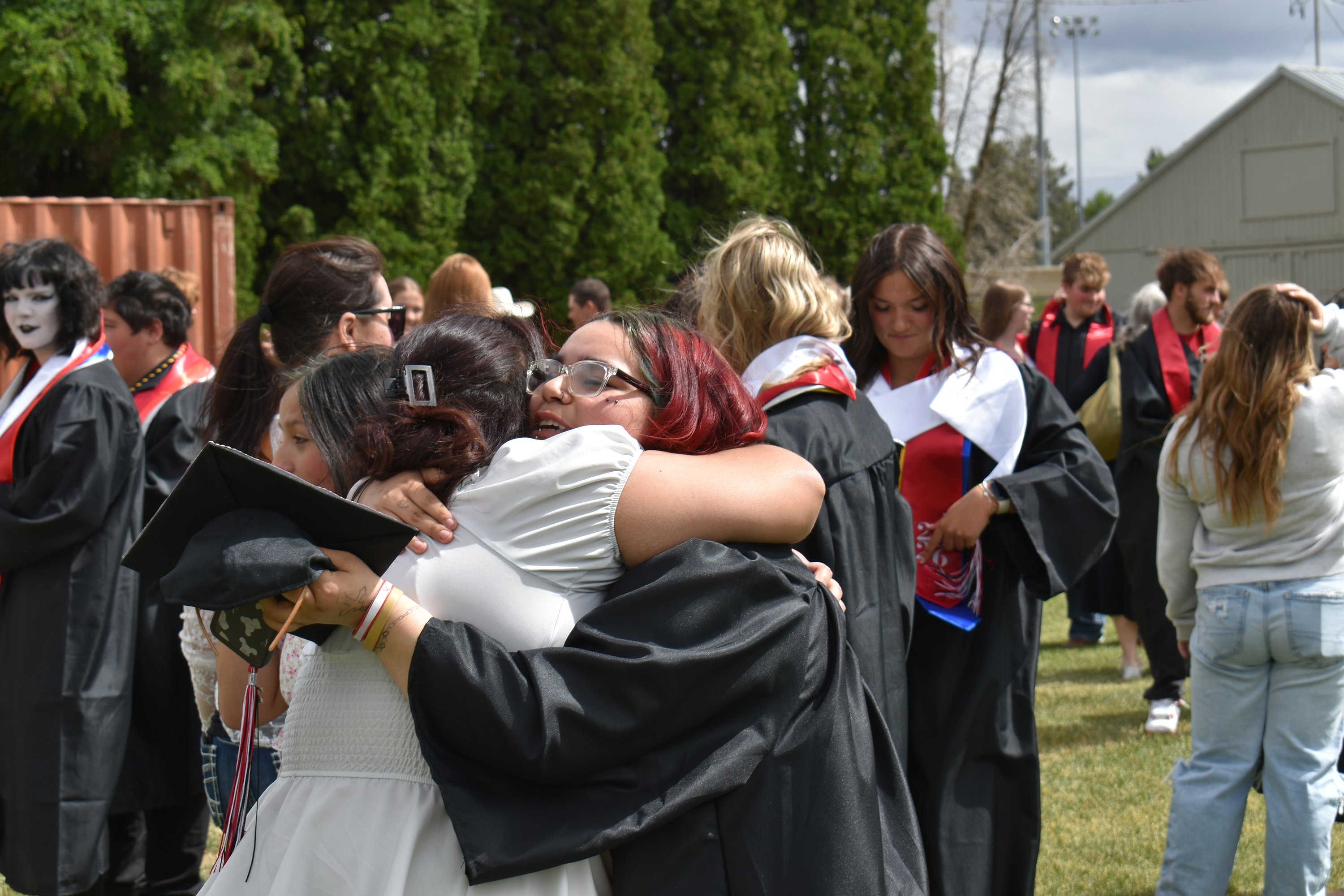 New Lind-Ritzville High School graduate Anahi Leal, right, hugs her friend Ashley Ramos after graduation June 6.
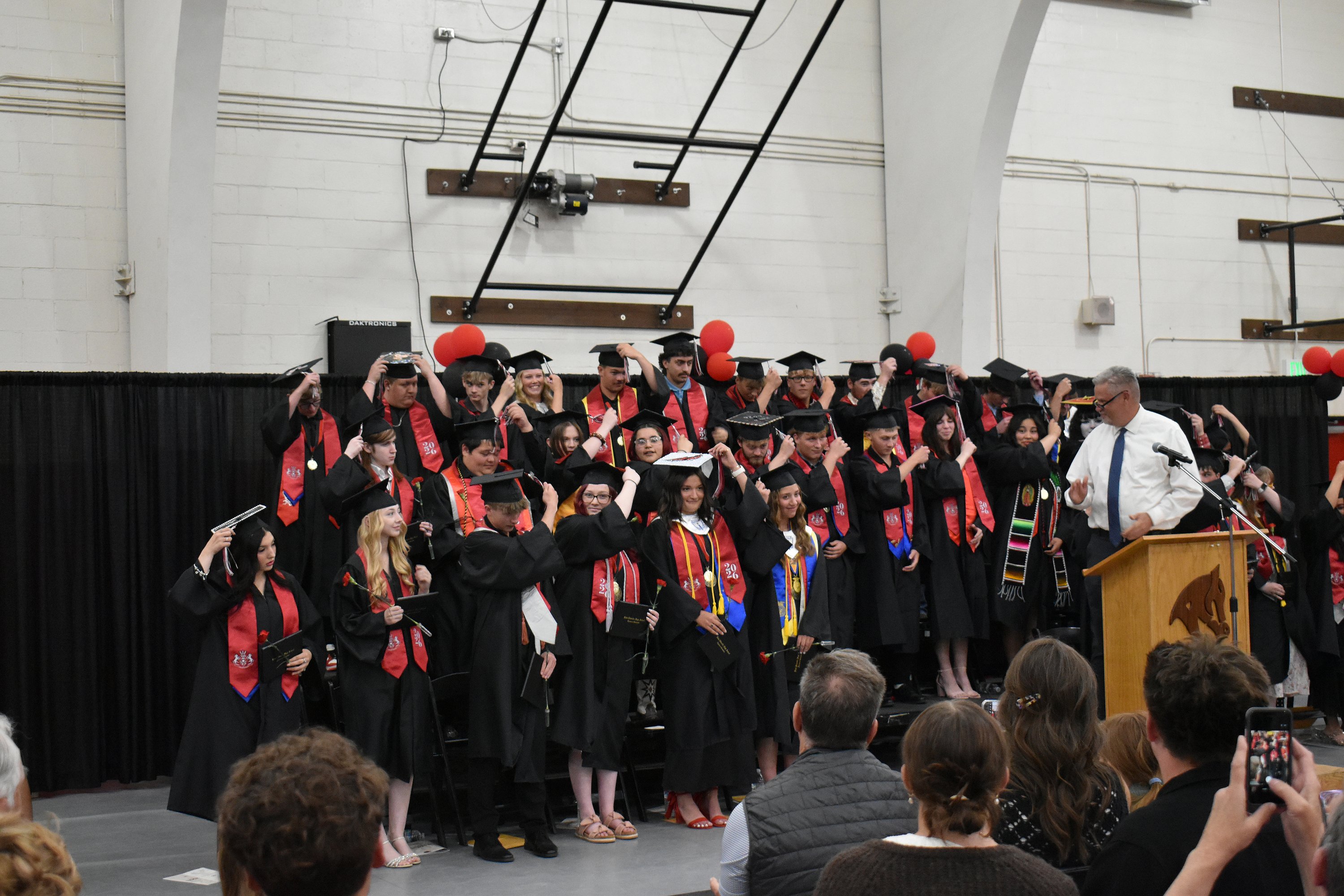 The Lind-Ritzville Class of 2026 turns its tassels June 6.
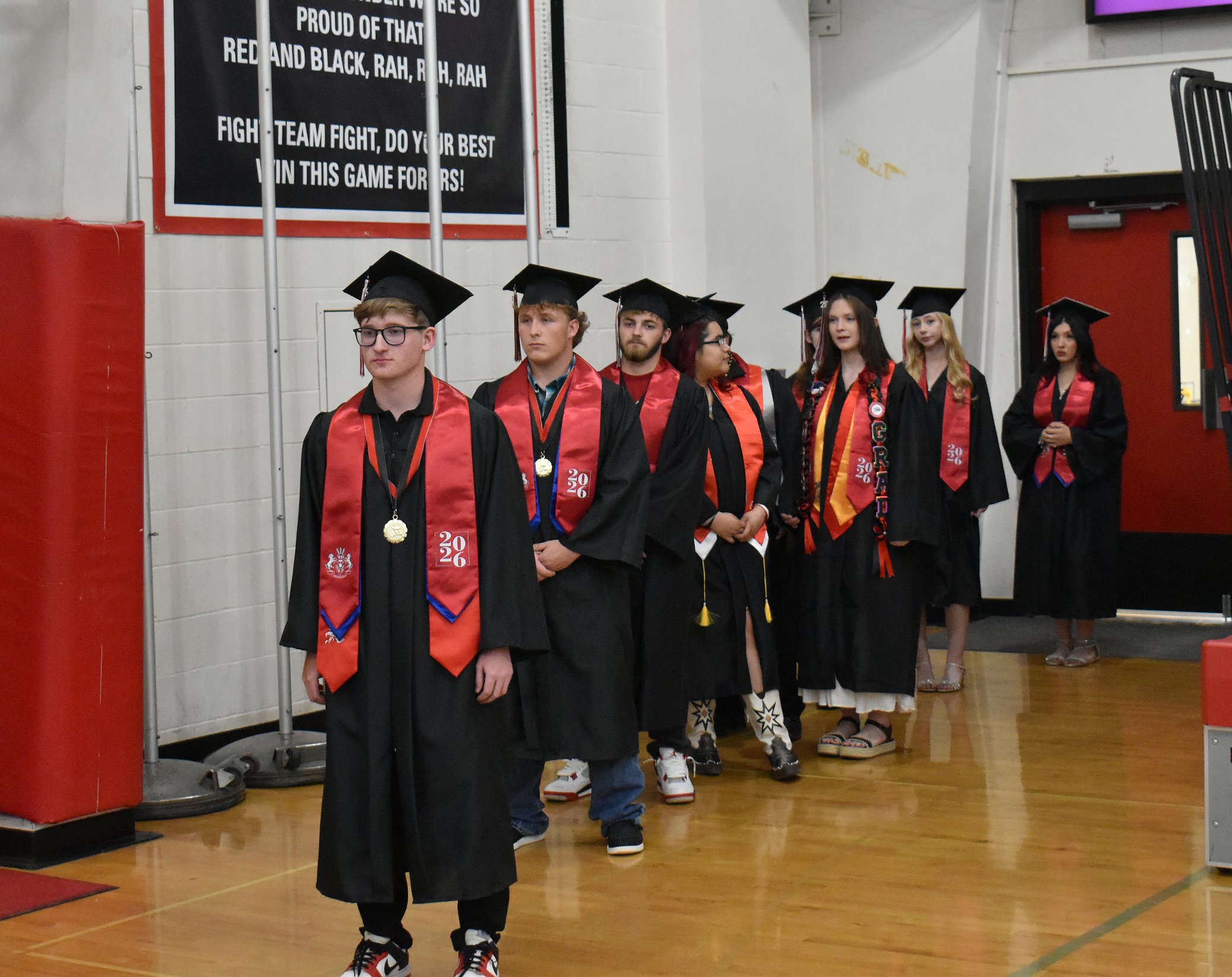 Lind-Ritzville high school seniors prepare to process into their graduation ceremony June 6.
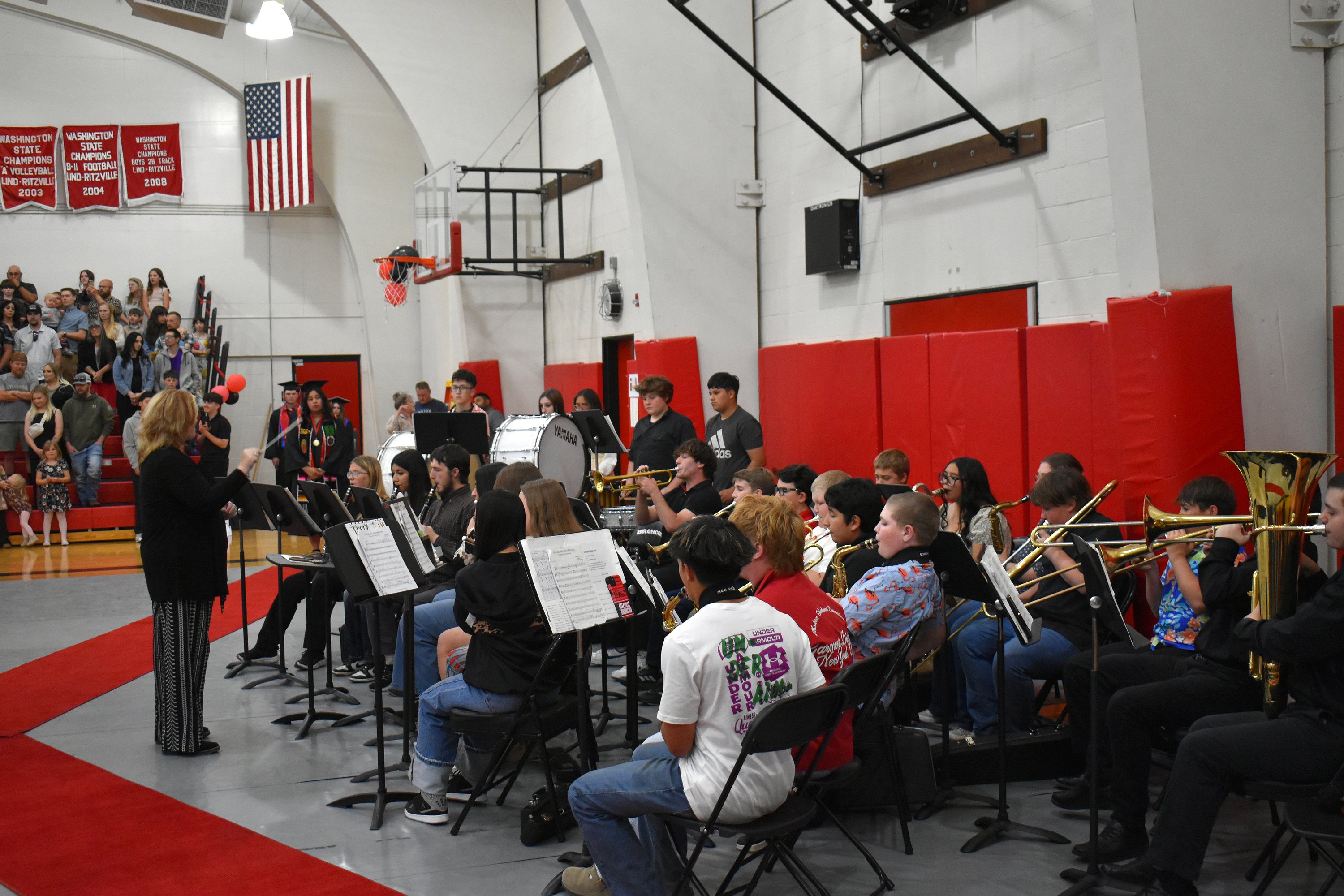 The Lind-Ritzville High School band plays “Pomp and Circumstance” at the beginning of graduation.
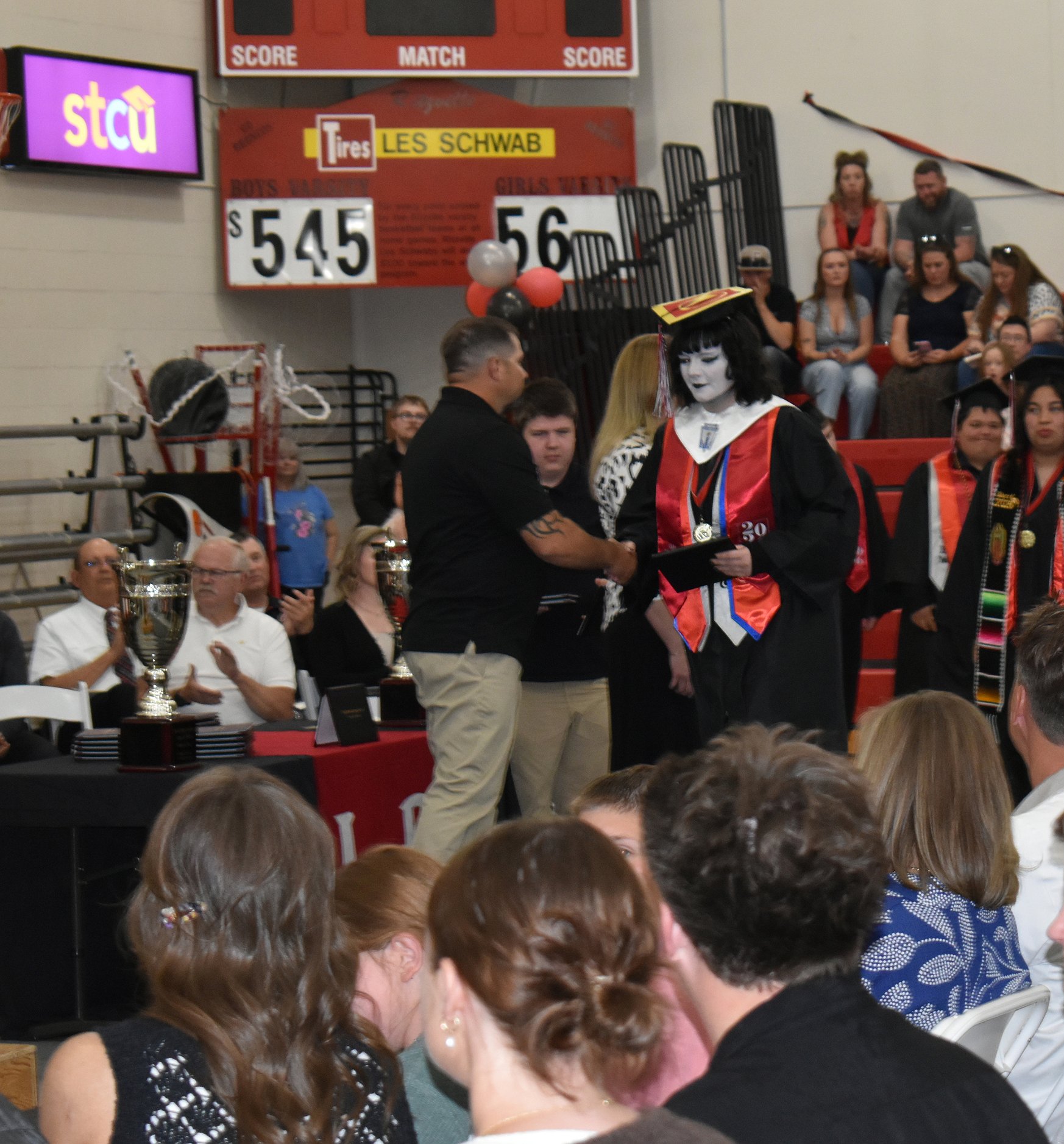 Erien Najera receives her diploma at the Lind-Ritzville High School graduation June 6.
ARTICLES BY JOEL MARTIN

Endless battle
Noxious Weed Control Board works to keep invasive plants under control
MOSES LAKE — Some of the nastiest plants in Grant County were the topic of a class led by Jay Johnson, a consultant with the Grant County Noxious Weed Control Board, Tuesday. The Noxious Weed Control Board, as its name would suggest, is tasked with keeping weeds under control in Grant County. That’s not a small job; the board’s website lists 129 species of noxious weeds that are found around Grant County. A noxious weed is defined as an invasive, non-native plant that threatens agricultural crops, local ecosystems or fish and wildlife habitat, according to the Noxious Weed Control Board. Washington state law requires that these weeds be identified and their spread kept to a minimum, if not completely eradicated. “We’re one of those agencies a lot of people don’t really understand,” Johnson said. “We’re a county office and … our funding is tax-based assessment. When you get your tax bill and you look down at all the expenses that you pay for, there we are.”

BASIN EVENTS: Oct. 16-24
COLUMBIA BASIN — Whether you feel like shopping, crafting, learning or seeing a show, there’s something happening for you this week in the Basin. Oct. 16 ‘My Family (Mi Familia)’ screening Spanning three generations, “My Family (Mi Familia)” is a heartfelt drama that follows the Sánchez family as they build their lives in East Los Angeles. Through love, hardship, triumph, and sacrifice, the film explores the immigrant experience, the strength of family bonds, and the traditions that connect one generation to the next. Lowrider show and taco truck before the screening. Sponsored by Columbia Basin Allied Arts, EDUBS C/S and the Moses Lake Creative District. $12 per person. Doors open at 6 p.m., film begins at 7 p.m. at the Moses Lake Civic Center Auditorium, 401 S. Balsam St. Tickets and info: www.cba-arts.org.

Moses Lake author encourages women to look beyond church culture norms
MOSES LAKE — A Moses Lake author’s book, “A Christian Woman Striving to Live Her Faith in a Man-Controlled World,” takes aim at the role to which many churches relegate the female half of their congregations. “It’s to encourage women in the faith,” Linda Curran said. “A lot of churches say, ‘Teach Sunday school, do this, do that, but don’t (evangelize.)’" In her book, Curran recounts a time when she moved to a new community and joined a church there. She was surprised to learn that, as a new female member, she had been automatically assigned church cleaning duties. When she questioned it, she wrote, she was met with condescension and her objections were brushed aside. In other churches, she said, women who were capable of teaching were relegated to “women’s ministry.”