
REC Silicon to be converted from public to private company
CHERYL SCHWEIZER | Hagadone News Network | UPDATED 2 months, 3 weeks AGO
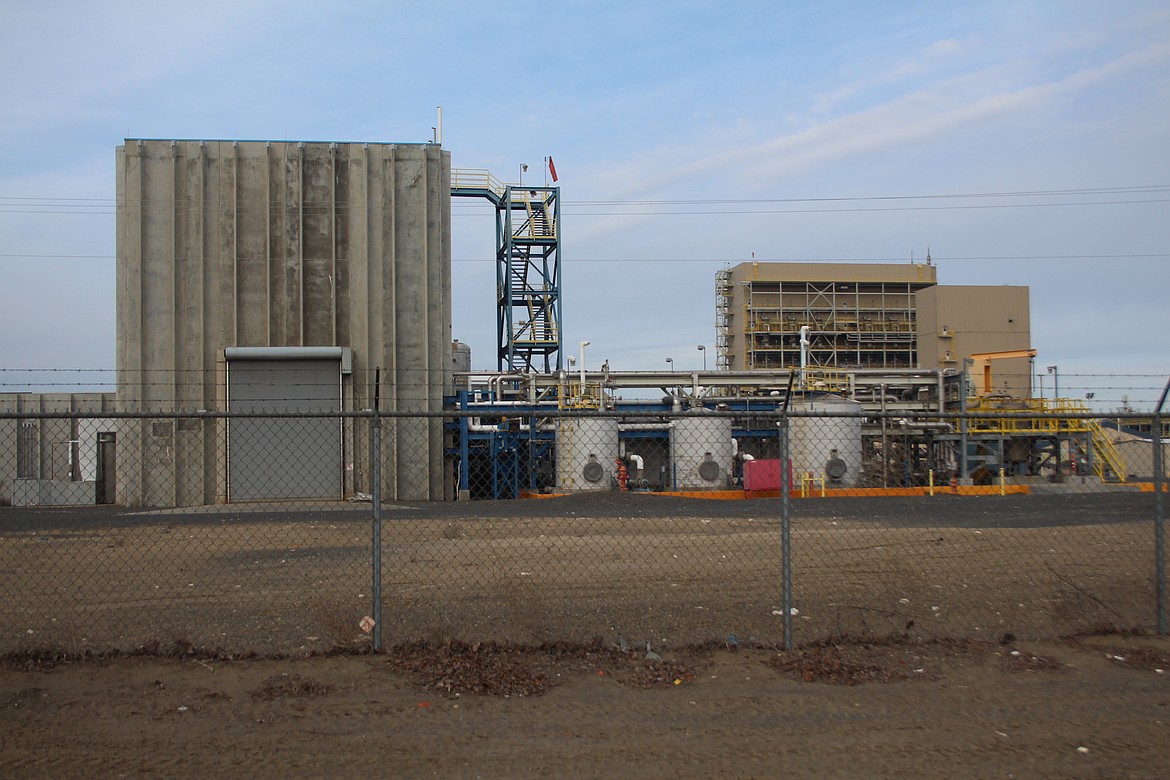
The owners of REC Silicon have announced the company will be converted from a publicly traded to a privately held company.
CHERYL SCHWEIZER/COLUMBIA BASIN HERALD
Senior Reporter Cheryl Schweizer is a journalist with more than 30 years of experience serving small communities in the Pacific Northwest. She began her post-high-school education at Treasure Valley Community College and enerned her journalism degree at Oregon State University. After working for multiple publications, she has settled down at the Columbia Basin Herald and has been a staple of the newsroom for more than a decade. Schweizer’s dedication to her communities and profession has earned her the nickname “The Baroness of Bylines.” She covers a variety of beats including health, business and various municipalities. | June 16, 2026 3:35 AM
MOSES LAKE — The owners of REC Silicon will be acquiring all the outstanding public shares of the company and removing it from the Euronext Oslo Borse.
“As the company will apply for a de-listing of its shares from the Euronext Oslo Borse, it is considered appropriate to transform the company from a public limited liability company to a private limited liability company,” according to the minutes of a board meeting held Monday.
Board members voted to dissolve the existing board when the transition to a private company is complete and appoint Jun Chul Chang as the sole board member.
Anchor AS holds about 93% of REC’s stock. It’s a subsidiary of the Hanwha Group, the South Korean-based company that first purchased stock in REC in late 2021 and early 2022.
Anchor announced early Monday morning that the company has initiated a “compulsory acquisition of shares.” That means shareholders of outstanding stock not already held by Anchor AS will be paid about 24 kroner per share, the equivalent of about $2.40.
“Formers shareholders of the company who do not object to, or reject, the offered compulsory acquisition price will be deemed to have accepted the (offer),” according to an REC press release. “Any objection to, or rejection of, the offered compulsory acquisition redemption price must be made at the latest by Aug. 18.”
The REC Silicon facility on Wheeler Road was closed in late December 2024. It shut down in 2019, then reopened in 2022.
The Wheeler Road facility produced polysilicon, which is used in the production of solar panels and in the electronics industry. Most production is based in China.
REC started producing polysilicon again, but the resulting products had to pass some specific tests to be accepted by manufacturers. The company was having trouble meeting the specifications required, according to a 2024 press release. Company officials tried making changes to finishing and handling systems, but it wasn’t effective.
“The company was unsuccessful in its attempts to fully rectify the issues and ultimately received an unsuccessful qualification test,” the press release said.
The production process starts with silane gas, said Chuck Sutton, a former REC Silicon executive based in Moses Lake, in 2024.
“That silane gas can then be sold into the market as is or used to make polysilicon or other silicon gases,” Sutton said.
REC still has a facility operating in Butte, Mont. that produces silane gas. But Chief Executive Officer Kurt Leavens wrote in the company’s 2026 annual report that the company revenue dropped significantly in 2025. Sales from the Butte facility decreased by about 14% between 2024 and 2025.
REC officials have not said what they plan to do with the Moses Lake facility.
“The silane facilities were placed in a safe-shutdown condition so that a future restart would be possible if silane market conditions and high-volume demand opportunities were to materialize.” Leavens wrote in the annual report.
Market conditions have not improved, however, and REC Silicon has received a series of loans from Anchor AS. Company officials announced Monday that the company received an extension on and existing $50 million loan from the Standard Chartered Bank of New York, the subsidiary of a London-based bank.
“REC Silicon does not have sufficient available cash to meet debt service and other anticipated operating cash flow requirements going forward without the continued support of the major shareholder, Hanwha, or additional sources of capital. Therefore, it will soon require additional financing beyond this loan, either from Hanwha or from other sources of capital, none of which has yet been finalized or guaranteed,” according to the announcement.
ARTICLES BY CHERYL SCHWEIZER
Road projects on hold for Labor Day weekend
MOSES LAKE — With Labor Day weekend dead ahead, drivers will be able to move freely about the state. Most road projects are on hold for the holiday weekend. Nobody will be working on the Hansen Road overpass on Interstate 90, but the lane restrictions that are in effect will continue through the end of the project.

Cost estimates for water source alternatives given to Moses Lake City Council
Protected under the U.S. Endangered Species Act, efforts are ongoing to keep it self-sufficient
MOSES LAKE — It’s going to cost a lot of money to provide alternative water sources for the city of Moses Lake, but some of the possible alternatives will cost more than others. City officials provided the Moses Lake City Council with costs for various alternatives Tuesday.

Dryer vent cleaning is important -- but often overlooked
MOSES LAKE — Not all the maintenance a house needs is visible. Sometimes a potential problem just goes unnoticed until it causes trouble, sometimes serious trouble. But a lot of potential problems give off warning signs. Clothes dryers often do when they need a good cleaning.