
Microscopic, nonviable mussel captured in Whitefish Lake, additional samples negative
KELSEY EVANS | Hagadone News Network | UPDATED 23 hours, 43 minutes AGO
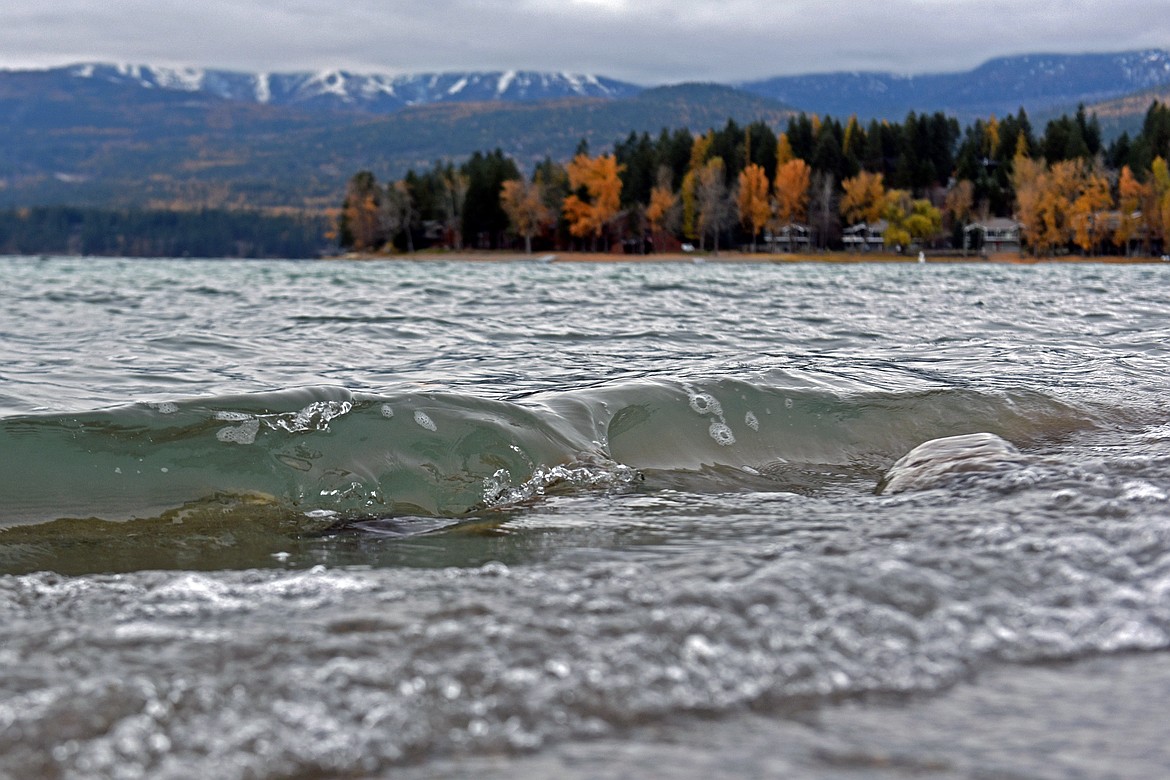
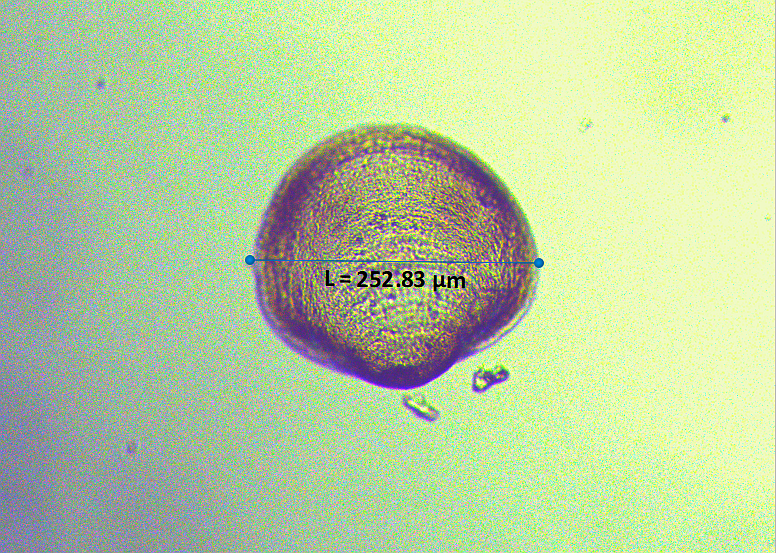
A Whitefish Lake Institute sample taken from the Whitefish City Beach boat dock last summer captured half of a shell of a microscopic invasive mussel, prompting extensive further sampling that has not found any presence of live mussels.
The sample was taken in July as part of the institute's routine early detection monitoring for aquatic invasive species. The shell was nonviable, meaning dead or incapable of reproduction.
The Montana Fish, Wildlife and Parks laboratory identified the one quarter of a millimeter wide invasive mussel on Oct. 21 and verified the finding with multiple independent laboratories. Experts agreed that the shell was from a zebra, quagga or golden mussel.
The state responded swiftly after the detection was confirmed, according to Whitefish Lake Institute Executive Director Mike Koopal.
Last week, the state collected additional early detection samples, utilized a dive team and inspected the shoreline. Between the samples collected by the lake institute and the ramped-up efforts by Fish, Wildlife and Parks, more than 120 microscopy and 85 eDNA samples were collected from Whitefish Lake. All samplings tested negative.
"Whitefish Lake serves the Whitefish community as a partial drinking water source, and we take this finding very seriously,” said Whitefish Mayor John Muhlfeld. “The monitoring efforts have not found any adult mussel or any other larvae. Right now, we’re cautiously optimistic but moving forward, the city of Whitefish is committed to our continued partnership on this evolving issue.”
Fish, Wildlife and Parks' Aquatic Invasive Species Supervisor Tom Woolf said while the negative results are encouraging, they do not rule out the presence of invasive mussels in the lake.
According to the state and other government resource agencies, invasive mussels, including zebra and quagga mussels, pose a significant threat to waterways. They can reproduce rapidly, clog water infrastructure and disrupt aquatic ecosystems. Preventing their spread remains a priority.
Montana remains one of 10 states free of invasive mussels. Larval mussels were last detected in November 2016 in Tiber Reservoir in north-central Montana, and suspect detections were also reported at Canyon Ferry Reservoir near Helena, but both water bodies were delisted after years of monitoring turned up no additional signs of the mollusks.
In recent years, invasive mussels have shown up closer to Montana’s borders, particularly in the Snake River in Idaho and the lower Missouri River in North Dakota.
Koopal said the mussel was likely about two to three weeks old when it died. Based on its small size and because it was only half of a shell, with no soft tissue, and due to movement from boat propellers and wind, it's impossible to know when exactly it entered the lake, he said.
The state and Whitefish Lake Institute planned to be on the lake this week collecting more samples and inspecting docks that have been pulled up along the shoreline.
“I’ll be able to coordinate with the larger HOAs and marinas to inspect their docks, but I ask private dock owners to take the time to look at their docks and report anything that looks suspicious to our office," Koopal said.
The aquatic invasive species early detection monitoring program at Whitefish Lake Institute is sponsored by the city of Whitefish and contributes to a broader statewide network led by Fish, Wildlife and Parks.
Koopal pointed to the impressiveness of the sampling and analysis technique in capturing an organism of this size and to the power of the partnership with the state in enabling more management options.
The state initiated its statewide early detection and monitoring program in 2004. This program seeks to identify small or localized invasive populations, investigate suspicious reports, and analyze existing population trends. According to the agency's 2025 summary of the program, its work is adaptable based on risk.
Site prioritization depends on factors such as previous years' sampling efforts and detections, water calcium levels, water-quality data, angler-pressure data, boater-use data, and input from partners, the summary states.
The capture of the shell may indicate a higher priority for Whitefish Lake in the future, Koopal said.
Woolf said they will continue to follow the state's mussel response plan.
“We can’t let up. We have to protect our waters by following clean, drain, dry practices every time we come off the water," Woolf said. “All watercraft should be cleaned, drained, and dried before being moved between waterbodies, and boaters should stop at required watercraft inspection stations.”
It is mandatory to have all motorized and non-motorized watercraft inspected prior to launching in Whitefish Lake. High risk watercraft must also be decontaminated. Inspection stations at City Beach and Whitefish Lake State Park are closed Oct. 1 through April 30. Watercraft users may launch at these sites in the off season by passing the off-season online AIS Self-Certification Program.
 A nonviable microscopic mussel, about ¼ of a millimeter wide, identified under a microscope by FWP after it was collected in a Whitefish Lake Institute sample. (Montana FWP photo)
ARTICLES BY KELSEY EVANS
Suspect in Lincoln County shooting was Whitefish school substitute
The suspect in a deadly shooting spree near Eureka on Friday, Oct. 30 had worked at Whitefish School District as a substitute teacher.
Microscopic, nonviable mussel captured in Whitefish Lake, additional samples negative
A routine Whitefish Lake Institute sample taken from the Whitefish City Beach boat dock contained half of a shell of a nonviable microscopic invasive mussel.
Sustainable tourism and workforce housing go hand in hand, survey finds
Asked what they most valued about living in Whitefish, residents overwhelmingly named "the people, and knowing your neighbors," a recent study found.