
Several logging projects OK’d on Flathead Forest
HAILEY SMALLEY | Hagadone News Network | UPDATED 15 hours, 55 minutes AGO
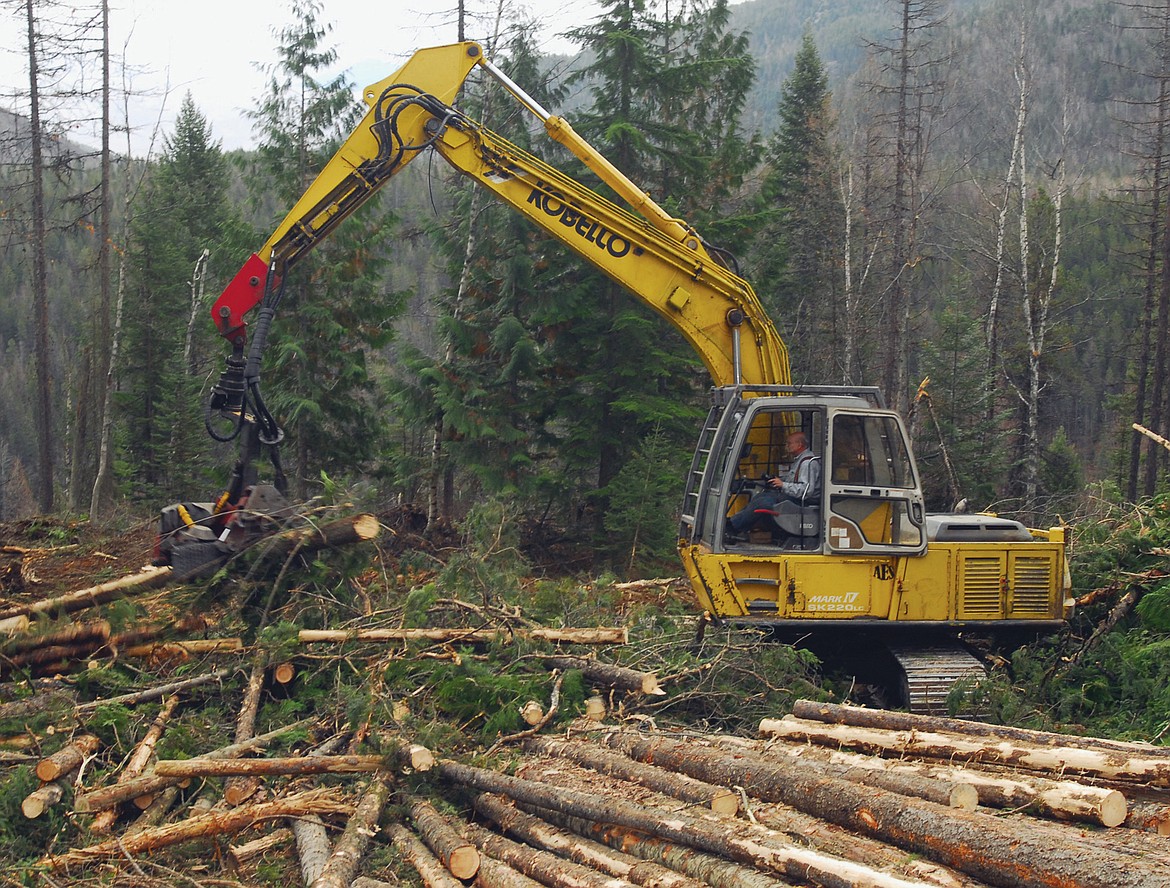
A logger works in the woods in this file photo.
Nearly 5,000 acres of forestland along U.S. 2 have been cleared for a variety of treatments that Flathead National Forest officials say will reduce wildfire risk and improve ecological health.
Officials described the stretch of forest between West Glacier and Summit as “overstocked, disease-prone and increasingly vulnerable to insects and wildfire” in a final decision notice signed Oct. 6. The Forest Service has prescribed a patchwork of commercial and precommercial thinning, clearcuts, whitebark pine restoration and prescribed burns to remedy the issue, which it has collectively titled the Granite-Moccasin Project.
Commercial treatments make up 2,397 acres of the 4,930-acre treatment area, while noncommercial treatments account for 2,402 acres. Another 131 acres will be thinned to expand an existing utility corridor.
About 8 miles of new Forest Service roads will be constructed during the project, most of which will be made impassable once activities cease.
The Granite-Moccasin Project was first proposed in December 2025 and reviewed under an emergency action determination that the Trump administration introduced last year, which allows the Forest Service to forgo the typical objection period for projects in areas considered to be at high risk for catastrophic wildfire.
A singular public comment period in January 2026 elicited more than 250 letters from individuals and organizations, many of which voiced concerns about the scale of the project and the overlap of proposed treatment areas with lands designated as critical to the conservation of wildlife, natural resources and outdoor recreational opportunities.
“While we recognize the need for responsible wildfire mitigation actions to protect infrastructure and private property across the U.S.-2 corridor ... we have some real concerns about the scope and justification for the project given its location in such an ecologically critical corridor through the heart of one of the most intact landscapes in the United States,” read one letter submitted on behalf of Glacier-Two Medicine Alliance and National Parks Conservation Association.
More than 2,000 acres of treatment are slated for inventoried roadless areas, and another 400 acres will occur within the bounds of the Middle Fork Flathead River Wild and Scenic River Corridor. An environmental assessment released in June concluded that 1,629 acres of core grizzly bear habitat would be affected by increased traffic from logging trucks, while critical lynx denning habitat would be reduced by about 1,608 acres.
In his Finding of No Significant Impact for the project, district ranger Robert Davies nodded to some of the public comments while emphasizing the project’s long-term goals.
Forgoing the project “avoids short-term adverse effects and some long-term adverse effects, such as reduced dense forest cover for grizzly bear and lynx, but carries appreciable long-term adverse consequences in the form of increased wildfire risk and deterioration of habitat resilience,” he wrote. “These tradeoffs support my determination that the proposed action does not result in significant impacts to wildlife when evaluated in totality.”
Davies argued that treatments scheduled to take place within the wild and scenic river corridor and inventoried roadless areas would similarly boost long-term forest health and reduce the risk of catastrophic wildfire.
The project is also expected to provide economic benefits in the way of 12.5 million board feet of timber and the creation of up to 83 direct and 69 indirect jobs, according to the decision notice.
Work is set to begin immediately and unfold over the course of 10 years. The first timber sale for the project will likely occur in late 2026 or early 2027.
In addition, the Forest Service announced approval of the Piper Creek project in the Swan Valley.
The project includes 2,307 acres of active management, including 1,415 acres of commercial treatments and 892 acres of non-commercial treatments, to address stands of trees that have been affected by insects and disease – such as root rot, dwarf mistletoe, and bark beetles. The project also targets hazardous fuel buildup in the wildland urban interface, reducing the potential for fast moving wildfires that could threaten nearby homes, infrastructure, and firefighter safety. Additionally, the project includes 40 acres of aspen improvement, the Forest Service said in a release. It was approved through a categorical exclusion from the Healthy Forests Restoration Act of 2003, the Forest Service said.
Last month the Forest Service approved the Dry Riverside project along the Hungry Horse Reservoir.
That decision authorizes approximately 3,726 acres of commercial timber harvest and 3,683 of noncommercial vegetation treatments, including precommercial thinning, prescribed burn, and whitebark pine restoration.
ARTICLES BY HAILEY SMALLEY
Several logging projects OK’d on Flathead Forest
Nearly 5,000 acres of forestland along U.S. 2 have been cleared for a variety of treatments that Flathead National Forest officials say will reduce wildfire risk and improve ecological health.

Forstag flips western congressional district amid wave of blue votes
The blue wave left its mark on Montana Tuesday, as Democratic candidate Sam Forstag clinched victory in the western congressional district and his party made gains in the statehouse.

Northwest Montana Republicans enter election night in high spirits, despite close congressional race
Spirits were high at Republican Congressional candidate Aaron Flint's election night watch party, despite projections of a long night waiting on results.