
Kratom restrictions begin in Moses Lake today
NANCE BESTON | Hagadone News Network | UPDATED 8 hours, 48 minutes AGO
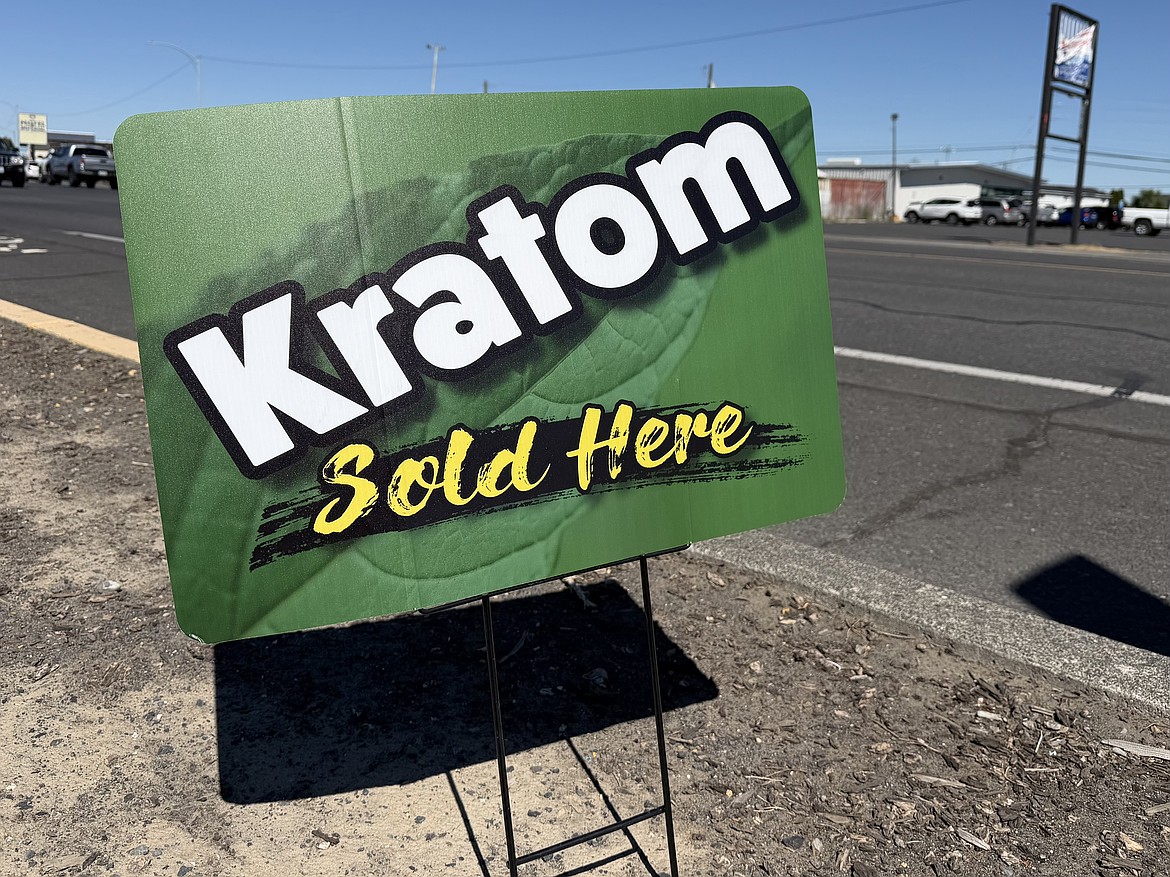
A Moses Lake City ordinance banning the sale of kratom products for people under the age of 21 goes into effect today. Moses Lake Police Dept. Capt. Mike Williams said the department has been working with local businesses to educate them on the change. He said the department plans to continue education before beginning enforcement of the new ordinance.
FILE PHOTO
“Like anything else, I think parents need to have a conversation with their kids. We need to educate our kids on making good choices about what they're putting in their bodies.”
— Moses Lake PD Capt. Mike Williams
MOSES LAKE — A new Moses Lake ordinance restricting access to kratom products for people under 21 takes effect today, adding age restrictions and new requirements for retailers who sell the products.
The ordinance, approved by the Moses Lake City Council on July 28, prohibits the sale, distribution or advertising of kratom products to anyone younger than 21. The law applies to products containing kratom, kratom extracts, mitragynine, 7-hydroxymitragynine and synthetic kratom-derived compounds.
Under the ordinance, retailers must also keep kratom products secured behind a counter or locked away to prevent easy access by customers.
Kratom is derived from the leaves of the tropical plant Mitragyna speciosa and is commonly sold as powders, capsules, tablets, beverages and liquid extracts. According to city documents, the substance can produce stimulant effects at lower doses and opioid-like effects at higher doses. The ordinance cites concerns about addiction, dependence, overdose risk and the lack of federal regulation governing kratom products.
Moses Lake Police Department Capt. Mike Williams said the department has spent the weeks leading up to the ordinance's implementation focusing on educating retailers and officers about the new law.
“So far, we've been in the education phase,” Williams said Thursday. “We've contacted all but a couple of the potential retailers in town and given them informational flyers. We will be contacting the final businesses tomorrow.”
The department has also distributed required signage to businesses and is continuing to train officers to identify kratom products.
“There are a number of them that know nothing about kratom,” Williams said of police officers. “I think a lot of us didn't know much about it until this ordinance came around.”
While enforcement begins with the ordinance taking effect Friday, Williams said the department's immediate goal is compliance rather than issuing fines.
“For the near future, we're going to be primarily focusing on education,” he said. “We want compliance but we're not out there trying to give tickets.”
As awareness of the ordinance grows, Williams said police expect to conduct compliance checks that could include undercover purchases to ensure retailers are following the law.
The ordinance establishes escalating penalties for violations. A first violation carries a $1,030 civil penalty, a second violation within a 12-month period carries a $3,000 penalty, and third or subsequent violations carry fines of $5,000. Each day a violation continues may be treated as a separate offense.
Williams said citations may be issued once the department believes retailers have had sufficient opportunity to understand the requirements.
“After the initial education phase, we'll be writing citations,” he said.
Although MLPD has responded to incidents involving kratom in the past, Williams said the department has not seen widespread problems locally.
“We've had some contacts,” he said. “I can't say that there's been a rash of them or anything that has come to our attention locally on a large scale.”
Williams said a major concern for law enforcement is that kratom products remain largely unregulated and were previously available for purchase without any age restrictions.
“Prior to this ordinance, there was nothing preventing a retailer from selling it to anybody that could put money on the counter,” he said.
The ordinance was adopted following concerns outlined by city officials regarding the product's health effects and the lack of state or federal oversight. City documents note that a proposed Washington state Kratom Consumer Protection Act introduced during the 2026 legislative session failed to pass.
Williams said identifying products covered under the ordinance may present challenges because some products are marketed using terms that do not clearly identify them as kratom.
“A lot of the packaging on some of these items is, I think, intentionally deceptive,” he said. “They really have to know what they're selling. A lot of these products are not labeled as kratom.”
He said retailers with questions about their inventory should contact manufacturers or wholesalers and take responsibility for ensuring the products they sell comply with the law.
Williams also urged parents to educate their children about substances that may pose risks.
“Like anything else, I think parents need to have a conversation with their kids,” he said. “We need to educate our kids on making good choices about what they're putting in their bodies.”
ARTICLES BY NANCE BESTON
Kratom restrictions begin in Moses Lake today
MOSES LAKE — A new Moses Lake ordinance restricting access to kratom products for people under 21 takes effect today, adding age restrictions and new requirements for retailers who sell the products. The ordinance, approved by the Moses Lake City Council on July 28, prohibits the sale, distribution or advertising of kratom products to anyone younger than 21. The law applies to products containing kratom, kratom extracts, mitragynine, 7-hydroxymitragynine and synthetic kratom-derived compounds.

4th District candidates talk affordability, ag and healthcare
RICHLAND — Rising costs, agricultural challenges and concerns about the future of rural healthcare dominated discussion Tuesday during a candidate forum for 4th Congressional District candidates Amanda McKinney and John Duresky. The candidates presented competing visions for the future of Central Washington in the forum hosted by AARP Washington, Northwest Public Broadcasting and the League of Women Voters. Held at the Washington State University Tri-Cities campus, the hour-long debate focused on issues affecting residents throughout the district, including affordability, Social Security, healthcare access, tariffs and economic development. “The issues discussed today are not partisan issues. They're kitchen-table issues that affect people and families every day,” AARP Washington Advocacy Director Cathy MacCaul said.

Homesley, Falstad outline priorities for improving Auditor’s Office
EPHRATA — As Election Day approaches, voters are considering not only who should lead county government offices, but how those offices can better serve the public through transparency, accessibility and efficient service. For the final installment of the Columbia Basin Herald’s five-part candidate Q&A series, auditor candidates Shannon Falstad and Darci Homesley were asked: “Grant County residents expect government offices to be efficient, transparent and accessible. What's one area where the Auditor's Office is falling short today, and how would you address it differently than your opponent?” Falstad: I do not believe the Auditor’s Office is currently falling short in these areas. In fact, there are already several ways the office provides accessible service to the public. For elections, the public can observe the election process. For licensing, residents have access to two subagents-Winzler Licensing in Moses Lake and Petersen Licensing in Quincy-which provides additional convenience and accessibility. For recording, the office accepts electronic recording, and the public can access the index through Eagle Web. That said, there is always room for improvement and welcome feedback from residents and employees. Listening to the people we serve and being willing to make improvements when needed is an important part of keeping county government efficient and accessible.