
Immigration, election security divide candidates in 4th District debate
NANCE BESTON | Hagadone News Network | UPDATED 4 hours, 42 minutes AGO
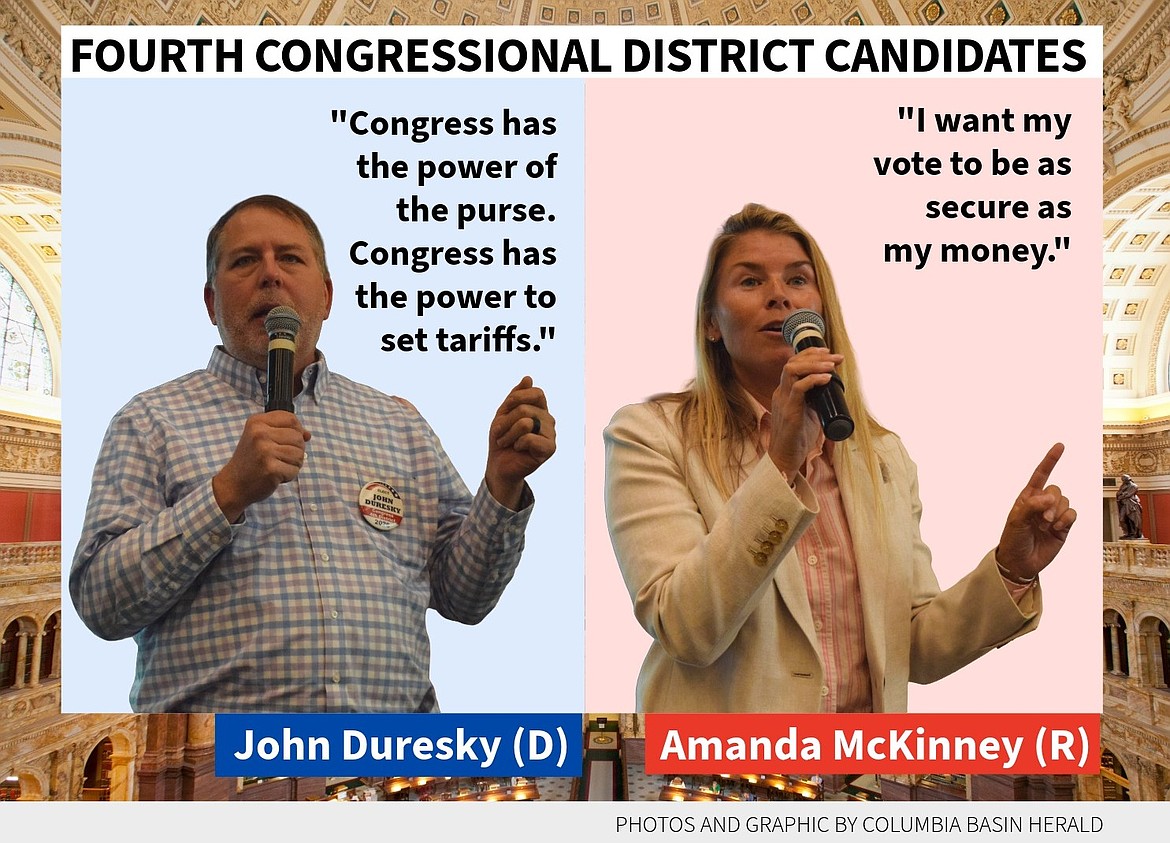
RICHLAND — Immigration policy, election security and the role of the federal government emerged as some of the sharpest points of disagreement Tuesday as 4th Congressional District candidates Amanda McKinney and John Duresky debated issues that have become increasingly prominent in national politics.
The forum, hosted by AARP Washington, Northwest Public Broadcasting and the League of Women Voters at Washington State University Tri-Cities, gave voters an opportunity to hear how the two candidates would approach issues ranging from border security and voting laws to congressional oversight and constitutional authority.
With longtime U.S. Rep. Dan Newhouse retiring, voters will elect a new representative for Central Washington for the first time in more than a decade.
Candidates clash on immigration
Immigration generated one of the night's most direct exchanges as moderators asked each candidate to identify areas where they agreed and disagreed with current federal immigration policies.
McKinney praised increased immigration enforcement efforts and said federal authorities must continue enforcing existing laws.
“We have had lawlessness and a lack of enforcement on immigration,” McKinney said.
She pointed to concerns about fentanyl trafficking, criminal organizations and human trafficking as reasons for stronger enforcement efforts.
McKinney also criticized Washington state's sanctuary policies, arguing they can complicate cooperation between local jails and federal immigration authorities.
Duresky agreed the United States has the right to control its borders but argued immigration policies should distinguish between violent criminals and undocumented immigrants who have lived and worked in communities for years.
“This country was built on immigration,” Duresky said.
The Democratic candidate said immigrants have played a critical role in the district's economy and agricultural sector and expressed concern that some current enforcement efforts have targeted workers rather than dangerous offenders.
“Nobody should be for open borders,” Duresky said. “We have a right as a sovereign nation to control who comes into and out of our country.”
The discussion highlighted differing priorities between the candidates. McKinney emphasized enforcement, public safety and cooperation between law enforcement agencies, while Duresky focused on economic contributions, workforce needs and what he described as a more targeted approach to immigration enforcement.
Election security and voter confidence
The candidates also offered sharply different views when discussing election security and voter confidence.
Moderators asked about the federal SAVE Act and concerns from some voters that additional citizenship verification requirements could make voting more difficult for certain populations.
McKinney said stronger identification requirements would help restore public confidence in elections and compared election safeguards to security measures used in banking and other industries.
“Trusting our election system is vital to the continuancy of our republic,” she said.
McKinney argued voters should be required to provide proof of citizenship and valid identification, saying election security should receive the same level of protection people expect when conducting financial transactions.
“I want my vote to be as secure as my money,” she said.
Duresky defended Washington state's vote-by-mail system and said he believes it has improved voter participation and accessibility.
“I am shocked at how well the system works here,” he said.
Duresky argued that claims of widespread voter fraud are unsupported and said public officials should be careful not to undermine trust in democratic institutions.
“Trust in our institutions is absolutely critical,” he said.
The exchange reflected broader national debates surrounding election administration, with McKinney emphasizing additional safeguards and Duresky emphasizing accessibility and confidence in existing systems.
Role of Congress
Questions about constitutional authority and the balance of power between branches of government produced another notable contrast.
Asked whether Congress has surrendered too much authority to the executive branch, both candidates expressed support for congressional oversight but described the issue differently.
McKinney said lawmakers play an important oversight role and argued members of Congress often receive information unavailable to the public when evaluating military and national-security decisions.
“I absolutely believe in the power of Congress and oversight,” she said.
At the same time, she suggested that when lawmakers support presidential actions based on classified information, Congress has not necessarily failed.
Duresky argued Congress has gradually allowed presidents of both parties to exercise powers that should remain with lawmakers.
“Congress has the power of the purse,” Duresky said. “Congress has the power to set tariffs. The Constitution was set that way deliberately.”
He said Congress should more aggressively exercise its constitutional responsibilities regarding trade, spending and military action.
Duresky also promoted government reform proposals that include congressional term limits, restrictions on stock trading by members of Congress and stronger ethics requirements.
“I think one of the problems here is we have too many people that are putting party ahead of country and constitution,” he said.
Tariffs and economic philosophies
While tariffs were discussed primarily through an economic lens, the issue also underscored each candidate's view of federal authority and international trade.
Duresky described tariffs as a cost ultimately paid by consumers and argued Congress should have a larger role in determining trade policy.
“A tariff is a tax,” he said.
He argued lawmakers should reconsider emergency powers that allow presidents to implement sweeping trade actions without congressional approval.
McKinney defended tariffs as a negotiating tool and said they can be used to secure more favorable trade agreements for American industries.
“There are many examples of presidents using tariffs as a way to bargain and as a tool to get fair trade agreements,” she said.
McKinney argued some foreign trading partners have benefited from unfair arrangements and said tariffs can help strengthen domestic industries and manufacturing.
Tribal issues, data centers and committee priorities
Both candidates said they support tribal sovereignty and emphasized the importance of consultation with tribal governments when federal projects affect tribal interests.
McKinney pointed to her experience working on water and resource issues through the Yakima Basin Integrated Plan and said stakeholder-driven solutions produce better long-term outcomes.
Duresky said meetings with tribal leaders have reinforced the need for stronger communication between tribal governments and federal officials and said he would dedicate staff resources to tribal issues.
The candidates also discussed the rapid growth of artificial intelligence and data center development in Central Washington.
Both said local communities should have a significant voice in determining whether projects move forward.
McKinney focused on the region's potential for future nuclear energy development and argued Central Washington is well-positioned to support major technology investments.
Duresky emphasized transparency, concerns about electricity demand and the need for safeguards as artificial intelligence technology continues to expand.
Finally, when asked which congressional committees they would most like to serve on, both candidates highlighted priorities reflective of their campaign messages.
McKinney said she would pursue a role on the House Appropriations Committee, citing her experience in local government, budgeting, agriculture, energy and water policy.
Duresky identified agriculture, energy and veterans' issues as his top priorities, pointing to his military service and professional experience in federal oversight roles.
The forum was part of a voter education effort by AARP Washington, Northwest Public Broadcasting and the League of Women Voters. Organizers said the goal was to provide voters with information about where the candidates stand on major issues before the November election.
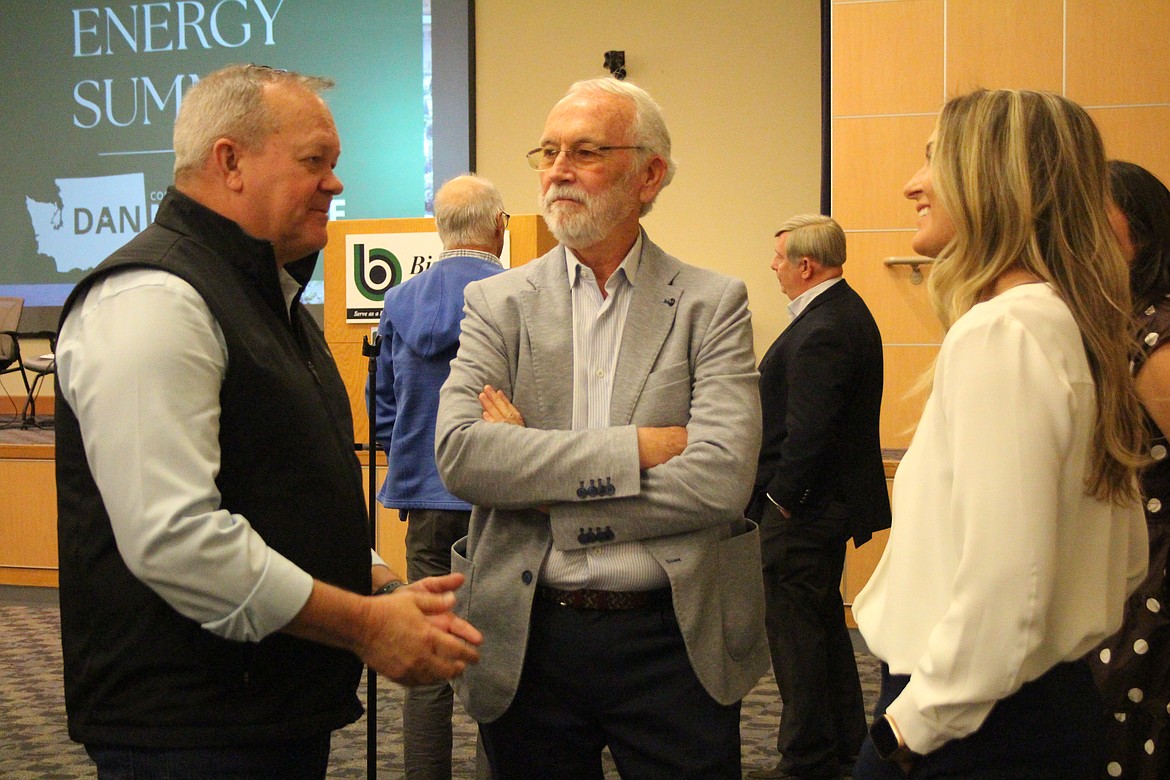
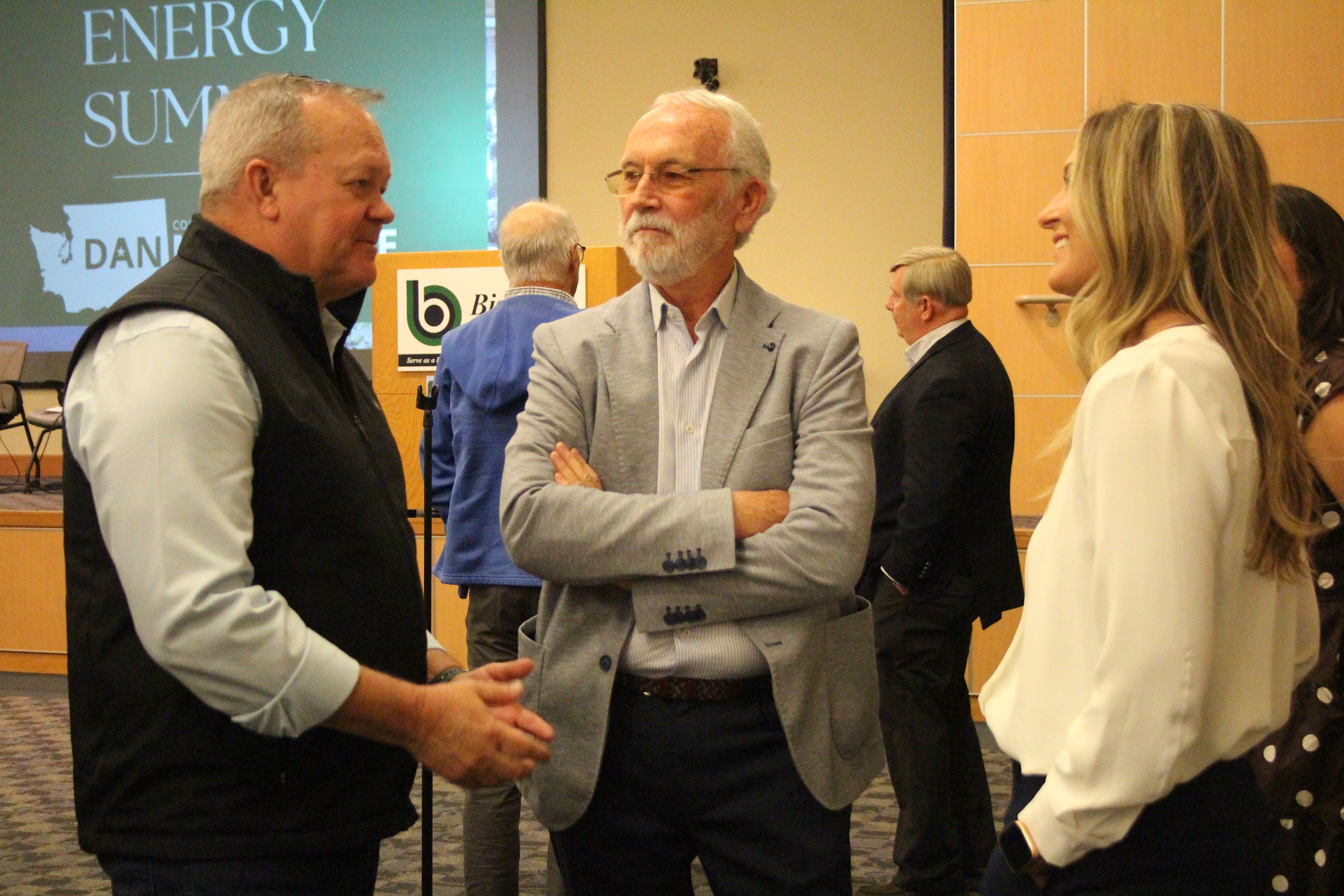 The winner of the Amanda McKinney and John Duresky Fourth Congressional District race will replace Dan Newhouse (center).
ARTICLES BY NANCE BESTON
Immigration, election security divide candidates in 4th District debate
RICHLAND — Immigration policy, election security and the role of the federal government emerged as some of the sharpest points of disagreement Tuesday as 4th Congressional District candidates Amanda McKinney and John Duresky debated issues that have become increasingly prominent in national politics.

Joel Martinez appointed to Moses Lake School Board
MOSES LAKE — The Moses Lake School District Board of Directors selected Joel Martinez to fill the vacant District 2 seat Thursday night after interviewing four candidates seeking the position.

Kratom restrictions begin in Moses Lake today
MOSES LAKE — A new Moses Lake ordinance restricting access to kratom products for people under 21 takes effect today, adding age restrictions and new requirements for retailers who sell the products. The ordinance, approved by the Moses Lake City Council on July 28, prohibits the sale, distribution or advertising of kratom products to anyone younger than 21. The law applies to products containing kratom, kratom extracts, mitragynine, 7-hydroxymitragynine and synthetic kratom-derived compounds.