
Ephrata Middle Schoolers get front-row seat to local democracy
NANCE BESTON | Hagadone News Network | UPDATED 2 months, 2 weeks AGO
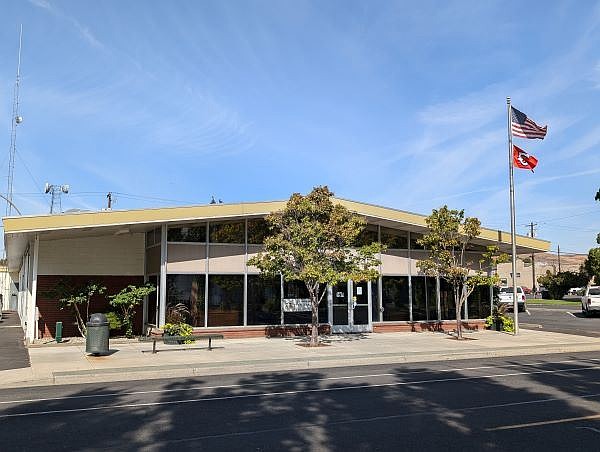
For the past four years, Ephrata Middle School eighth-graders have been attending the Ephrata City Council meetings. Students are required to complete an “extended learning” project with the option to attend a council meeting for credit, or extra credit. EMS history teachers say it helps to remove the barrier between students and their local governments.
COURTESY PHOTO/CITY OF EPHRATA
“It ... gives some accountability to our elected leaders. When they see kids show up, they’re having to communicate with a part of their constituency they don’t always consider.” — Ephrata Middle School teacher Katie Johnson
“I’m honestly really fortunate and really glad that I’ve been forced to go … now I can learn about it, and I wouldn’t be as scared if I had to go (in high school).” — Ephrata Middle School eighth-grader Korben Fronsman
EPHRATA — On Wednesday nights at Ephrata City Hall, it’s not unusual to see a row of eighth-graders quietly filing into the council chambers, agendas in hand. They’re not there for extra credit alone – though that certainly helps. They are there because their teachers want them to see democracy up close, long before they’re old enough to vote.
Ephrata Middle School history teachers Katie Johnson and Lindsy Roberts revived the tradition after experiencing it themselves as students.
“When we were younger, as eighth-graders, we had a teacher named Wes Crago … and he had us do this,” Johnson said. “It takes some of the lessons we’re supposed to be getting in the classroom about civics and local government … and gives kids a chance to watch that and see that it’s not as scary to get involved as it might feel like.”
Crago served on the Ephrata City Council while he was teaching, and then served as Ephrata's city administrator from 2003 to 2020.
Each quarter, students must complete one “extended learning” project – attending a city council meeting, attending a school board meeting, reading a historical fiction novel, or participating in an after‑school Social Studies Cinema event. Many choose the meetings, especially when they realize attending more than one earns extra credit.
Four students from Johnson’s class said they’re learning more than they expected.
Clayton Cobb said he’s picked up on real issues affecting the city.
“I learned … they’re trying to put in a new overpass by the railroad,” he said, adding that he also heard discussions about water infrastructure and runoff concerns near Patrick Park.
For Cobb, the meetings are surprisingly social, which he said makes him enjoy them.
“Yes (I like them) because I see my friends, which I don’t get to do often,” he said.
Classmate Korben Fronsman admitted he wasn’t eager at first.
“For the first time, I really just didn’t want to go … But after I went to it, I was like, wow, that’s really beneficial,” Fronsman said. “Now I know what’s going on in our town and who’s there.”
He added that simply showing up matters.
“Just being there is what counts … being there and learning about everything,” Fronsman said.
Fronsman said the experience has made his local government feel less intimidating.
“I’m honestly really fortunate and really glad that I’ve been forced to go … now I can learn about it, and I wouldn’t be as scared if I had to go (in high school).”
Not every student loves the meetings – and that’s okay, Johnson said. What she said matters is exposure.
Harper Shin said she doesn’t enjoy attending, but she sees the value.
“It helps me have more confidence to do more things,” she said.
She said she has learned how meetings work and how decisions are made.
“I understand how the meetings go and how people are making decisions on what they want to do for their town,” Shin said.
Haley Baddley echoed that sentiment.
“I get information from it that I would normally not,” she said.
Even if she doesn’t plan to keep attending after the class requirement ends, she believes the meetings matter.
“If someone was wanting to go into the field for government… it would be helpful for them just to know how it works,” she said.
She also admitted the meetings can be unexpectedly entertaining.
“There’s this grandma … she was pretty mad about there being litter somewhere,” she said. “The public comments are kind of fun sometimes.”
Johnson said the benefits extend beyond the classroom. Students return with stories, questions and a clearer sense of how their community functions.
“Sometimes around town, like when we had the water tower built, kids knew what was going on… They were able to talk about the water pressure,” she said. “It also gives some accountability to our elected leaders. When they see kids show up, they’re having to communicate with a part of their constituency they don’t always consider.”
For some students, the experience has already shaped future involvement. Johnson said former participants have gone on to serve as student representatives to the high school board – and even, in her previous district, to serve on local school boards as adults.
Whether or not these Ephrata eighth-graders pursue public service, Johnson believes the exposure matters.
“It removes the fear factor later on … They see that it’s normal people participating, and that it’s something they can do if they want to,” Johnson said.
For now, the students will keep showing up – sometimes reluctantly, sometimes enthusiastically; but always learning.
“Even if we don’t have a say in what’s going on, it’s just great to know about,” Fronsman said.
ARTICLES BY NANCE BESTON
Grant County Sheriff candidates discuss transparency, trust
EPHRATA — As Grant County voters prepare to submit their primary ballots, three candidates are vying for the position as Grant County Sheriff including incumbent Joey Kriete and challengers Josh Sainsbury and Darrick Gregg are competing in the upcoming primary election. To help readers compare the candidates' priorities, qualifications and plans for the office, each was asked the same question and given an equal opportunity to respond.
Grant County Commissioner candidates deliberate fiscal responsibility, budgeting
EPHRATA — Four Republicans are seeking election to Grant County Commissioner Position 3 in the upcoming primary: Shannon Durfee, Kelly Raap, Seth Weeks and Janice Flynn. To give voters a clear comparison of the candidates' positions and priorities, each was asked the same set of questions and provided the same deadline to respond. Durfee, Raap and Flynn submitted responses by the deadline; Weeks did not respond.

Sheriff candidates discuss staffing, retention
EPHRATA — As Grant County voters prepare to select their next sheriff, incumbent Joey Kriete and challengers Josh Sainsbury and Darrick Gregg are competing in the upcoming primary election. To help readers compare the candidates' priorities, qualifications and plans for the office, each was asked the same question and given an equal opportunity to respond. This installment focuses on one of the most pressing challenges facing law enforcement agencies: recruiting, retaining and supporting qualified staff within the Grant County Sheriff's Office.